“I want to do everything I can to see this wonderful city and its community be successful, but there are signs the infrastructure is beyond the number of new developments.” - Mark McKeon, The Glen Boutique Hotel owner
Telford Vice / Cape Town
THE sound of Sea Point used to be seagulls screaming and gaartjies yelling “Cape Town!” from the windows of CBD-bound taxis. If you had the money to live on the cliffs that plunge from Victoria Road, you could hear the crash of the Atlantic Ocean against the edge of Africa.
Sea Point now shudders with mechanical excavators thudding their crude snouts into the ground. On a clear day in Regent Road, you can see cranes forever.
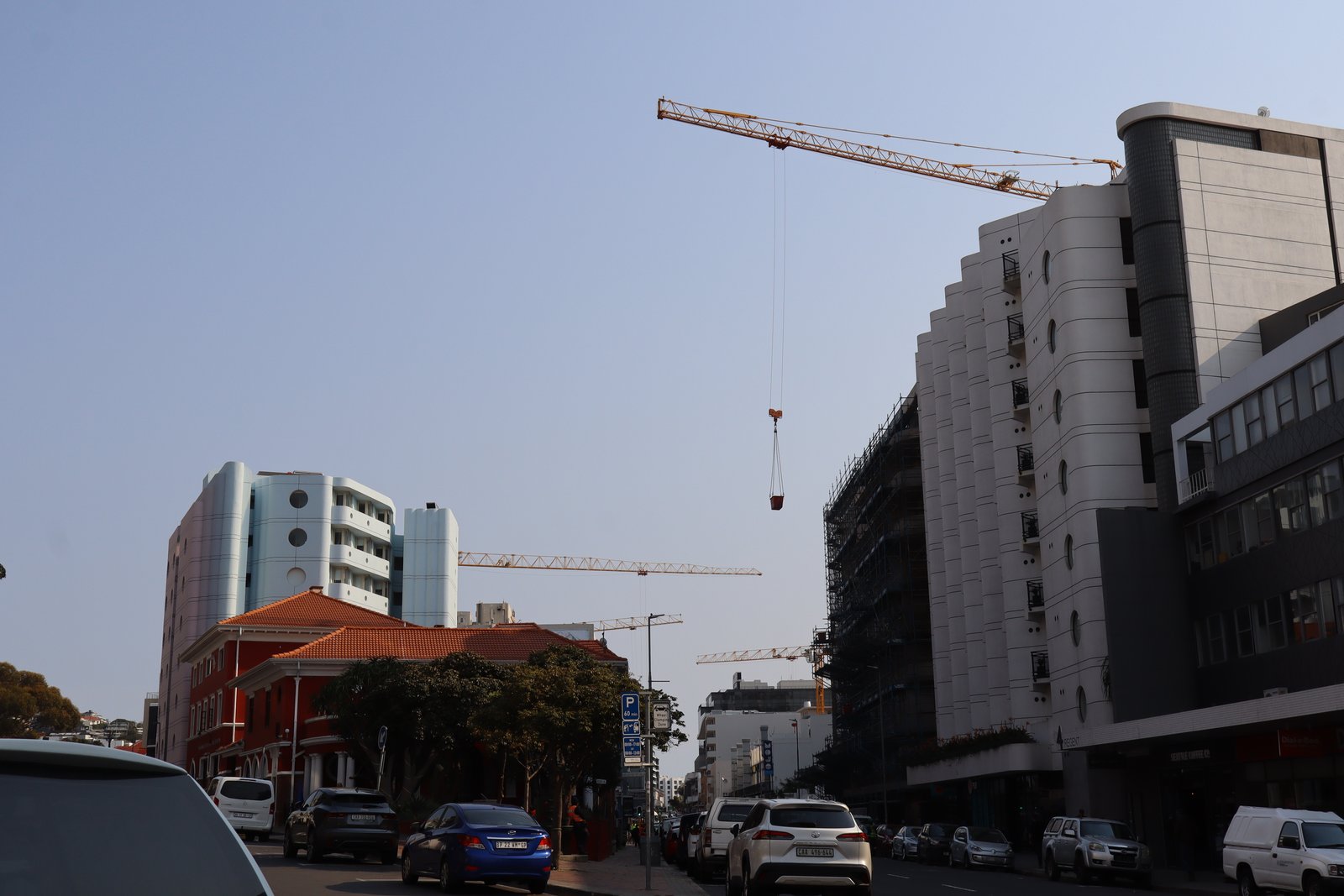
Just another day of construction in Sea Point. (Photo: Telford Vice).
Since January 2020, along Main and Regent or within a block of them and from Rocklands Road to Clarens Road — a distance of 1.5 kilometres — 17 residential complexes have or are being built.
Why should I care, you might think as you contemplate securing a slice of Sea Point. Because of what you might be able to smell in future. And have to walk through. And how your safety might be impaired. And how much your property might cost you in rates.
Developers are required to pay the City of Cape Town a proportional amount to ease the strain their new buildings put on the electricity grid, the water supply, roads, stormwater drainage, and wastewater and sewerage management.
But the relationship between the City and developers is notoriously cosy. A building on Main scheduled for completion in April 2027 will comprise nine storeys and 174 units priced from R3.19-million to R13.5-million. R1.89-million has been paid to offset the impact on the infrastructure.
That’s 0.34% of what would be raised if all the units were sold for the lowest asking price. Sea Pointers can’t even count on the R1.89-million being spent in their ’hood because the City does not ring fence those funds. The money will have been flushed into the system.
The developers, Rawson, did not respond when we asked them whether they considered that amount fair.
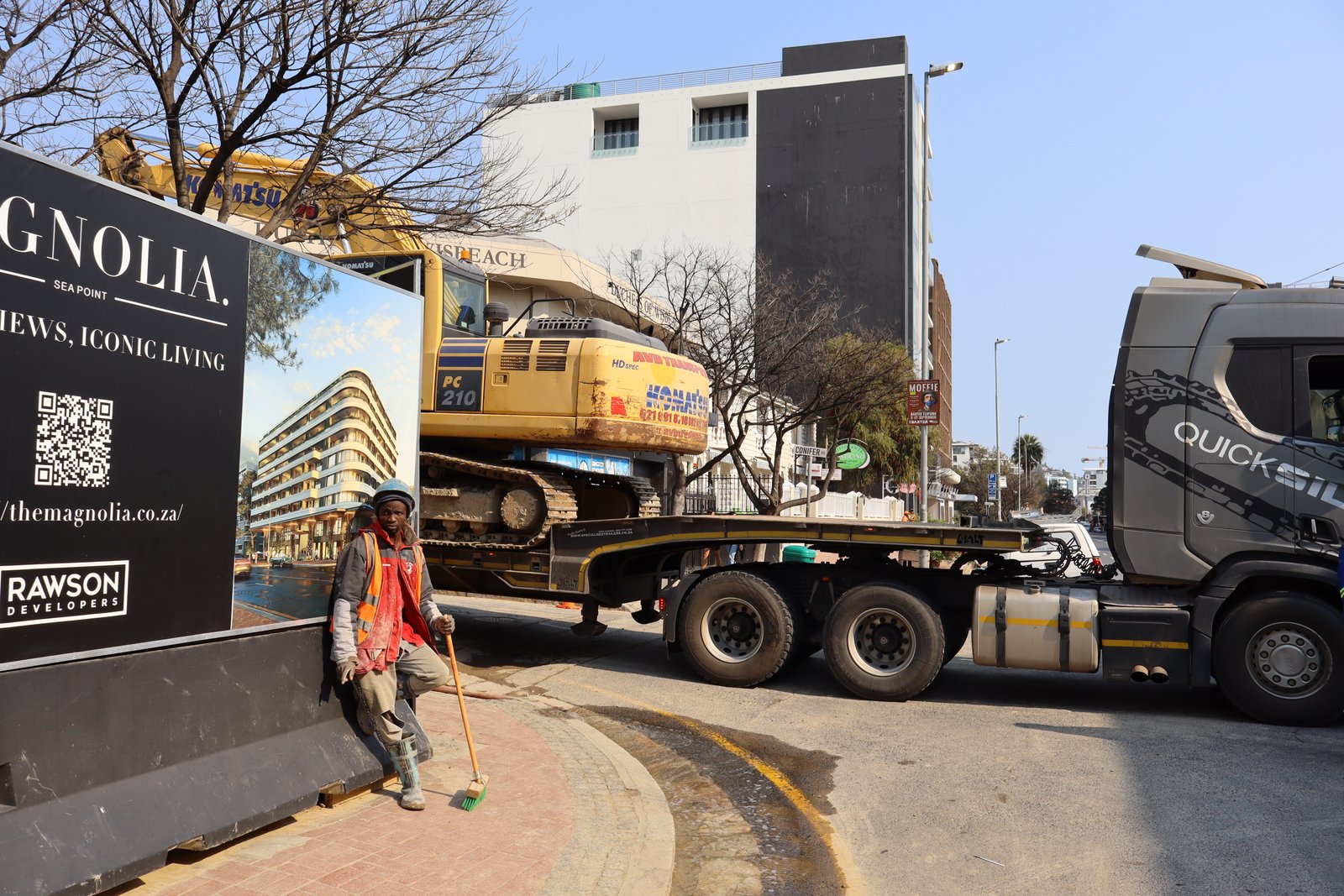
The site of one of 17 new buildings in a 1.5k of Sea Point. (Photo: Telford Vice).
Were developers paying enough? We asked the ward councillor, Nicola Jowell, who referred us to the City, which said through a spokesperson: “The development charge liability … is calculated based on the proposed land use right, and a credit is given for the existing land use right.
“Generally, the amount payable reflects the additional land use right and not the existing demand imposed by the existing land use right for which a credit is provided in terms of the calculation of the development charge amount.
“The development charge liability is calculated using industry standards and unit demands and reflects the actual cost of providing bulk infrastructure.
“It is adjusted annually using the [civil engineering price index] for civil engineering services. In so doing, the City ensures the development charges reflect a fair value for the bulk services infrastructure.”
An urban planner who used to work for the City told the Financial Mail: “The forefathers gave properties lots of rights, allowing swift conversion of houses to multi-storey blocks of up to seven or so storeys. The assumption is that infrastructure has been designed to cater for that.
“But in a place like Sea Point, which is older than other areas, the policy doesn’t work because that assumption doesn’t hold. There’s a lot more bulk coming on stream but the infrastructure is not designed for it, and the contributions the developers are paying are not proportional to the additional burden.
“It’s assumed the City will have to fork out to upgrade infrastructure. So the rate-payers of Cape Town will land up subsidising this cost.
Can Sea Pointers look forward to a future of faeces floating down potholed streets lined by burning buildings? Probably not — the Atlantic seaboard is too powerful as a voter block.
But this isn’t hypothetical. Mark McKeon, who owns The Glen Boutique Hotel a block away from Main, discovered this year that the building’s water pressure had halved from what it was 17 years ago.
“I was told it was because, if the pressure was maintained, it would cause [pipe] bursts,” McKeon told the Financial Mail. “The infrastructure is so old that if the water pressure isn’t declined there would be more underground bursts.
“We’ve spoken to four companies that specialise in this issue, and we’ve been told that in the event of a fire the sprinkler system wouldn’t be effective.
“Nobody wants Cape Town to be more successful than I do. But isn’t it irrational to have all this development at the same time?
“There’s excitement, opportunity, the creation of jobs and other wonderful things. But if this isn’t managed properly there will be implications.
“I want to do everything I can to see this wonderful city and its community be successful, but there are signs the infrastructure is beyond the number of new developments.”
Something else has, surely, got to give. Before you hand over millions, know that you may be buying a fire hazard or a pile of poo.
The Financial Mail
Comments
No comments yet. Start the conversation.