"If we have lower speed requirements, narrower lanes that make drivers feel squashed, that slows them down automatically, and that’s good for all of us." - Lebogang Mokwena, Cape Town bicycle mayor
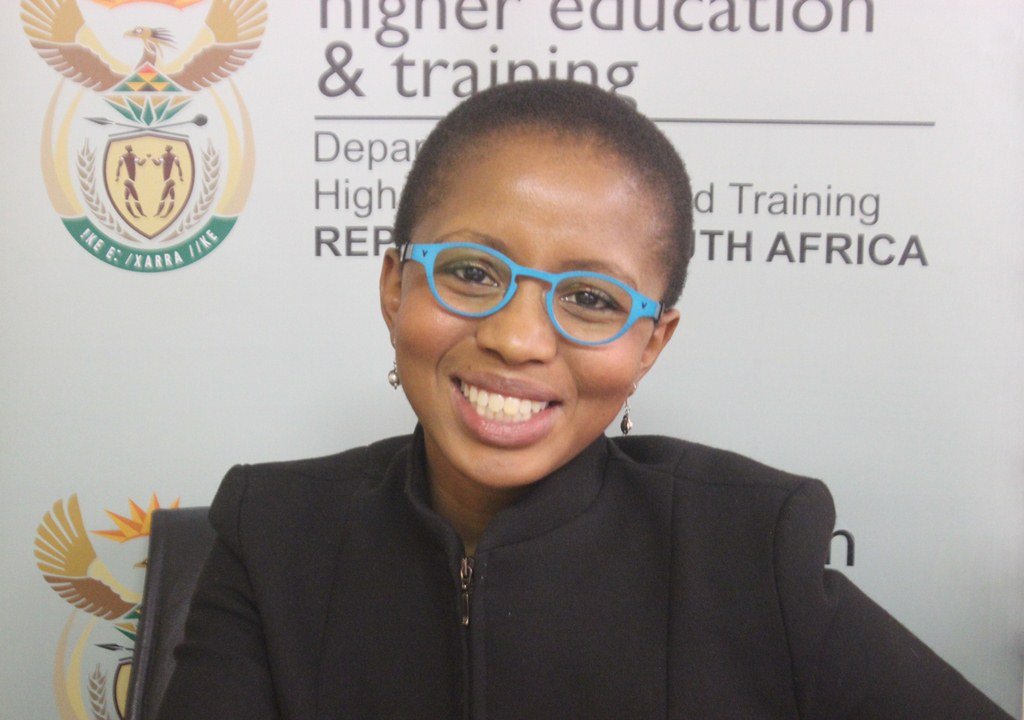
Lebogang Mokoena wants to get you on your bike.
An abridged version of this article appeared in the May 13, 2018 edition of The Sunday TimesTELFORD VICE in Florence
LEBOGANG Mokwena sees cycling in black and white. When she’s at Thembelihle High School in Khayelitsha on Friday afternoons, helping to put kids on bikes to go to school and back, and teaching adult women to ride in Mowbray on Saturday mornings, cycling is black.
When she was a spanner’s throw from Parliament in the city centre making her first address as Cape Town’s inaugural bicycle mayor on April 21, the audience was almost entirely white.
It’s part of Mokwena’s mission to join those disparate dots. And a lot more besides. She hopes to turn what for some is a sport, for others transport, and for still others an expression of their hipsterism into an integral part of what it means to live in a city that predates the car by more than 200 years but is dominated by the engine.
“I’ve had one white woman sign up [for classes],” Mokwena says. “The rest are black and a few coloured and Indian. I don’t know if that’s linked to Cape Town and its geography, and how much harder it is to penetrate if you’re from the Flats.
“When I was training to do the [2017] Argus it was interesting to see big pelotons of men — coloured men. Other than the white male community that seems to be the next big, coordinated, organised cycling community in Cape Town.
“Beyond feeling black and white it feels deeply gendered. Everytime I’m cycling — just going to get milk — I’m more likely to see men riding about. Very rarely do I encounter women, and if I do they tend to be white.”
Cycling’s vast peloton includes lycra lovers who look like they’re riding the Tour de France in perpetuity, magnificently muddied mountain bikers, bearded men in checked shirts and skinny jeans on single speeds, those Khayelitsha kids trying to get to school and back, their parents going to work and back or to look for a job, and people like Mokwena going everywhere on a bike, including “to get milk”.
Full disclosure: this reporter, who has never been near lycra, is among the latter and has been #ProudlyCarFree, and happily, for almost a year. My bicycle saves my life every day. Not all of us are that fortunate.
“We can’t discount geography,” Mokwena says. “The further out you live from where you’re likely to get a job or where you actually work, the less likely you are to even contemplate a bicycle as a means of transport.
“But at the heart of society is upward mobility, which is linked to particular sets of material acquisitions. And the car is a big part of it — preferably German, preferably fast.
“Part of our biggest challenge is changing the imagination of the average South African about what success looks like, and that success can look like a R500 secondhand bicycle that allows you to save your money and do different things with your financial resources as opposed to pumping them into a depreciating asset like a car.”
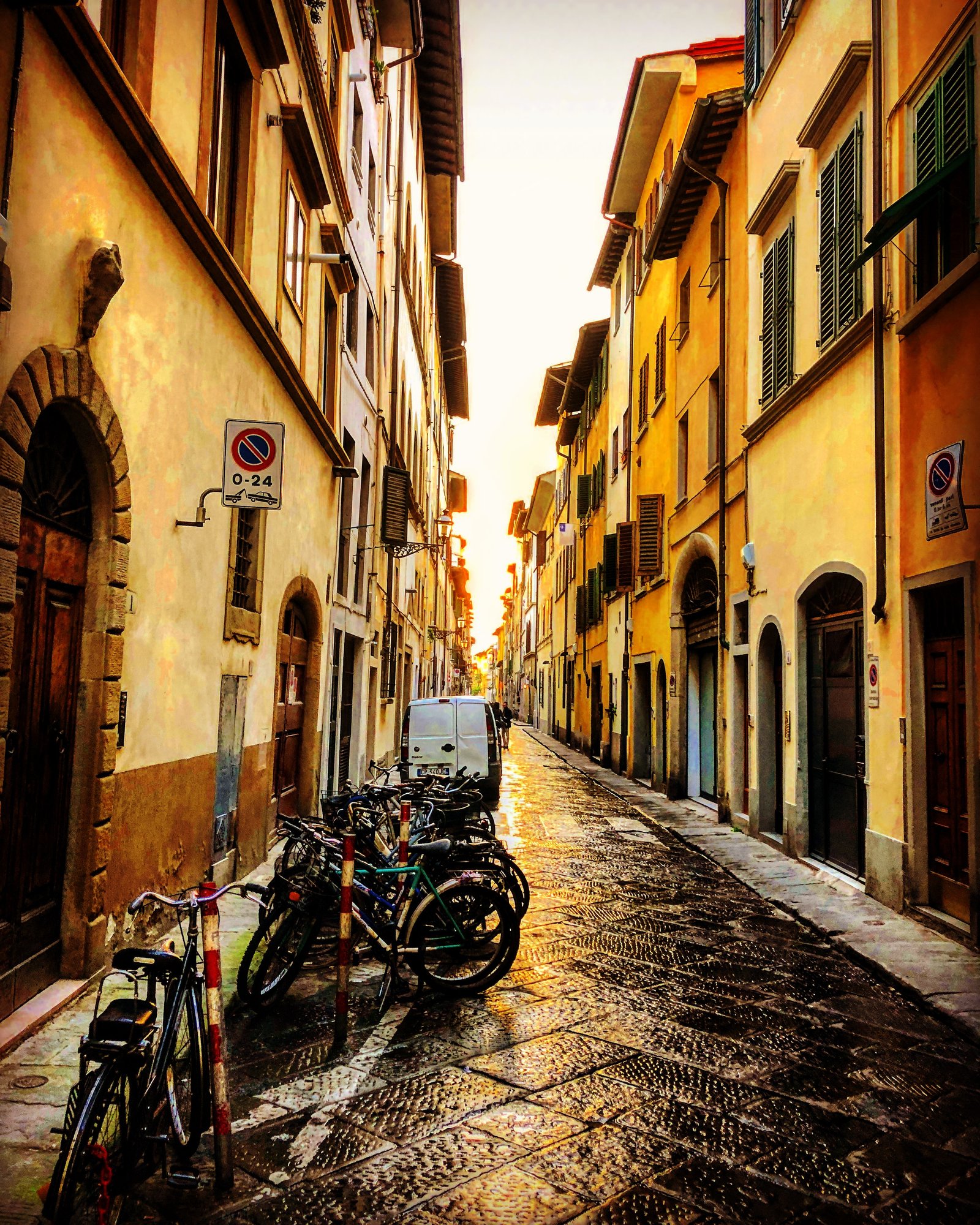
Today Florence. Tomorrow Cape Town?
Mokwena sounds like a cycling lifer, but she learnt to ride in 2014 as a “broke student in New York”. She grew up bikeless in Sophiatown, where a generation earlier many people would travel to work by pedal power, and in Soweto, where she was, in her own words, “the fattest sedentary chatterbox”.In 2016 she bought what remains her bike at a Brooklyn jumble sale for US$65 — R820. It has taken her all around New York and Italy, and now Cape Town.
That you could spend R6.3-million on a Trek Butterfly Madone — almost 8 000 times more than Mokwena paid for her bicycle — is a measure of the distance between cycling’s poles.
“And we want to maintain all of it, whatever type of cycling people want to do. But there is something elitist and therefore exclusionary about some cycling circles — what you wear, the cleats, the carbon frame.
“My bicycle has more than paid for itself. Every trip I’m not paying for an Uber or a taxi or a bus, it’s a saving that goes right back to the money I used initially to by the bicycle.
“For the average South African household even R800 is a big ask, so part of our challenge is to think about how we enable more people to gain fairly cheap, subsidised access to a bicycle. That’s not easy but there’s lots of room for corporates to get involved and brandish their logos.”
And for the legions blinkered by their windscreen mentalities to be pissed off about the money and effort cities put into coaxing people to use bicycles instead of cars.
But there’s another, call it a Freedom Charter perspective: that the roads were there long before cars and thus belong to everyone who uses them. All of us pay for them, and cyclists take an exponentially smaller toll on them in terms of space and wear and tear. So, bike lane or no bike lane, get on your bike.
“Infrastructure does not make people more sensitive automatically; more mindful and more respectful of cyclists,” Mokwena says. “You see that in Salt River, how often [bike lanes are] completely disregarded.
“To get more people on the road safely means getting more people on the road safely whether or not there’s designated infrastructure. It’s also cheaper.
“We do already have roads. So painting them to demonstrate that cyclists also have a right to use them is probably cheaper than trying to create an extra few metres for cyclists. This is not a popular view, and I certainly do feel a little bit safer if I’m riding along a cycle path. But it shouldn’t have to take that.
“Often the lanes are not used or they’re completely disregarded by motorists. So changing how motorists think and feel about the roads is really what will help cyclists be safer. It’s not designated lanes only that makes them feel safer.
“But we’re a middle income country. I cannot justify to myself calling for cycle lanes when people don’t have water or a toilet or they don’t have houses.
“I don’t want to put too much pressure on the city around cycling infrastructure when the city is under pressure to build social housing. As we meet some of these basic needs we can put much more pressure on the city about cycling infrastructure, but in the meantime the big, core, material concerns of the vast majority of South Africans are far from whether or not there’s a cycle lane. They’re about whether there’s a roof over my head.
“Sometimes the conversation about cycle lanes and special types of traffic lights and redesigning our kerbs forgets the context in which we live. Maybe these things aren’t mutually exclusive but right now I would prefer the city to get social housing closer to the city.
“For recreational cyclists, it’s a choice — what time and where and how. It’s a choice about blowing as much money as you have to beautify this thing and yourself, and to do all these cycle races that take money to enter.
“For Joe Soap it’s really about livelihoods and making every rand stretch as far as it can go to cover food, lodging, transport, clothing and school fees.”
Not that she foresaw carfree streets, just more fair, less mean streets: “We live in a country where the public transport system is grossly inadequate. So it’s ridiculous to assume that from tomorrow we can have all South Africans either cycling or using public transport.”
“I’m not wielding a bat saying vanquish all motorists. But we have already laid tarred roads, and more of us can use them differently and not just in a four-wheeled vehicle.
“Every time a motorist is more mindful of a cyclist, they’re more mindful of their own safety. If we make the roads safer for cyclists we’re making them safer for everyone who uses them.
“If we have lower speed requirements, narrower lanes that make drivers feel squashed, that slows them down automatically, and that’s good for all of us — pedestrians, motorists as well as cyclists. Because it means that we all travel at a speed that is healthier for the city and means we’re less likely to be reckless. We can share the road better.”
Mokwena is not an elected or an appointed official — “I doubt the city knows I exist,” she said on her first day in the role — but part of the Bicycle Mayor Programme, an advocacy group that has placed people in similar positions in nine other cities around the world, including perhaps unusual outposts like Baroda and Beirut.
Their task, according to the organisation’s website, is to “work with citizens and city stakeholders to ensure all voices are responded to”.
Serving as Cape Town’s bicycle mayor is only part of what Mokwena will be up to in the near future.
“I’m four months pregnant. I can’t imagine stopping cycling. I’m looking for a ‘baby on board’ sign, but I can’t think where I’ll put it on my bike.”
Comments
No comments yet. Start the conversation.