PEOPLE gave us a skew look when we said we were going to Sarajevo and Mostar. Where? Why? Wasn't Croatia more beautiful? One man's eyes stretched wide: "You're not going people hunting, are you?"
Because that's what happened during the siege of Sarajevo, which endured from April 1992 to February 1996. As if it wasn't bad enough that Bosnian Serbs were holed up in snipers' nests taking pot shots at ordinary citizens going about their daily lives, foreigners paid a lot of money to go on what came to be called Sarajevo Safaris to do the same. Don't take my word for it. Here's a documentary.
The siege outlasted the Bosnian War itself by 101 days. The Bosnian Book of the Dead produced by the Research and Documentation Center in Sarajevo counted 97,207 total deaths, 35% of them civilians. Another 2,000,000 people were displaced.
What started the war? Democracy. Asked in a referendum on February 29 and March 1, 1992 whether they were in favour of freeing themselves from the failing state of Yugoslavia, 99.7% of a voter turnout of 63.6% said they were. The Republic of Bosnia and Herzegovina declared its independence on March 3. The United Nations immediately gave the new country their seal of approval.
But there was no happily ever after. Bosniaks, who are Muslim, and many Croats, mostly Catholic, had voted in favour of independence. Bosnian Serbs - Orthodox Christians - boycotted the referendum. Not for the first time, and sadly not the last, religion found a place to rear its ugly head.
Serbian president Slobodan Milošević used that cancer to find people willing to fight for the establishment of Greater Serbia, an enthonationlist project that used as an excuse for its viciousness boundaries that were drawn in the 14th century. There was no room, in their minds, for an independent Republic of Bosnia and Herzegovina. Especially as most of the people in that country would be Muslim.
Hostilities started towards the end of February. The war proper began on April 6, the same day what was then called the European Economic Community recognised the newly minted state.
The Bosnian Serbs were led by Radovan Karadžić, who had Milošević's support. What used to be the Yugoslavian Army sided with them. Within months 70% of the country was under these forces' control. They embarked on a ruthless campaign of what, in Serbo-Croatian, they called etničko čišćenje. That translates to ethnic cleansing. The Bosniaks - Muslims - were their targets, and they murdered them ruthlessly.
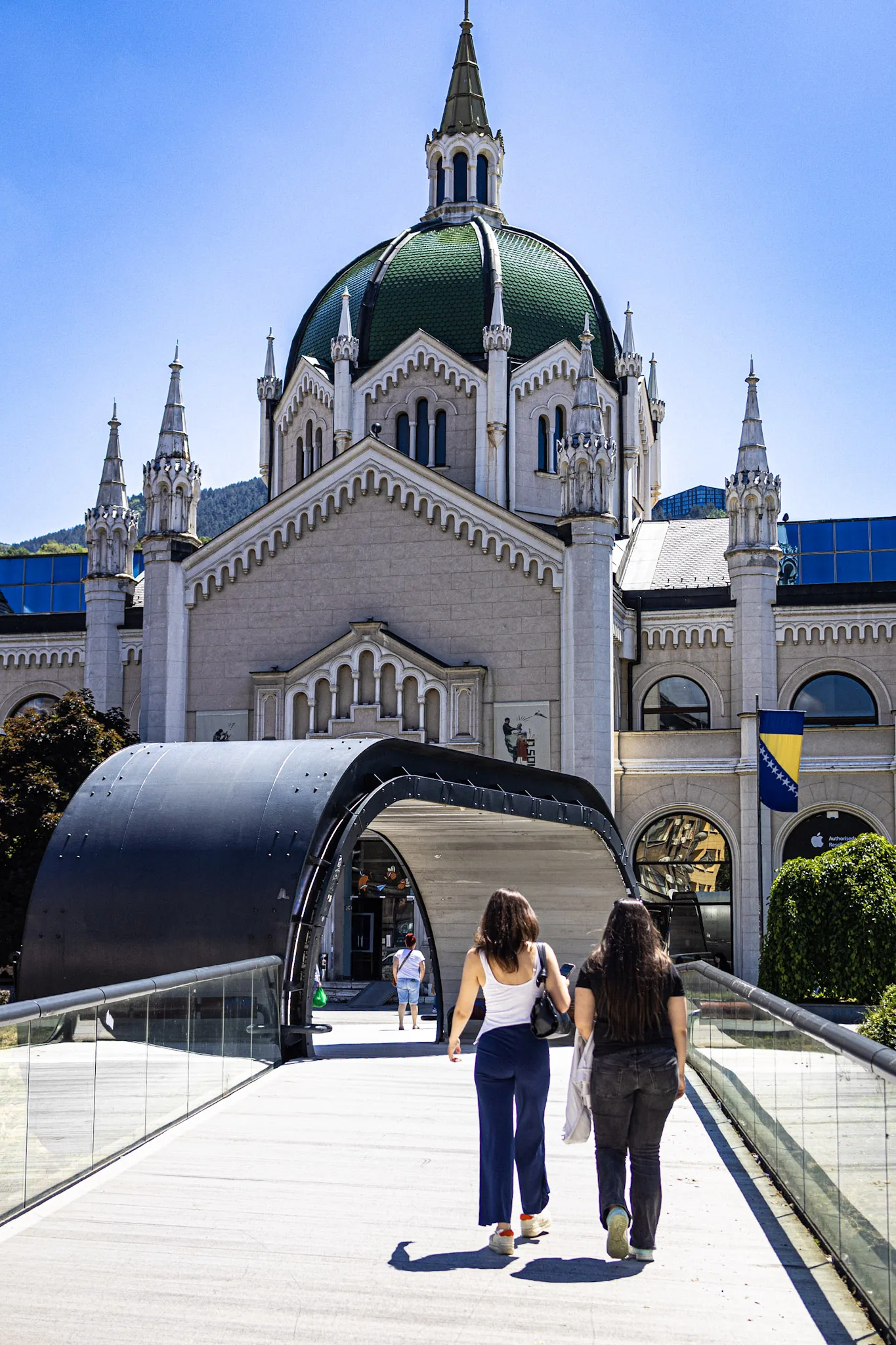
So I suspended my tendency to avoid photographing religious sites to capture some of the mosques of Sarajevo. There are more than 200 of them in this small city, some from the 15th century. Others were rebuilt after the war. All of them are monuments to resistance and courage.
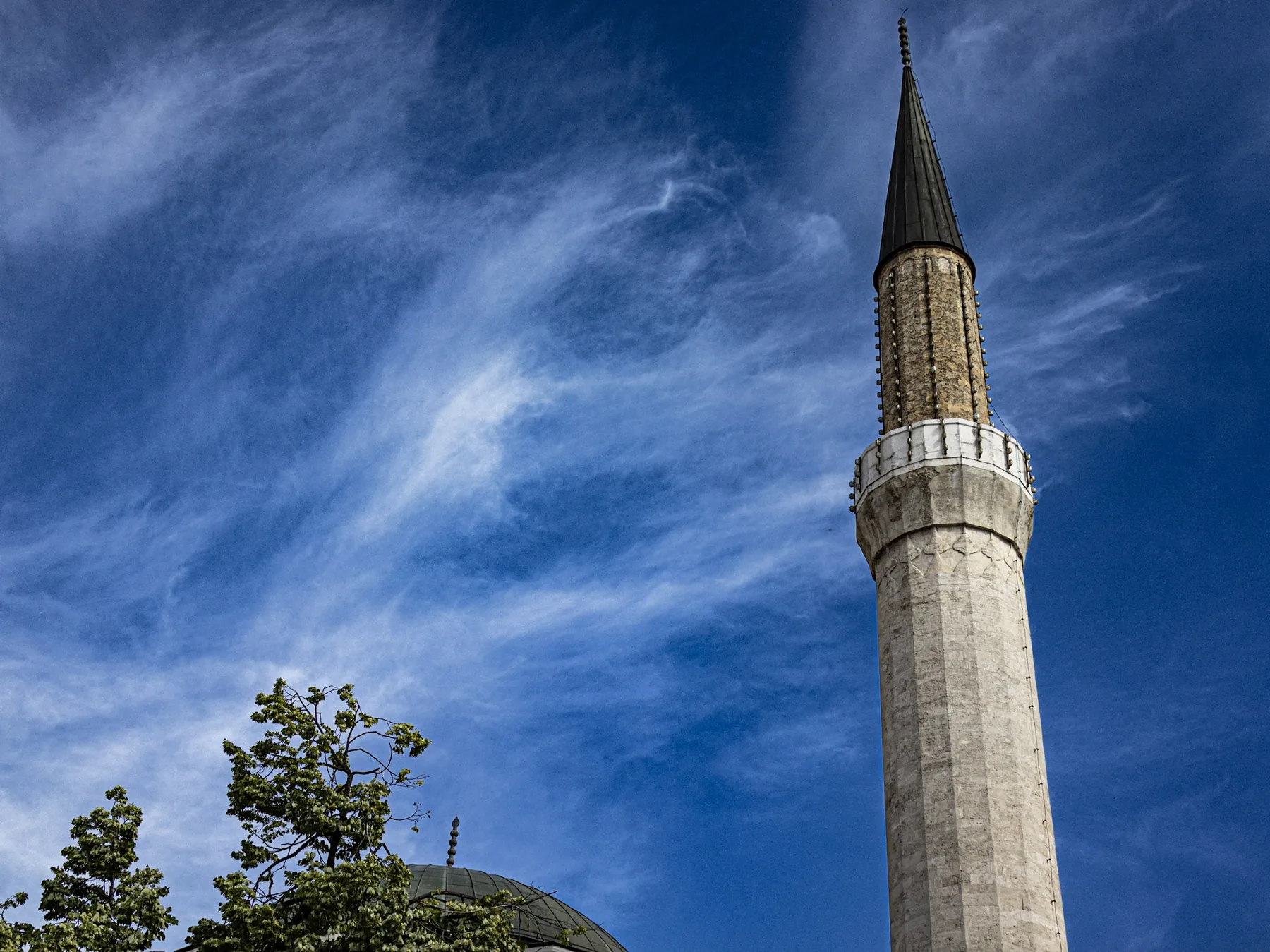
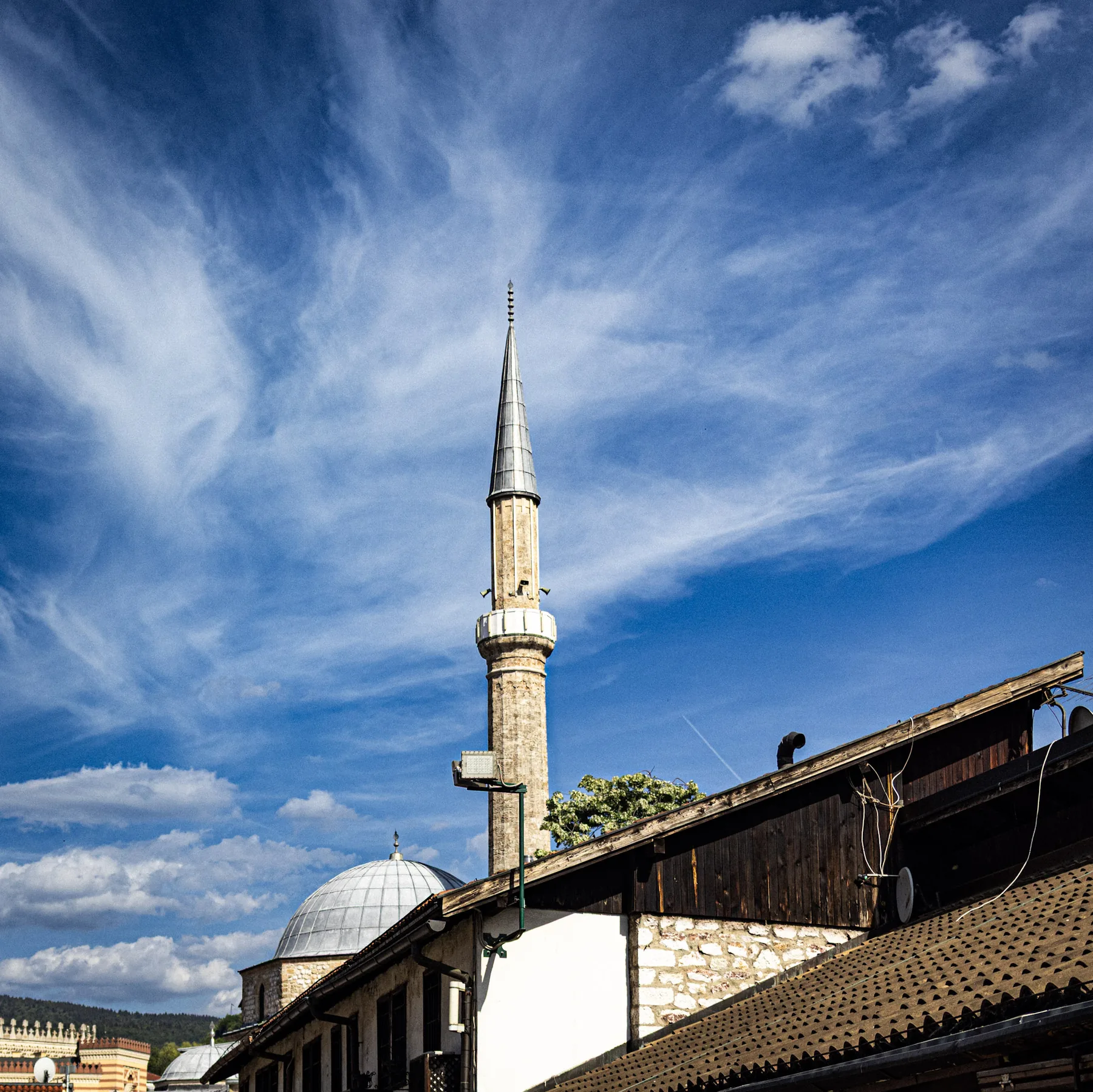
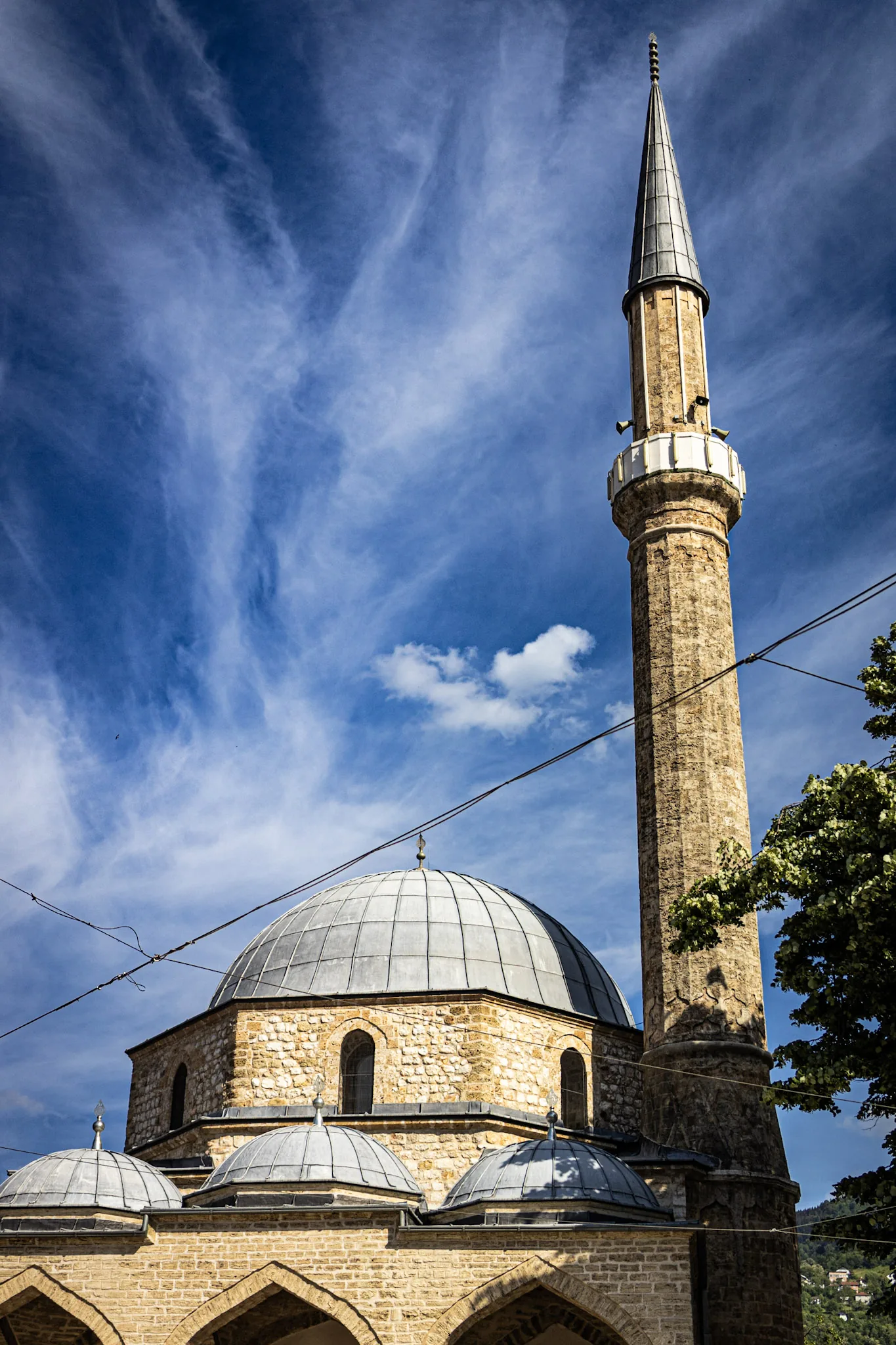
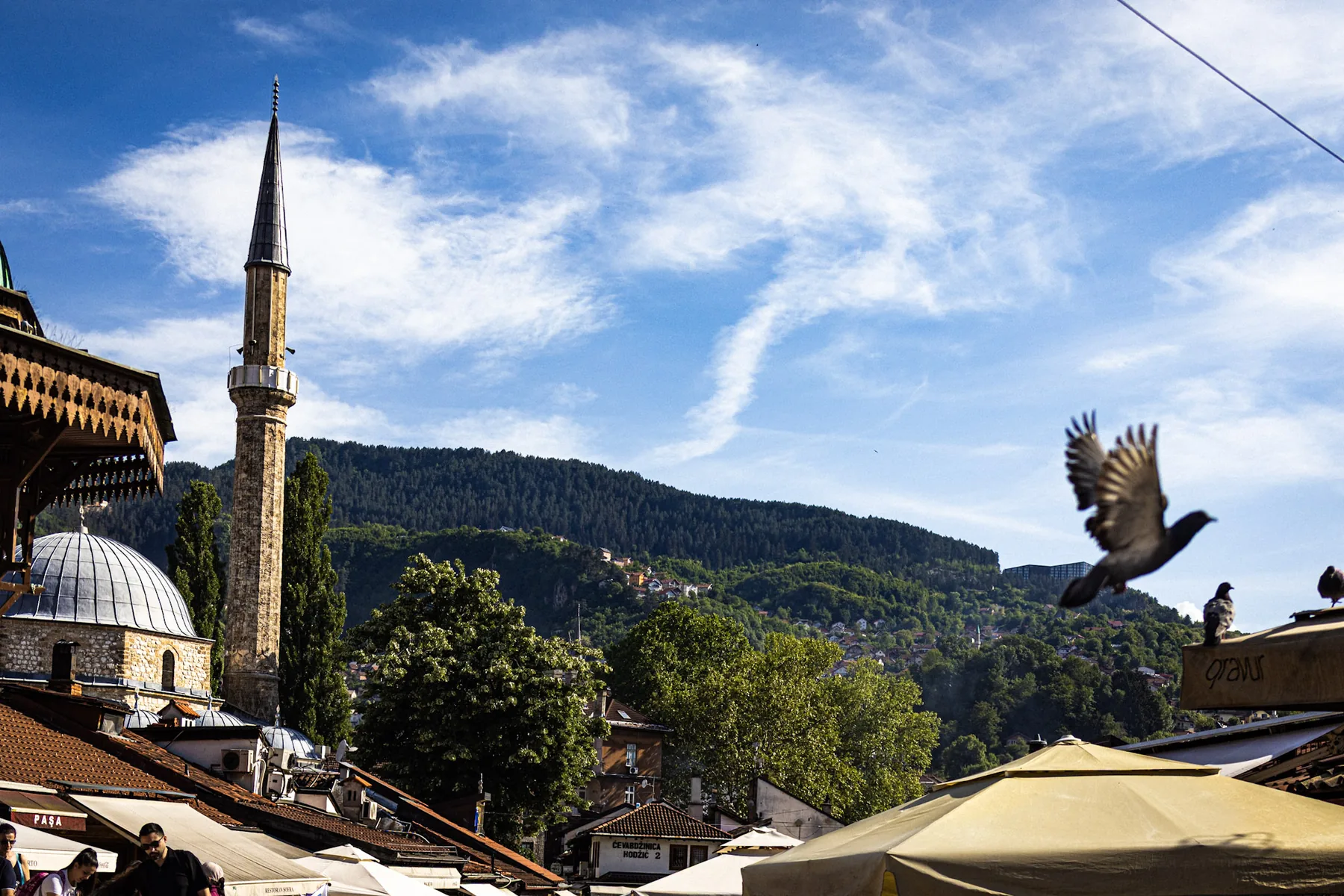
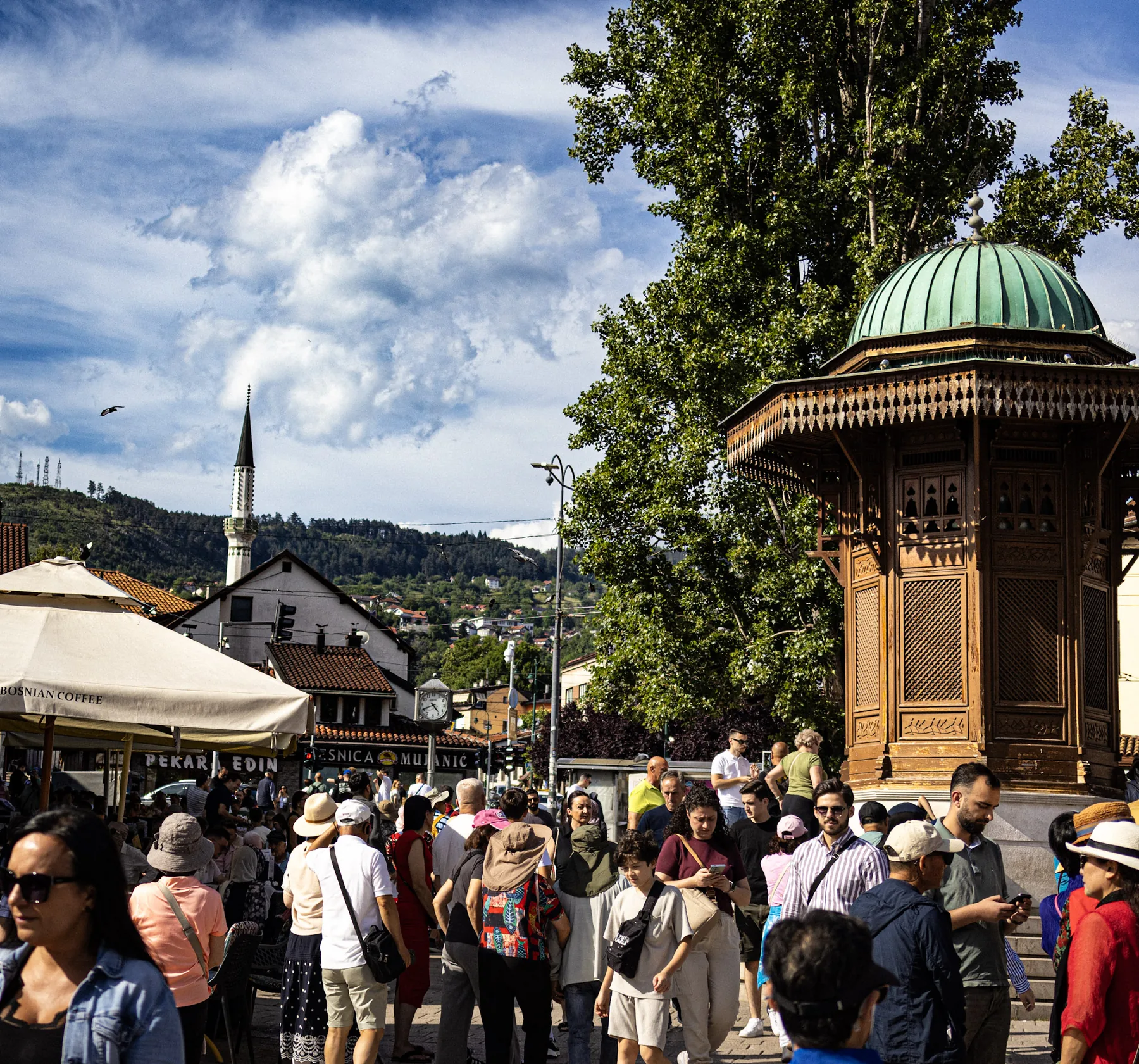
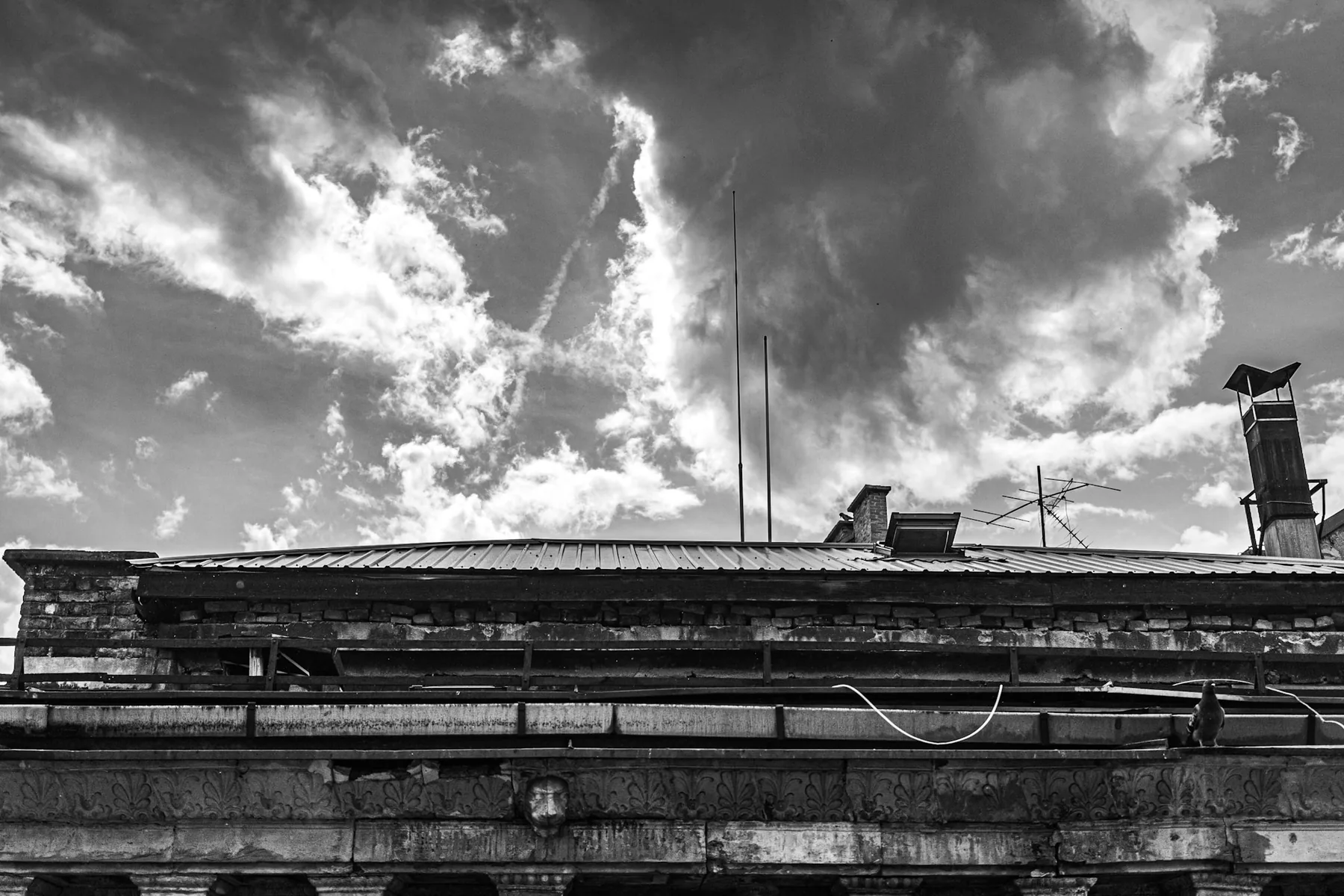
BUT, even with all that beauty everywhere, you are never far from bulletholes and shrapnel scars.
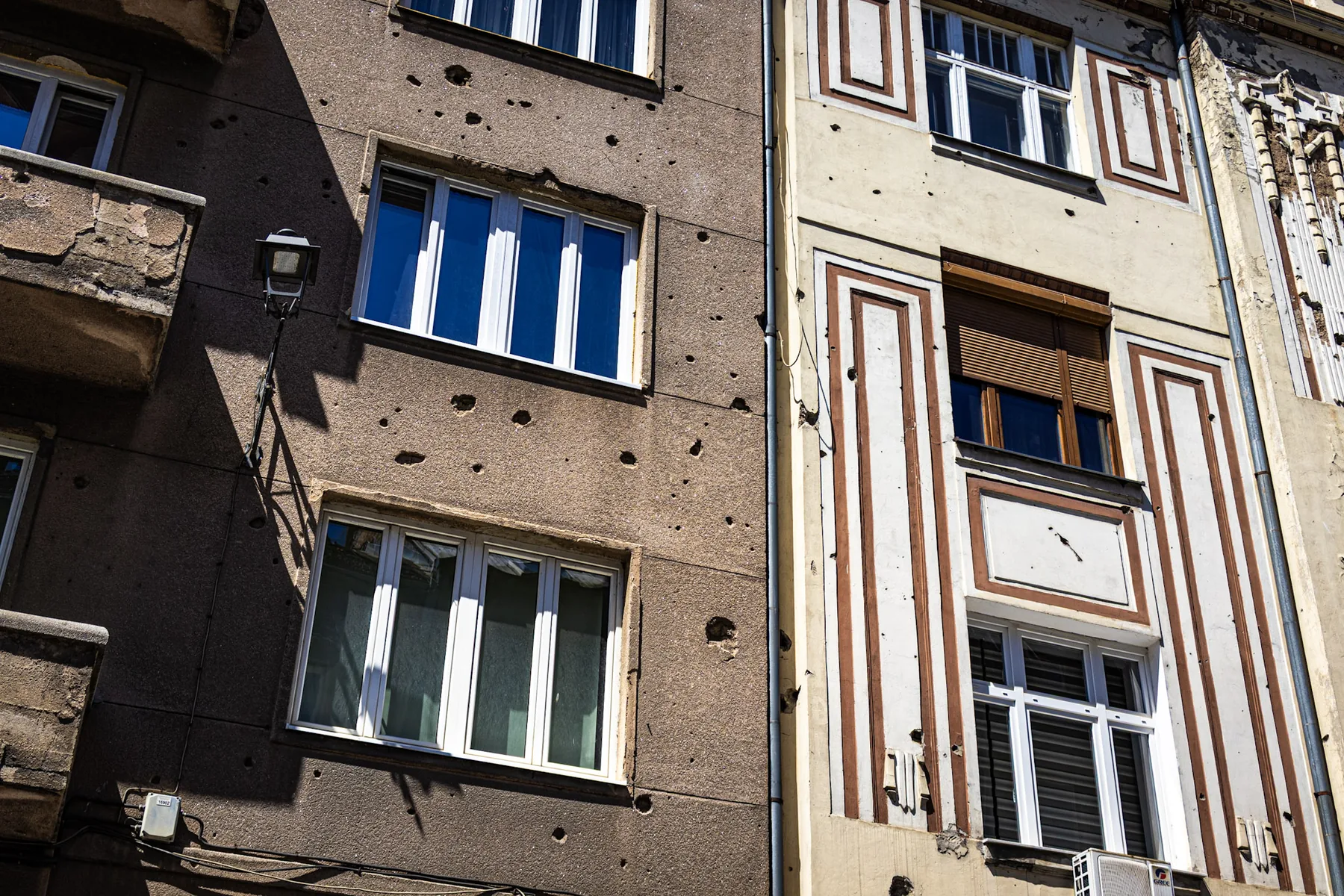
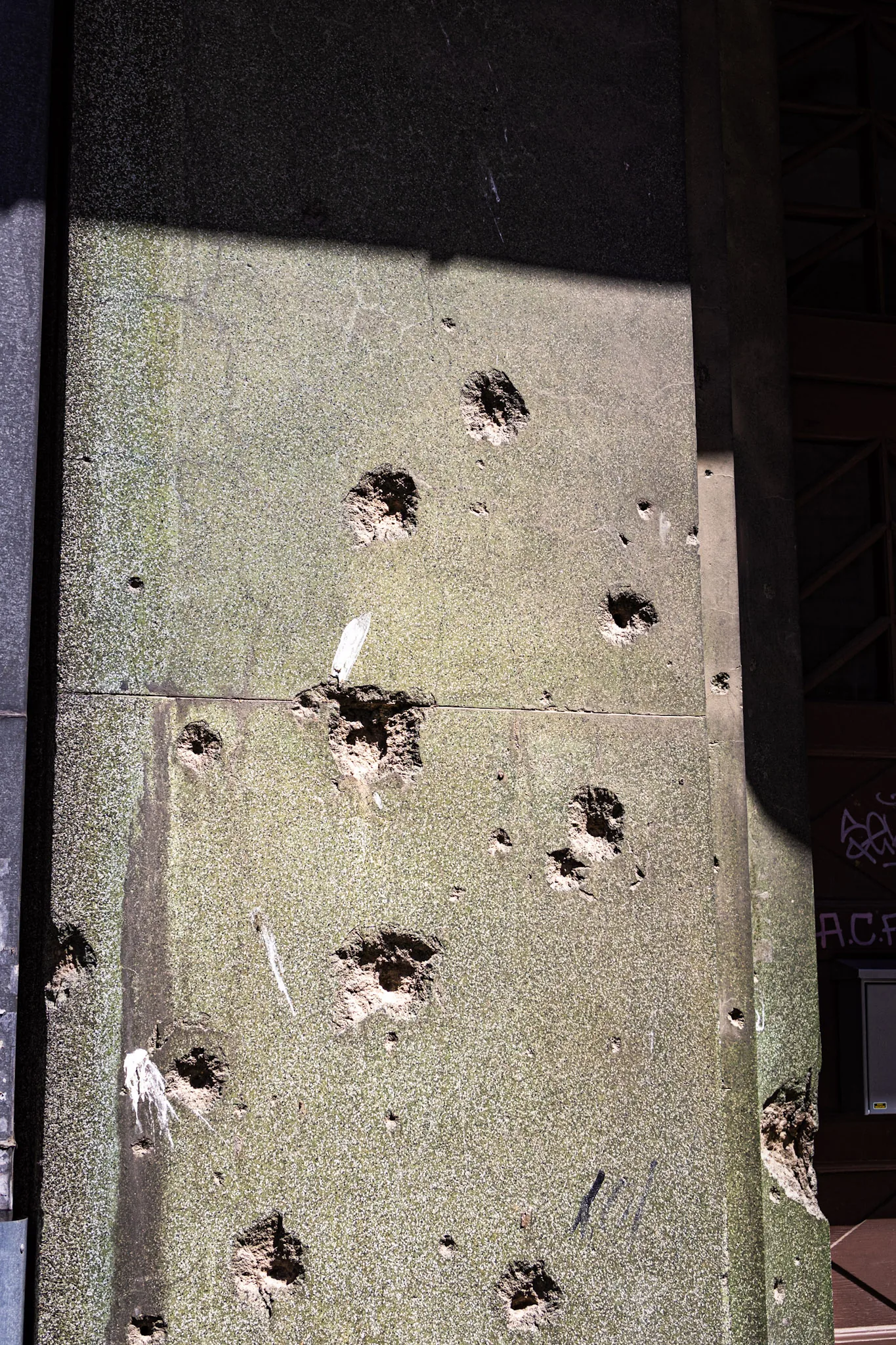
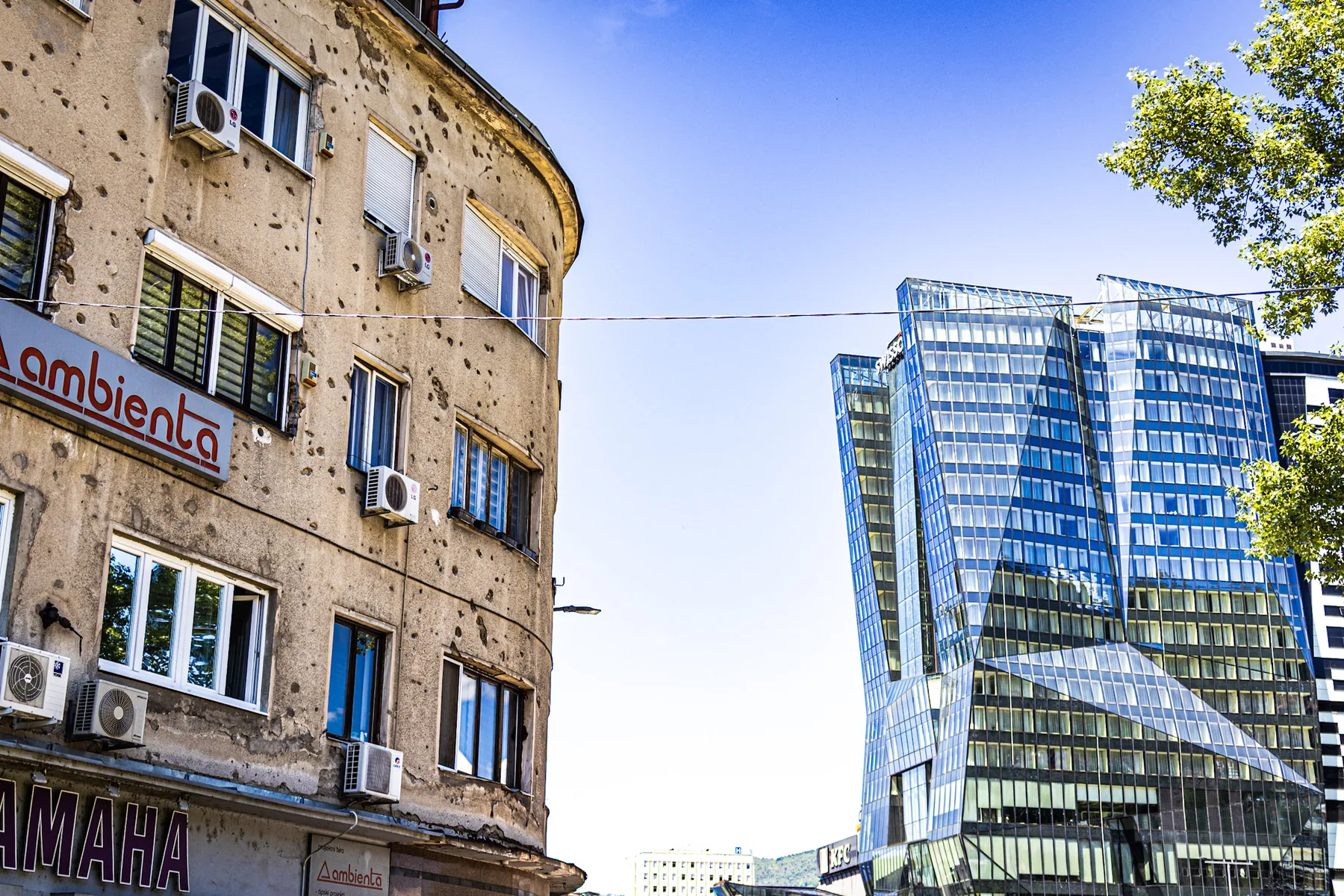
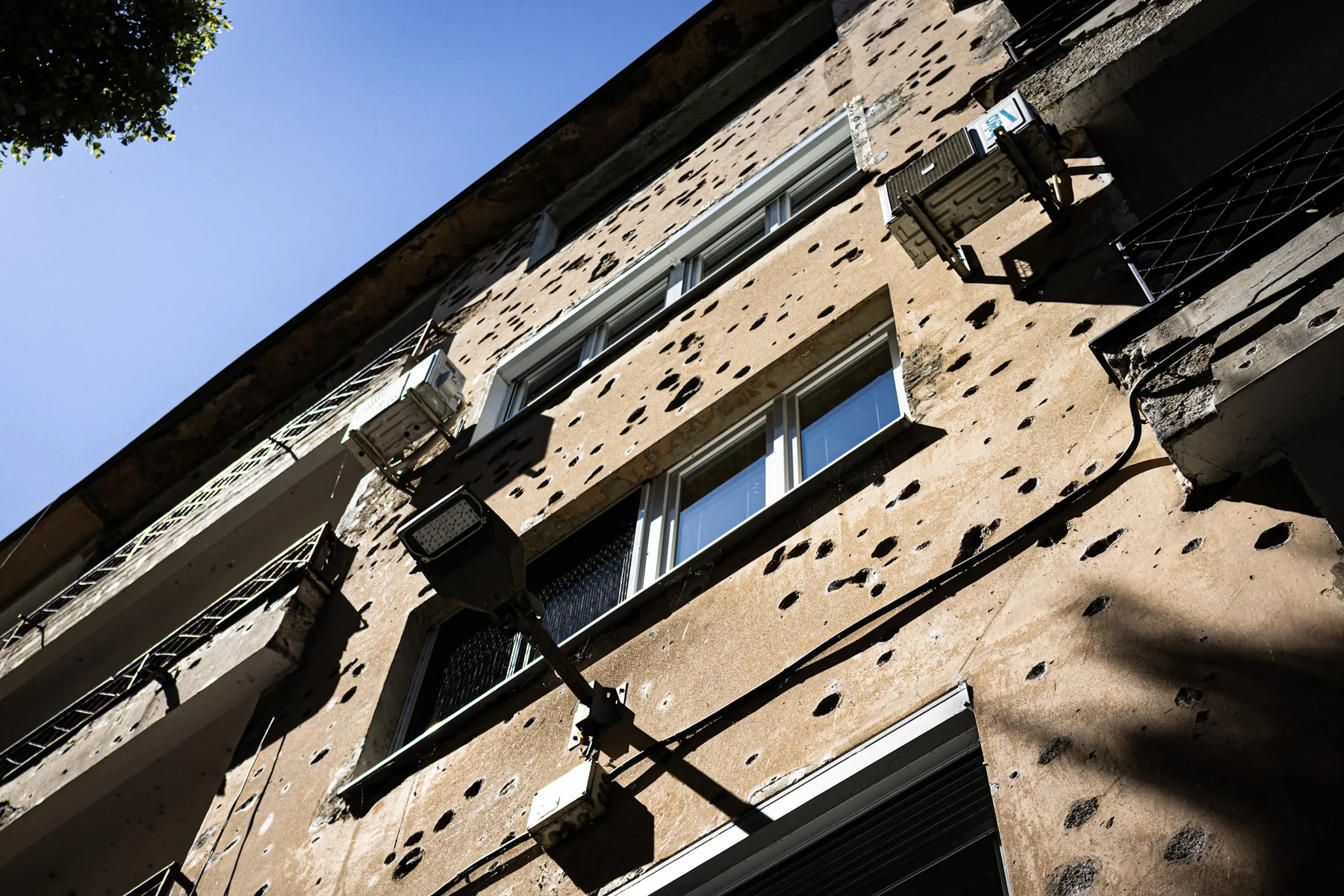
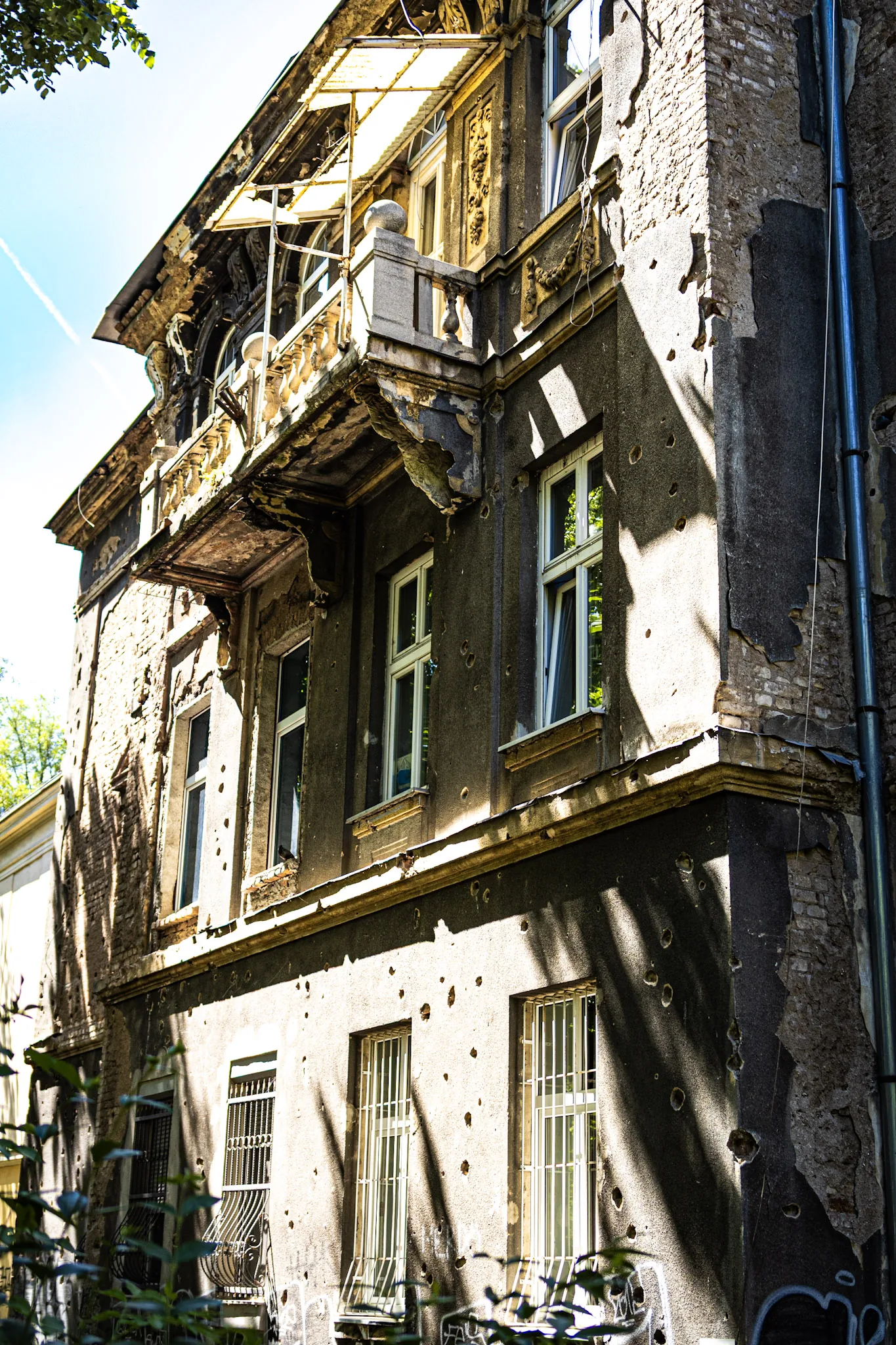
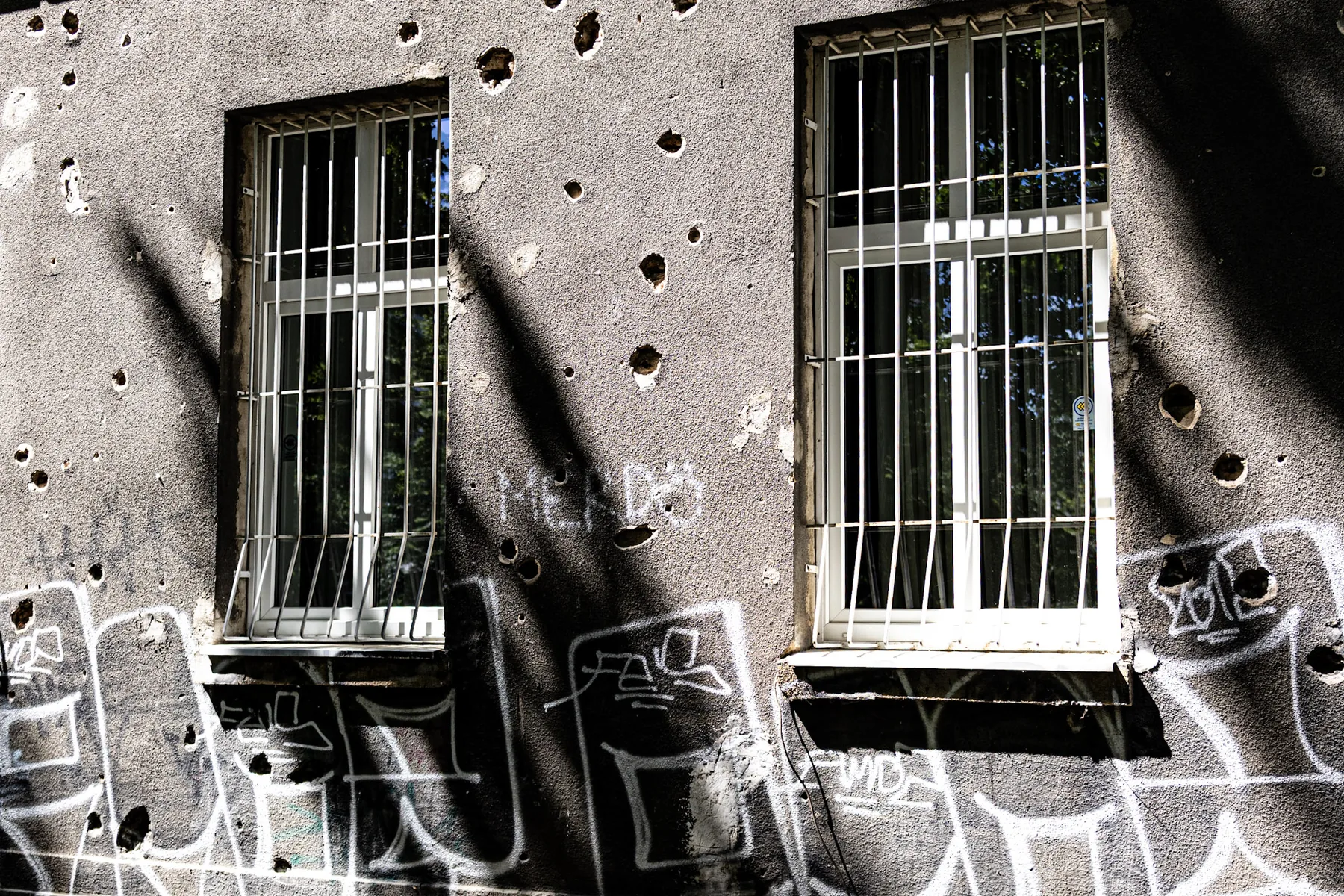
THEN there's this:
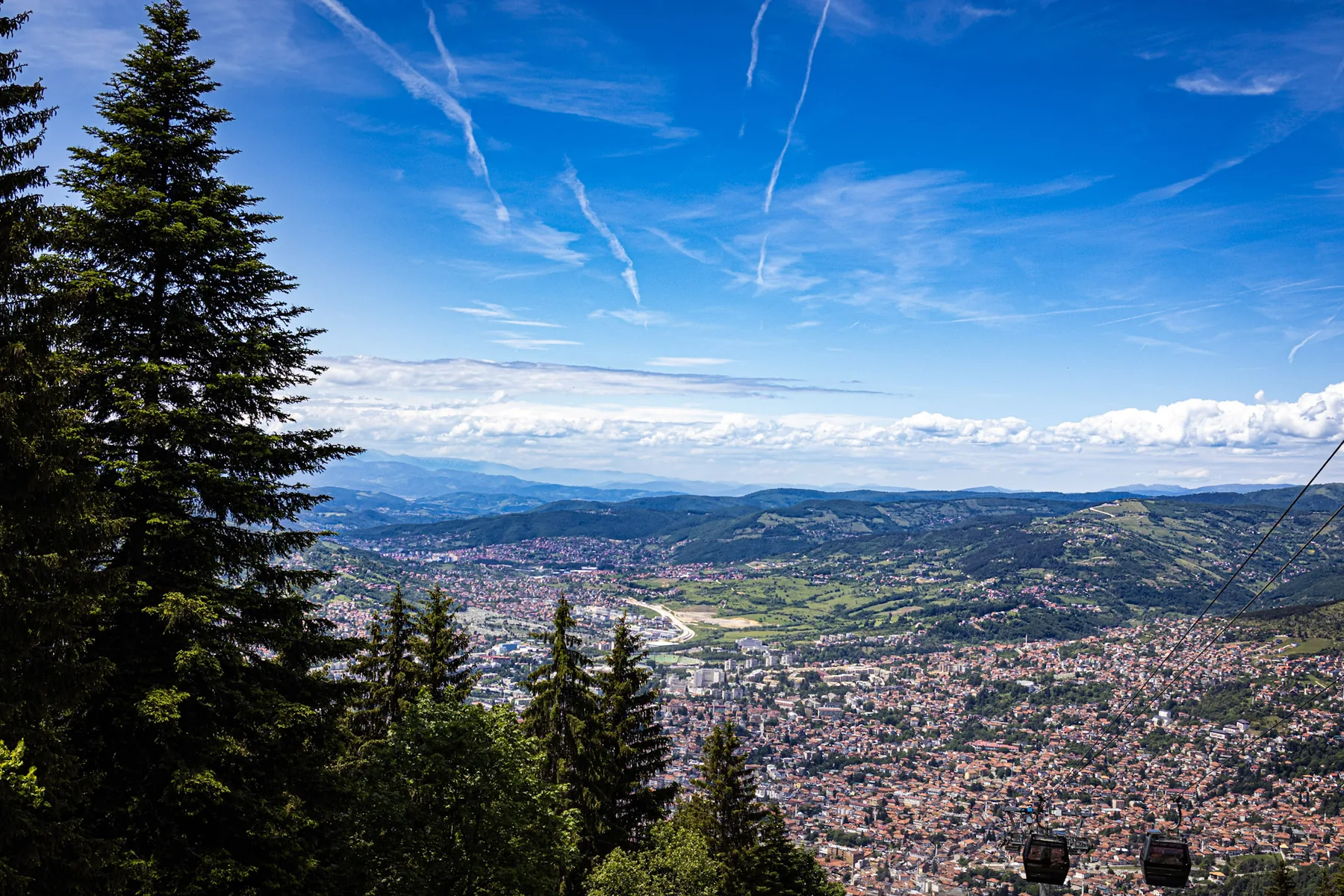
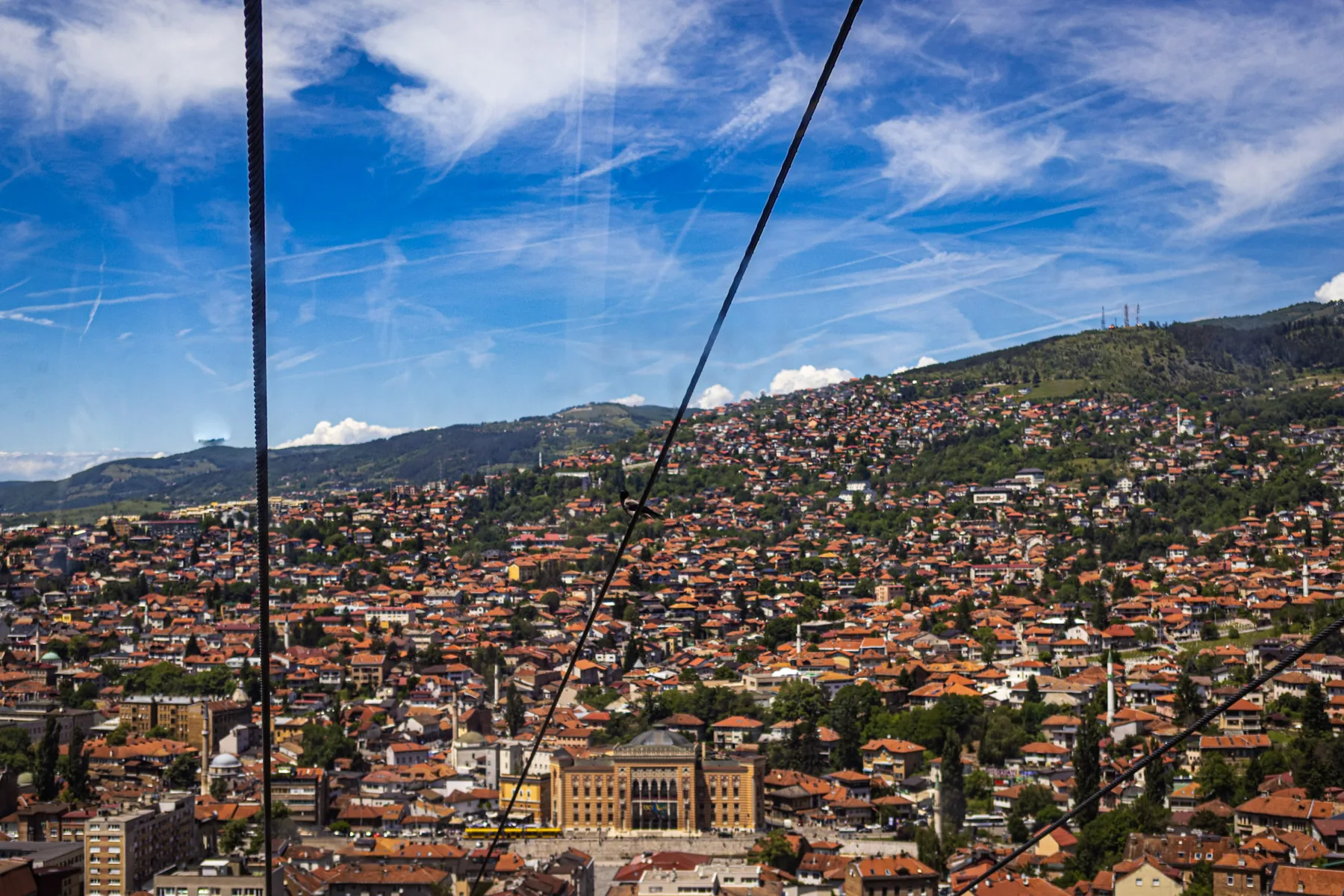
THAT was taken from the cableway going up Mount Trebević on the outskirts of the city. Not much more than six years before the war started, this towering hill was the centre of the action in the 1984 Winter Olympics. Now the bobsled and luge track has the air of a dinosaur skeleton.
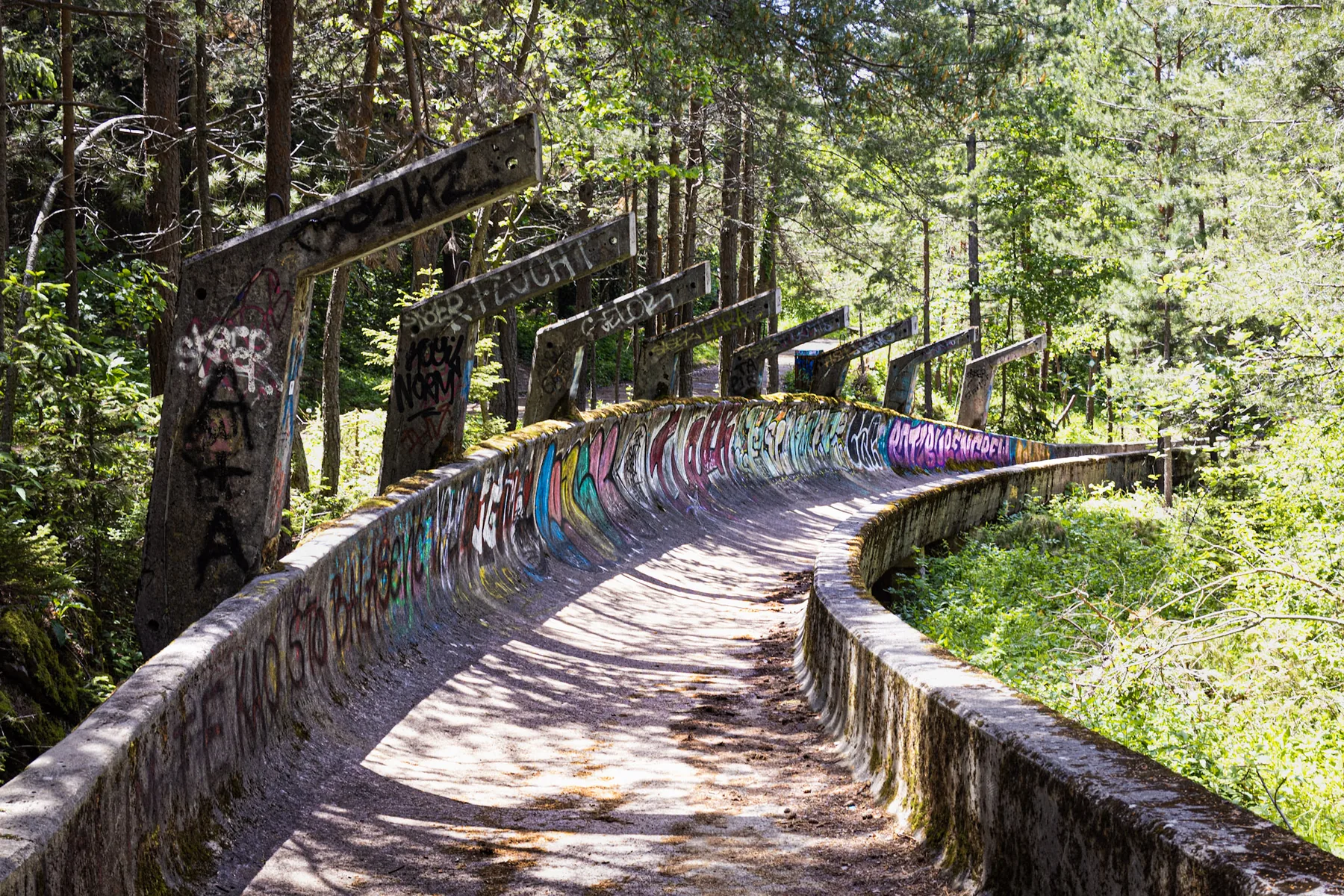
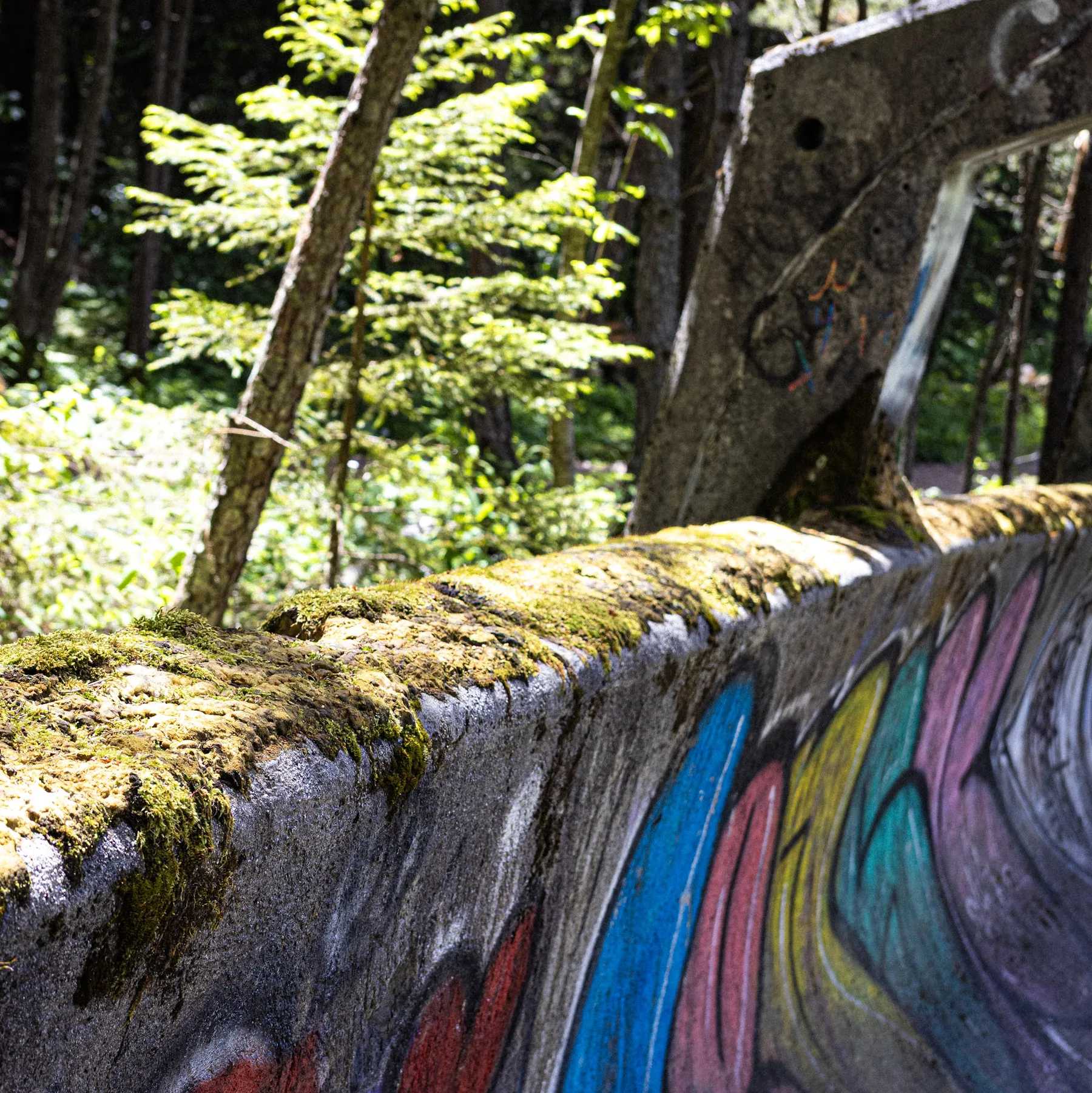
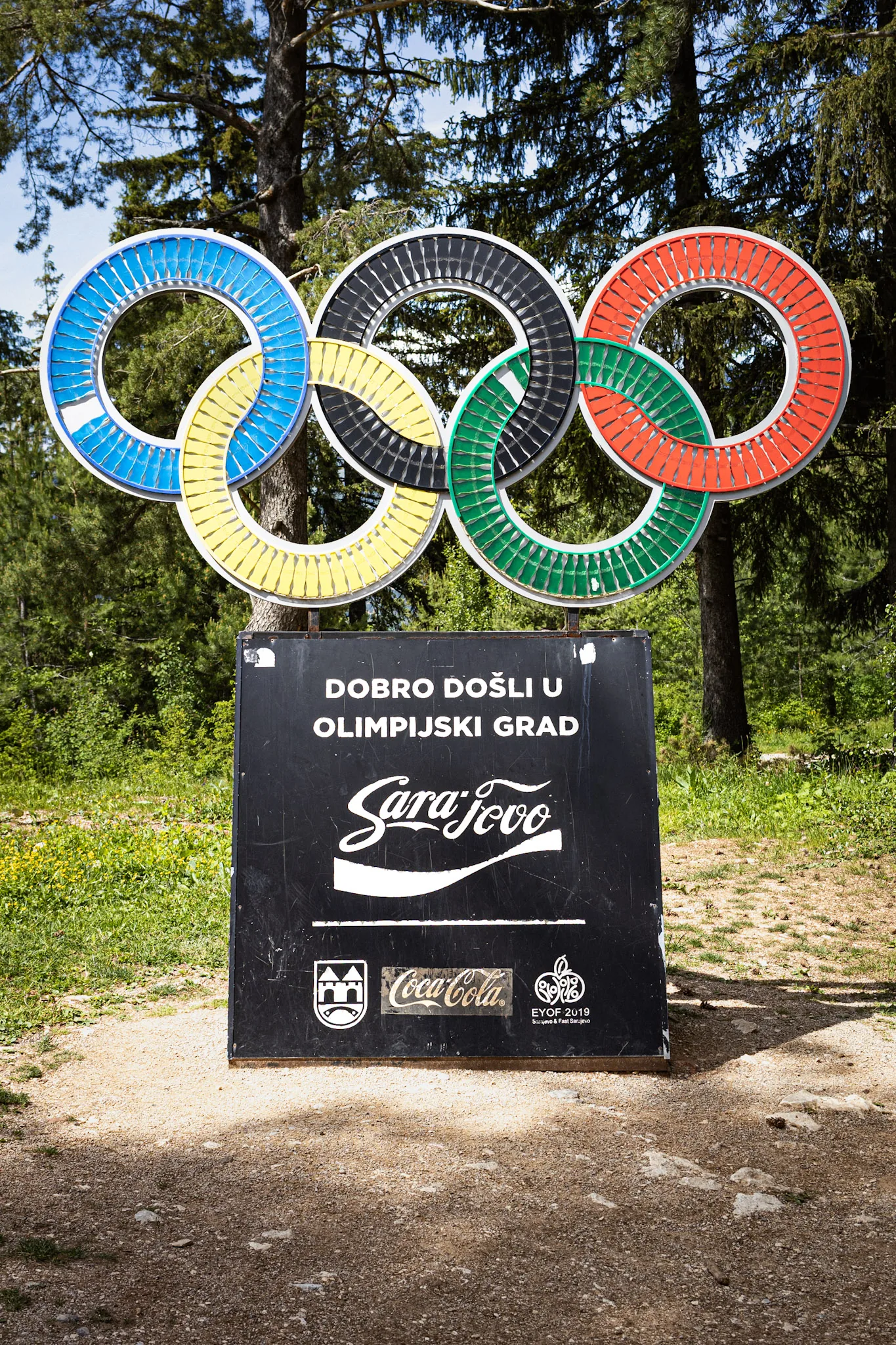
THE views are magnificent. But we have to remember that it was from up here that bullets and mortar shells rained onto the city below.
MUSEUMS dedicated to ensuring the war is not forgotten abound. Most of them are more chaotic than curated, but it matters that they're there.
So are people who can tell you everything you might want to know about the conflict. Plenty of them were born after the last shots were fired, but they are remarkably well informed and more than willing to talk about what happened.
I couldn't help comparing them with the depressingly many young South Africans who don't know why April 27 is a public holiday.
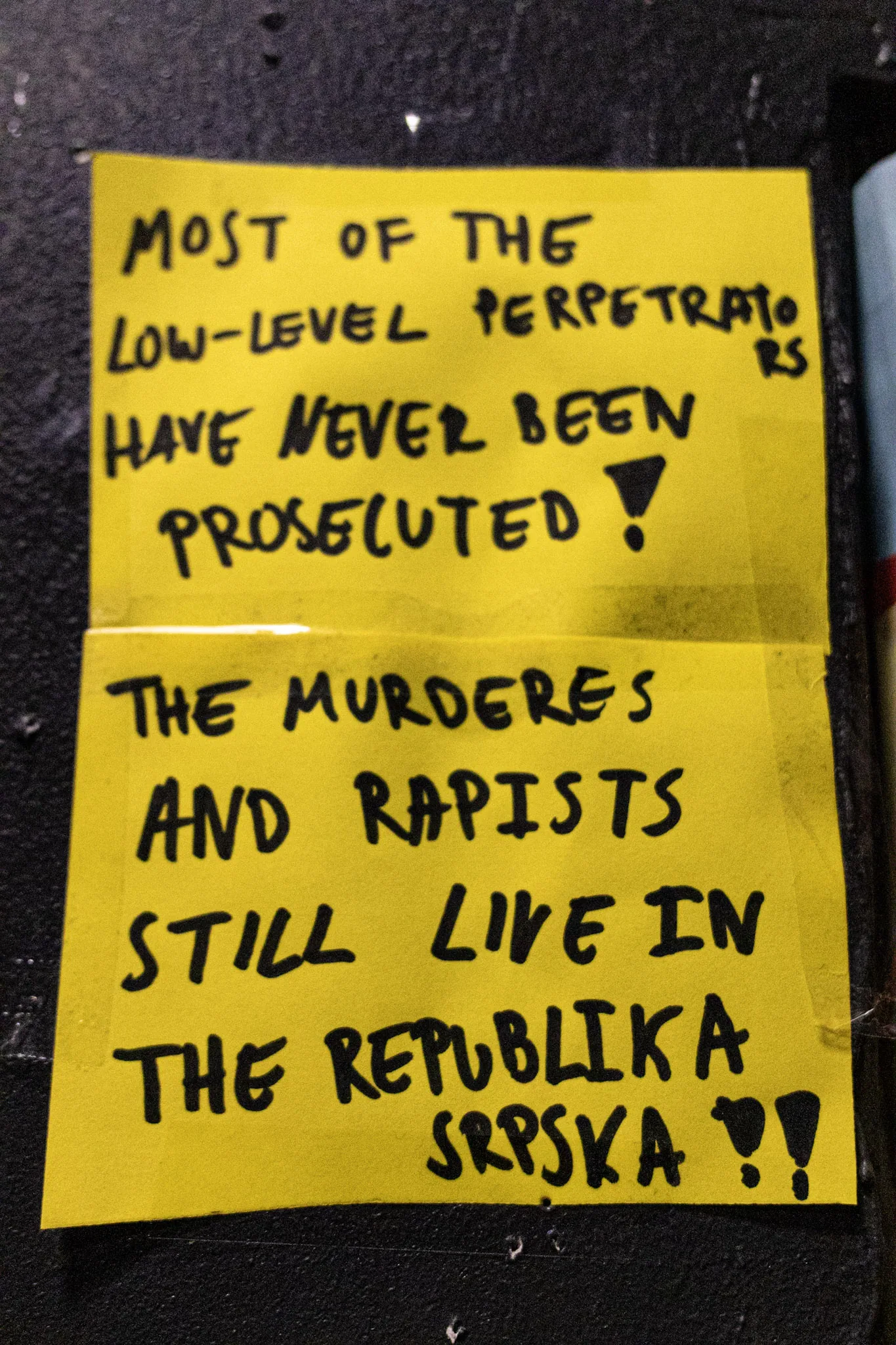
Worse than that, people in Republika Srpska disavow the events of the war - including the Srebrenica genocide that stole the lives of 8,372 Bosniak men and boys from July 11 to 22, 1995. Somewhere between 25,000 to 30,000 women and girls - the exact number has never been established - were raped, often with United Nations peacekeepers looking on.
Republika Srpska should not be confused with Serbia. Srpska is one of the two political entities of Bosnia and Herzegovina. The other is the Federation of Bosnia and Herzegovina. Srpska is 128 kilometres northwest of Sarajevo, which is 76 kilometres southwest of Srebrenica. These people live uncomfortably close to each other. Small wonder the war continues in their hearts and minds.
IF we think the idea of Greater Serbia died with the war, we need to think again. We saw proof of that in Belgrade, the capital of Serbia proper, this week when Ratko Mladić's body was returned home for burial after his death in prison in The Hague last month.
Mladić was arrested in May 2011, almost 16 years after he was indicted on charges of genocide by the International Criminal Tribunal for the former Yugoslavia for his key role in the Srebrenica genocide. He was convicted in November 2017 and sentenced to life in prison.
The world knows Mladić as "The Butcher of Bosnia". But not in Serbia, where he is idolised. So much so that his body was transported to Serbia on a government airplane and his casket draped in the national flag. it was removed from the plane by soldiers in uniform.
Thousands of Serbs were outside the church where the coffin, which was guarded by soldiers, was adorned with Mladić's military headgear, a sword and medals.
A massive banner across the street read, “Welcome, General, thanks be to your mother for bearing a hero.”
What hope does the truth have of being accepted in places like this? Truth like this:
“There was a girl who must have been about nine years old. Some Chetniks [a Serbian nationalist guerrilla movement] recommended to her brother that he rape her. He did not do it. They murdered that young boy.” - the testimony of Zumra Šehomerović
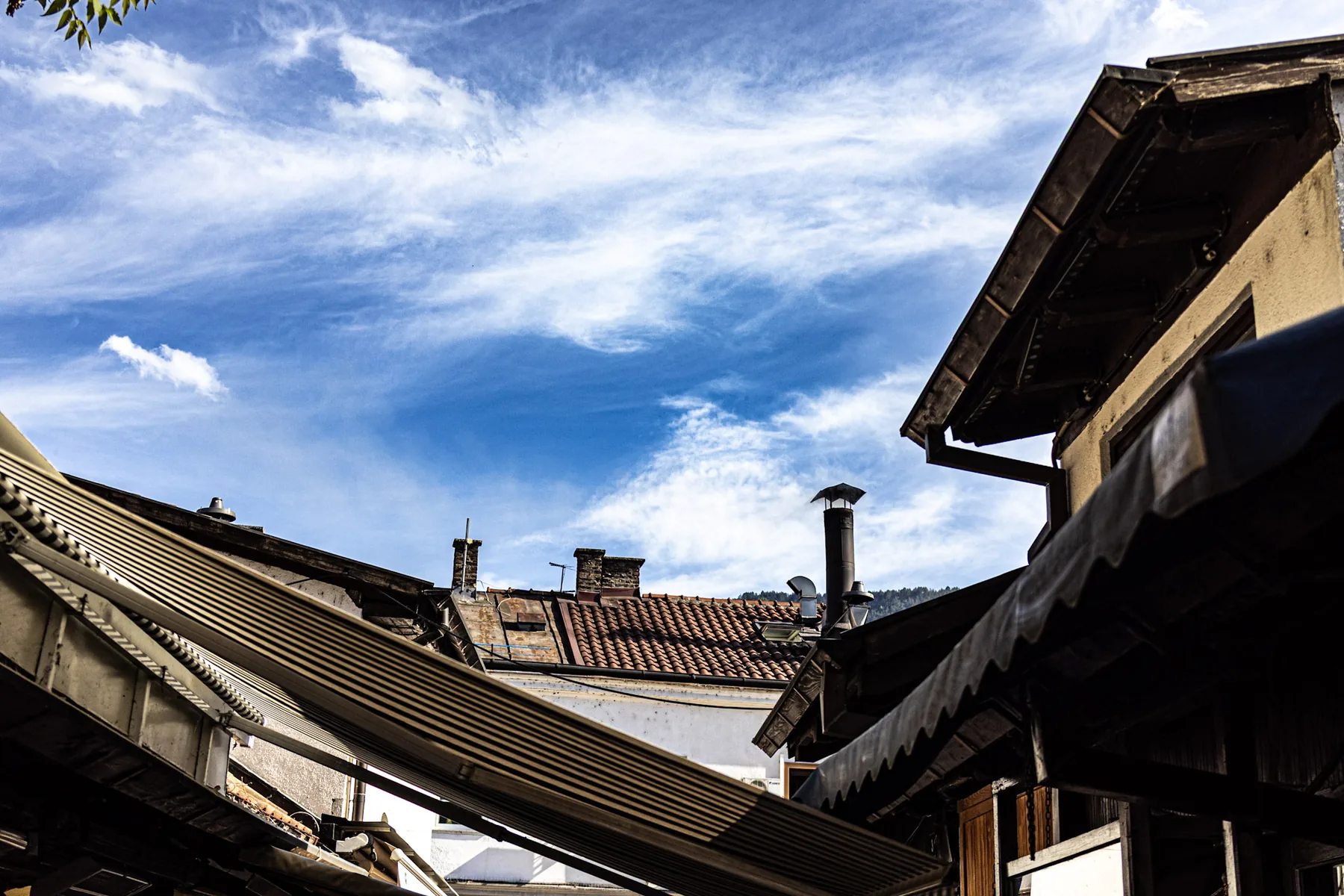
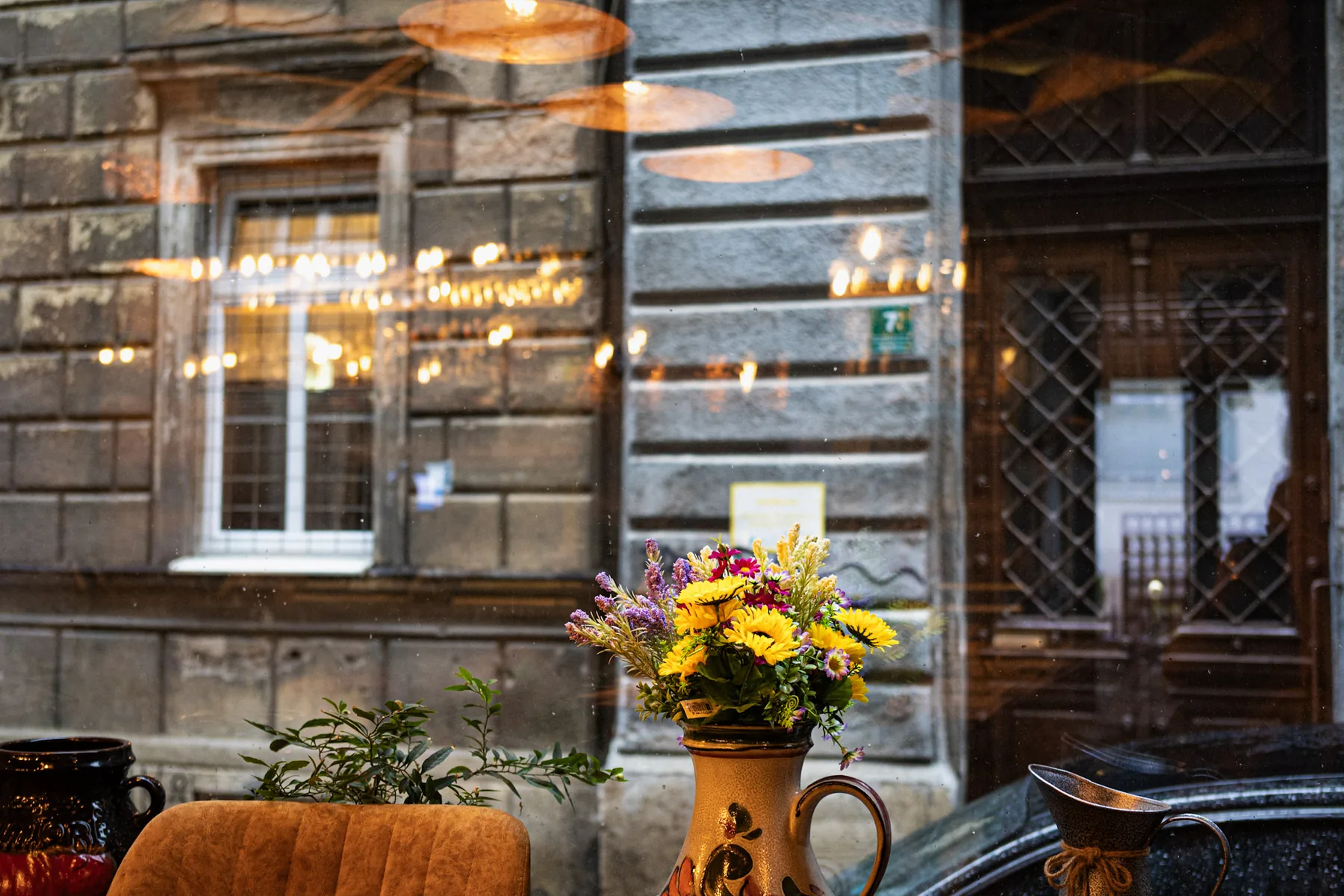
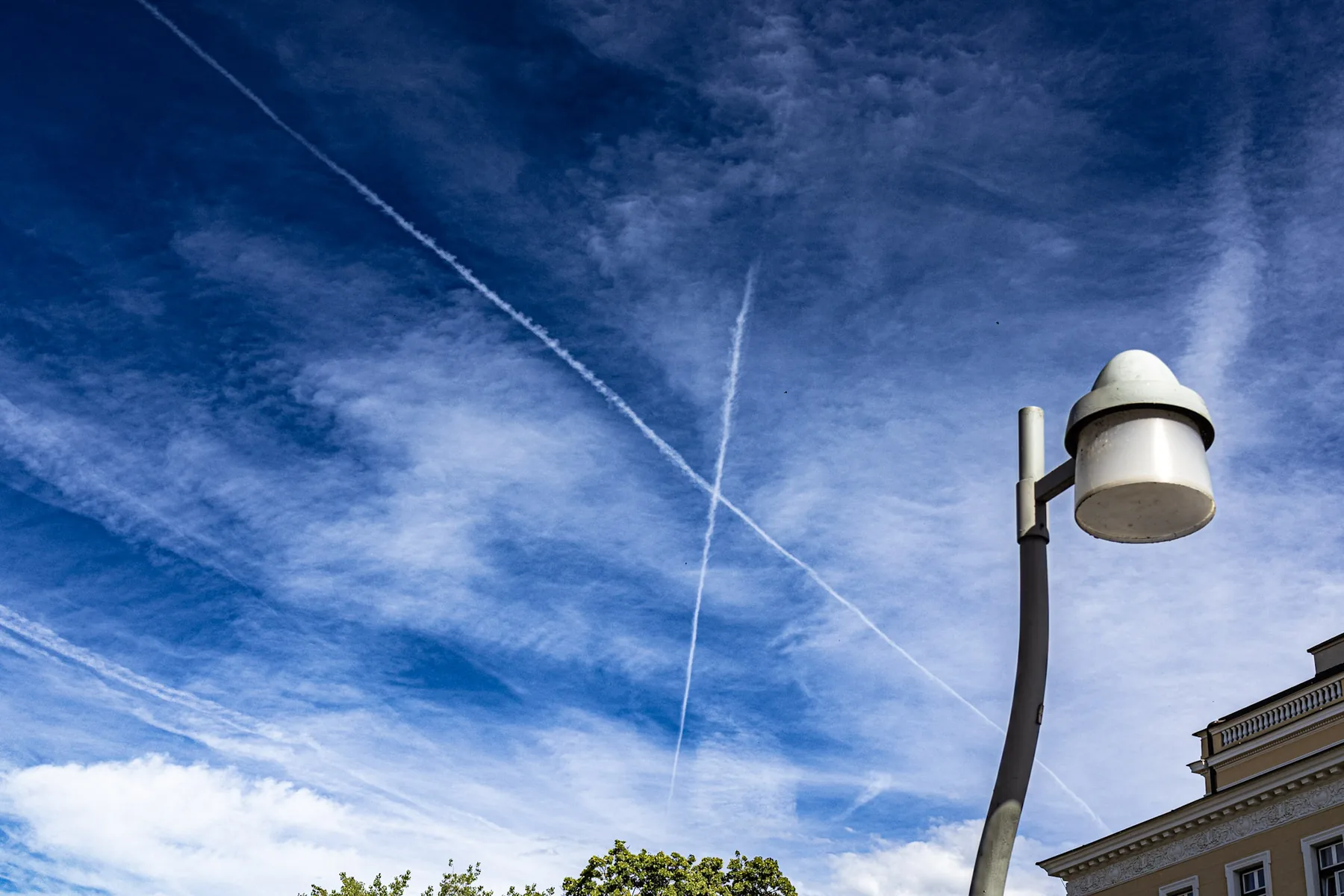
AND yet, in the midst of all this evil and ugliness, there is time and space for life, beauty and the dignity of ordinariness.
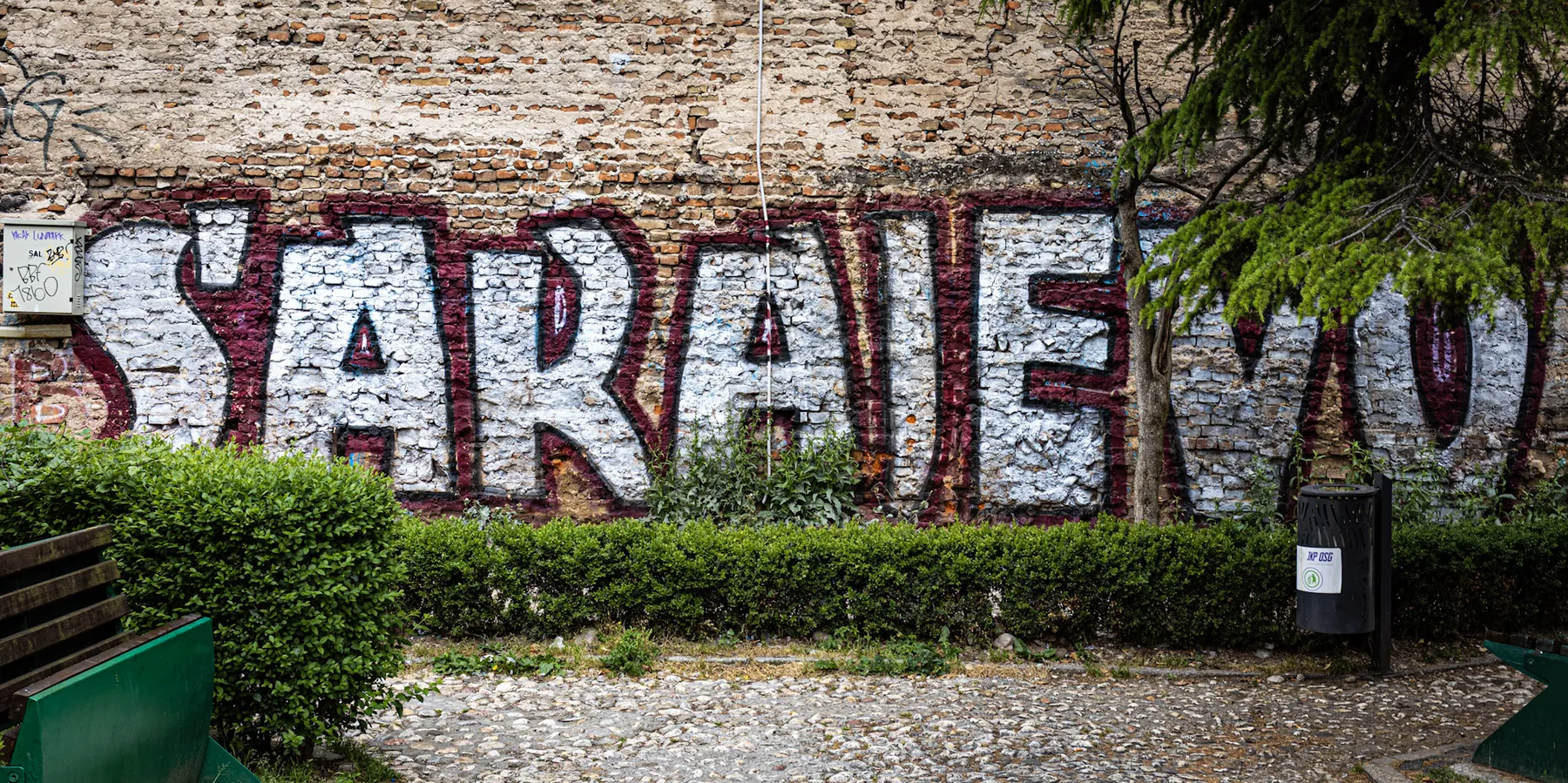
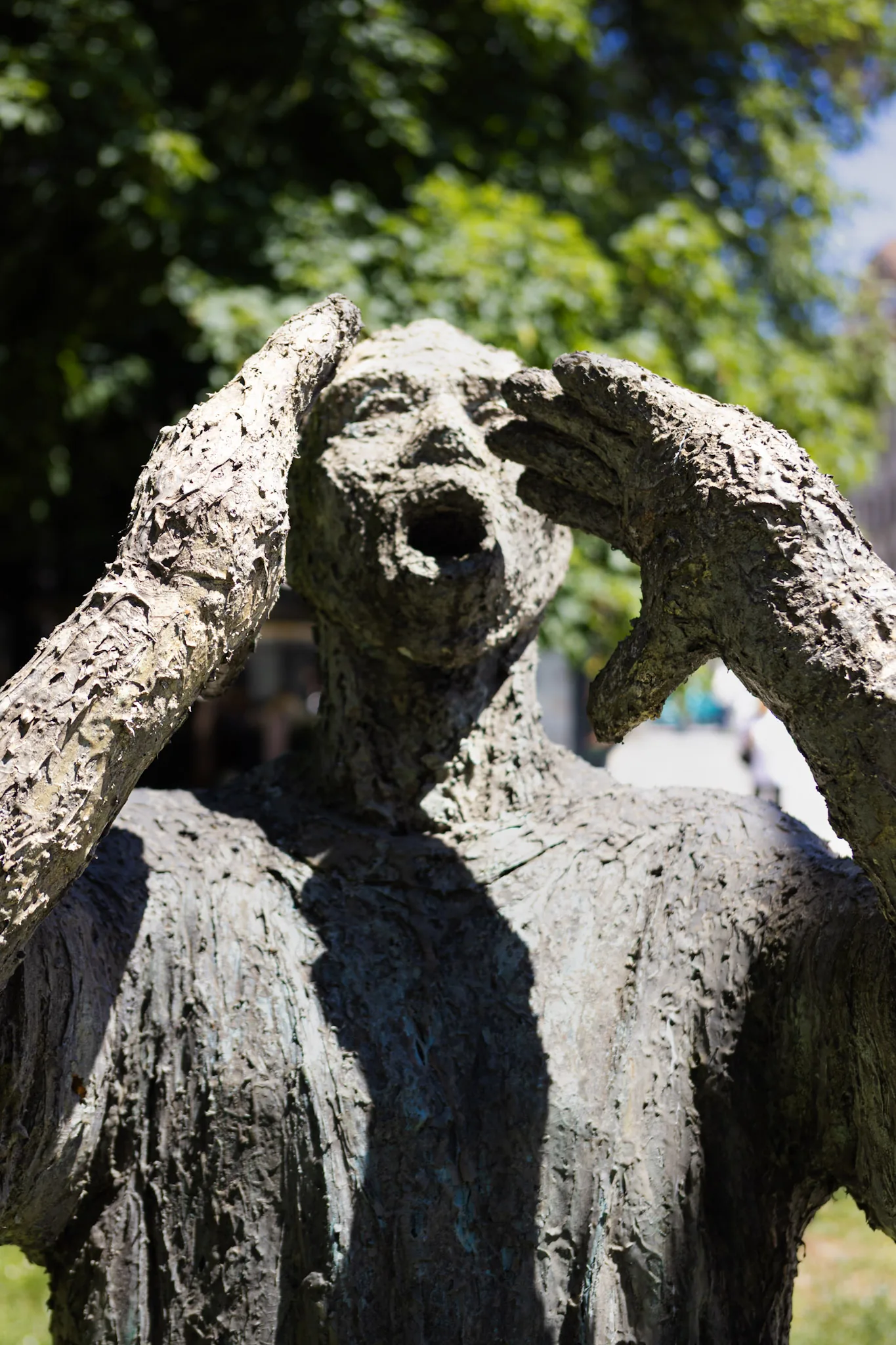
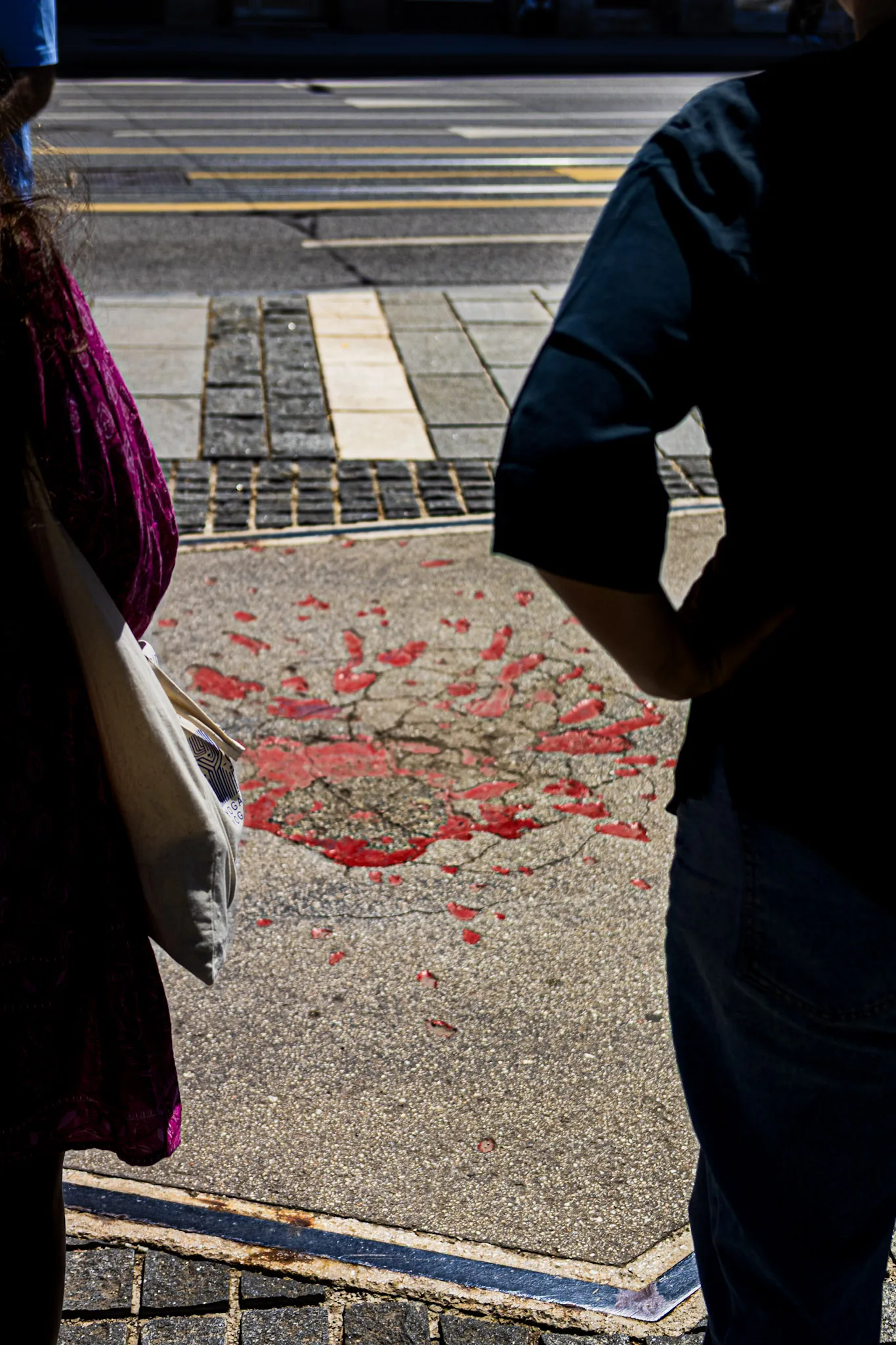
BUT reminders of violence are rich on Sarajevo's streets. To the left below is a statue of Ramo Osmanović, who was forced at gunpoint, to call for his 18-year-old son, Nermin, to emerge from the forest where he was hiding from the Serbs during the Srebrenica genocide. Nermin did, and he and his father were summarily executed. To the right is one of more than 200 "roses" - red resin poured into concrete scars where mortars killed at least three people.
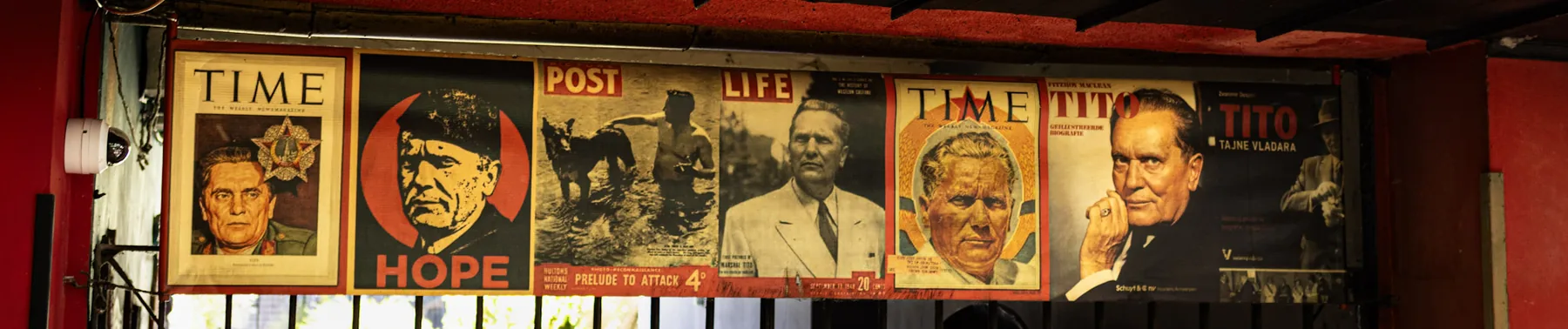
MEMORIES of other wars and their belligerentsare available. The photograph below was taken at a pub dedicated to the memory of general Josep Broz Tito, the leader of the Yugoslavia's League of Communists and the Partisans during World War II who served as prime minister and then president from November 1945 until his death in May 1980.
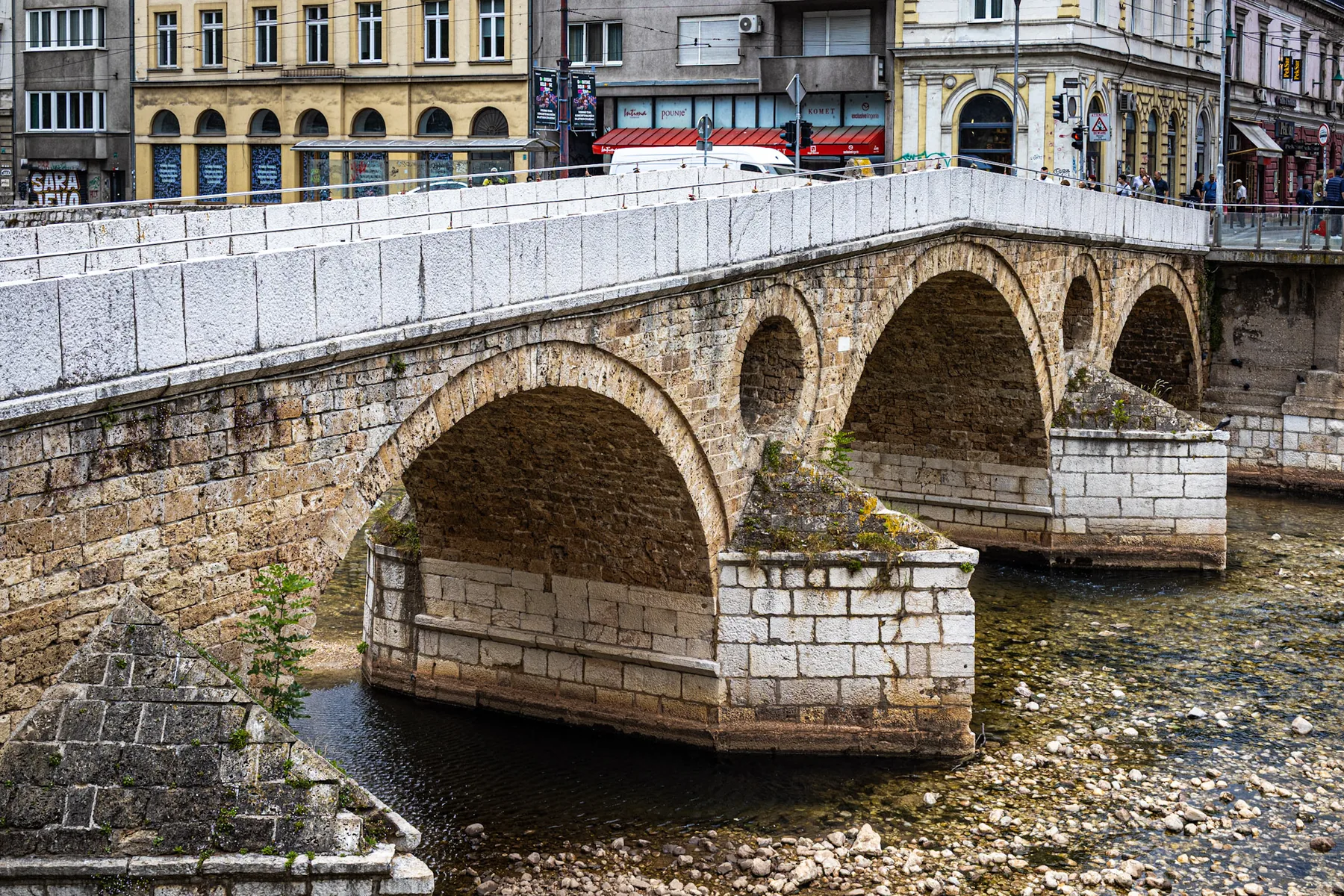
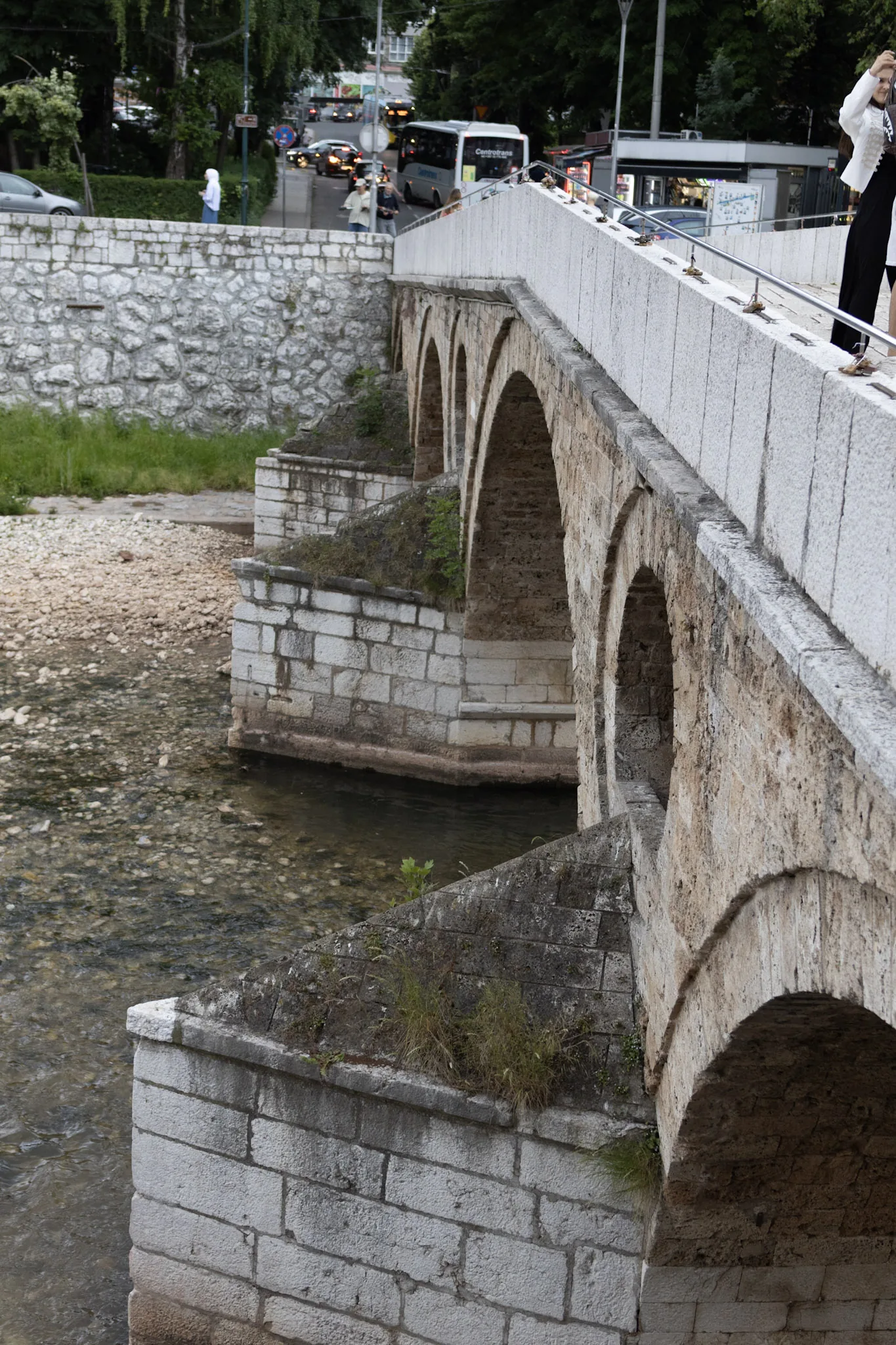
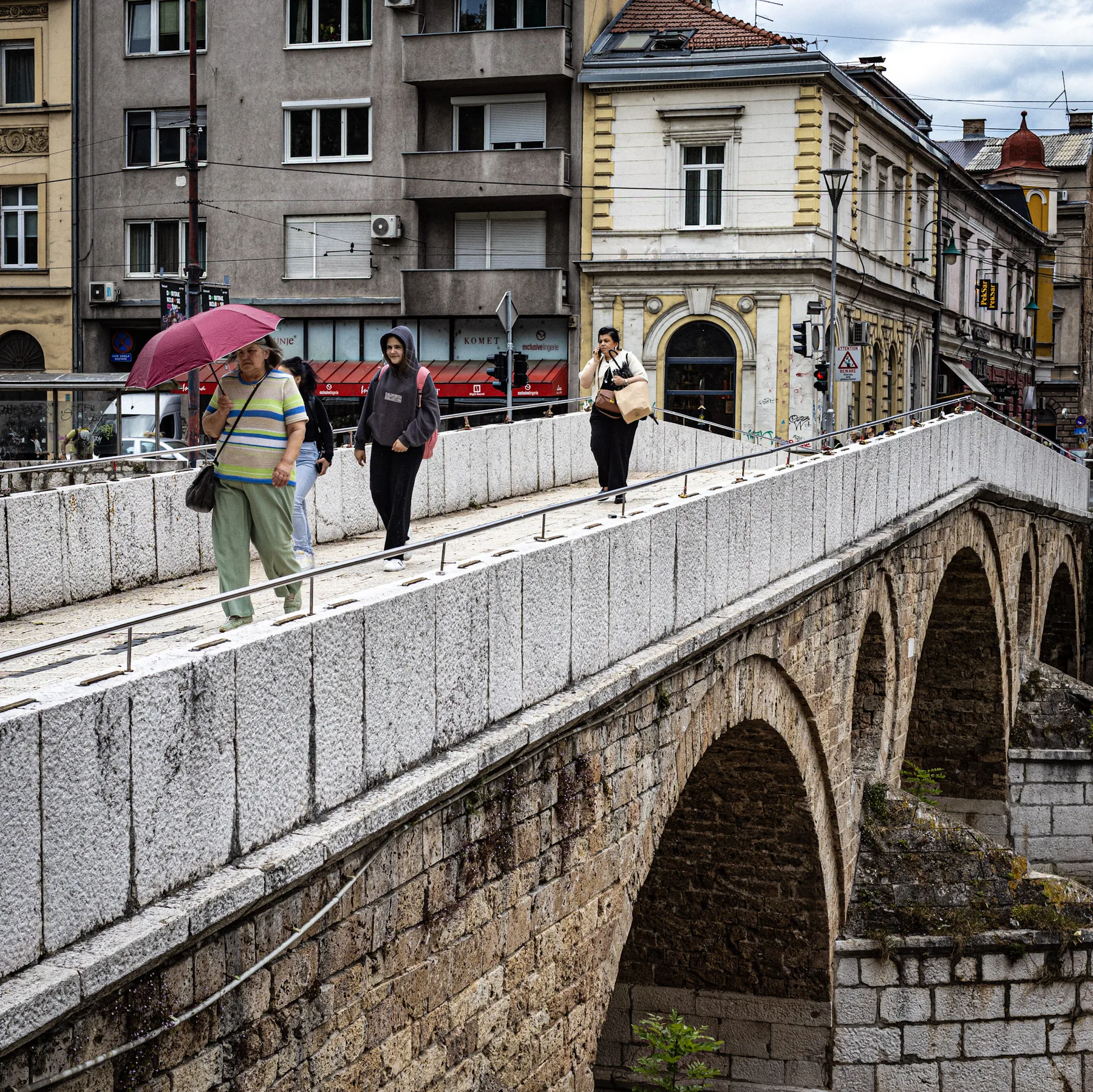
AND here's the modest Latin Bridge bridge over the Miljacka River where Archduke Franz Ferdinand, the presumptive heir to the throne of the Austro-Hungarian Empire, and his wife Sophie, the Duchess of Hohenberg, were assassinated by Gavrilo Princip, a Serbian nationalist, on June 28, 1914 - a major step towards triggering World War I.
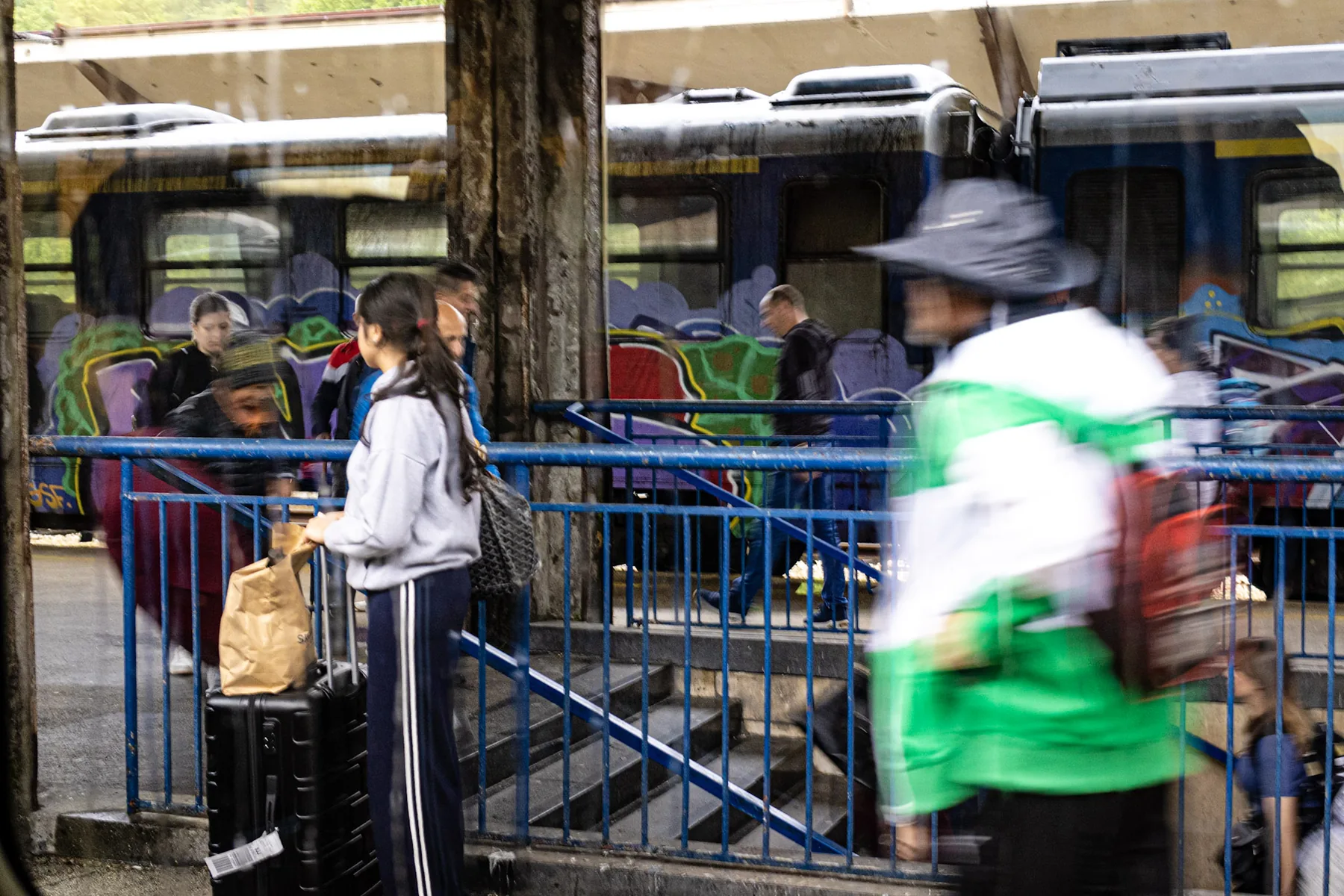
EARLY one grey, damp morning we were at the station to take the train to Mostar in Herzegovina.
WHILE one us slept the other got busy with the camera.
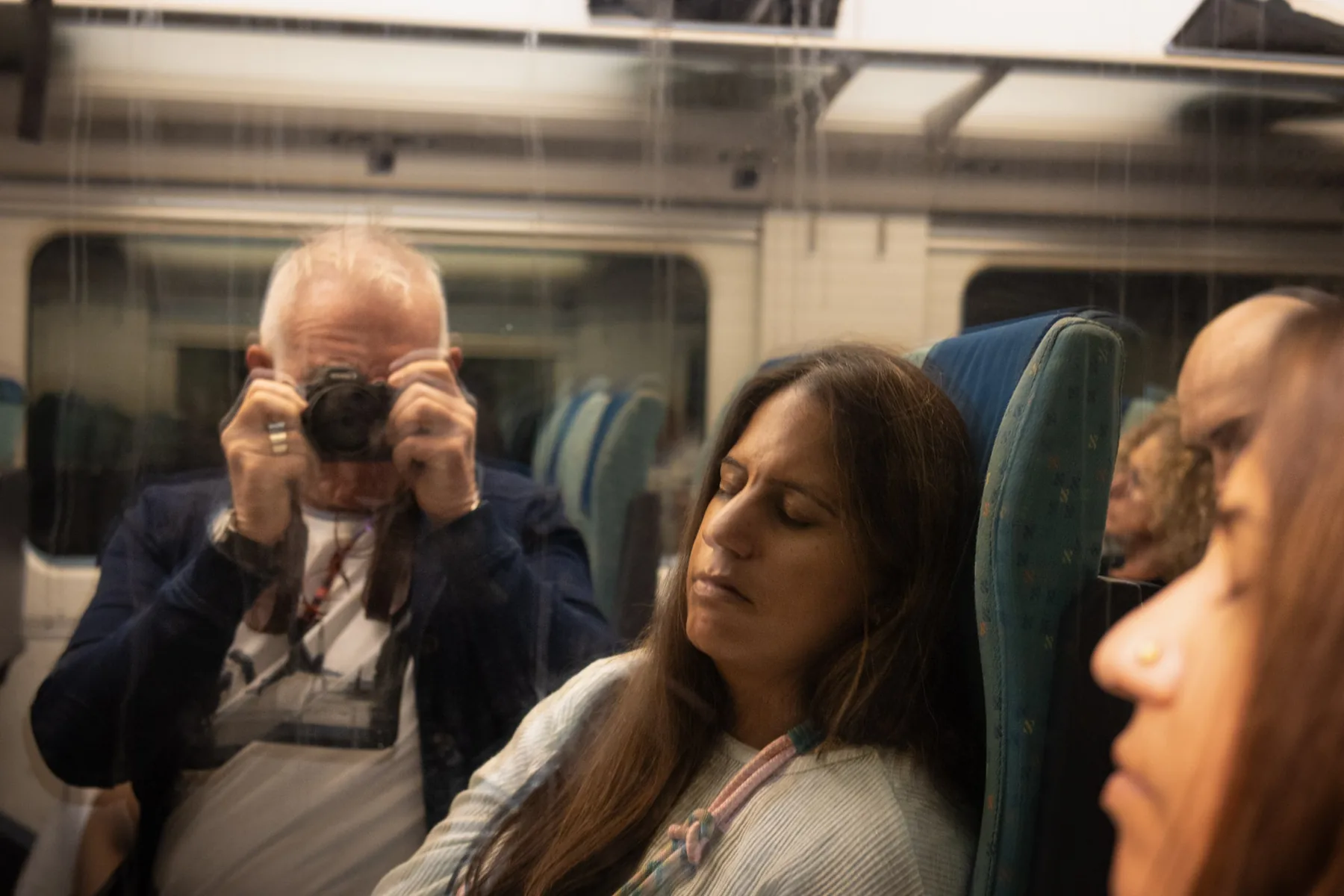
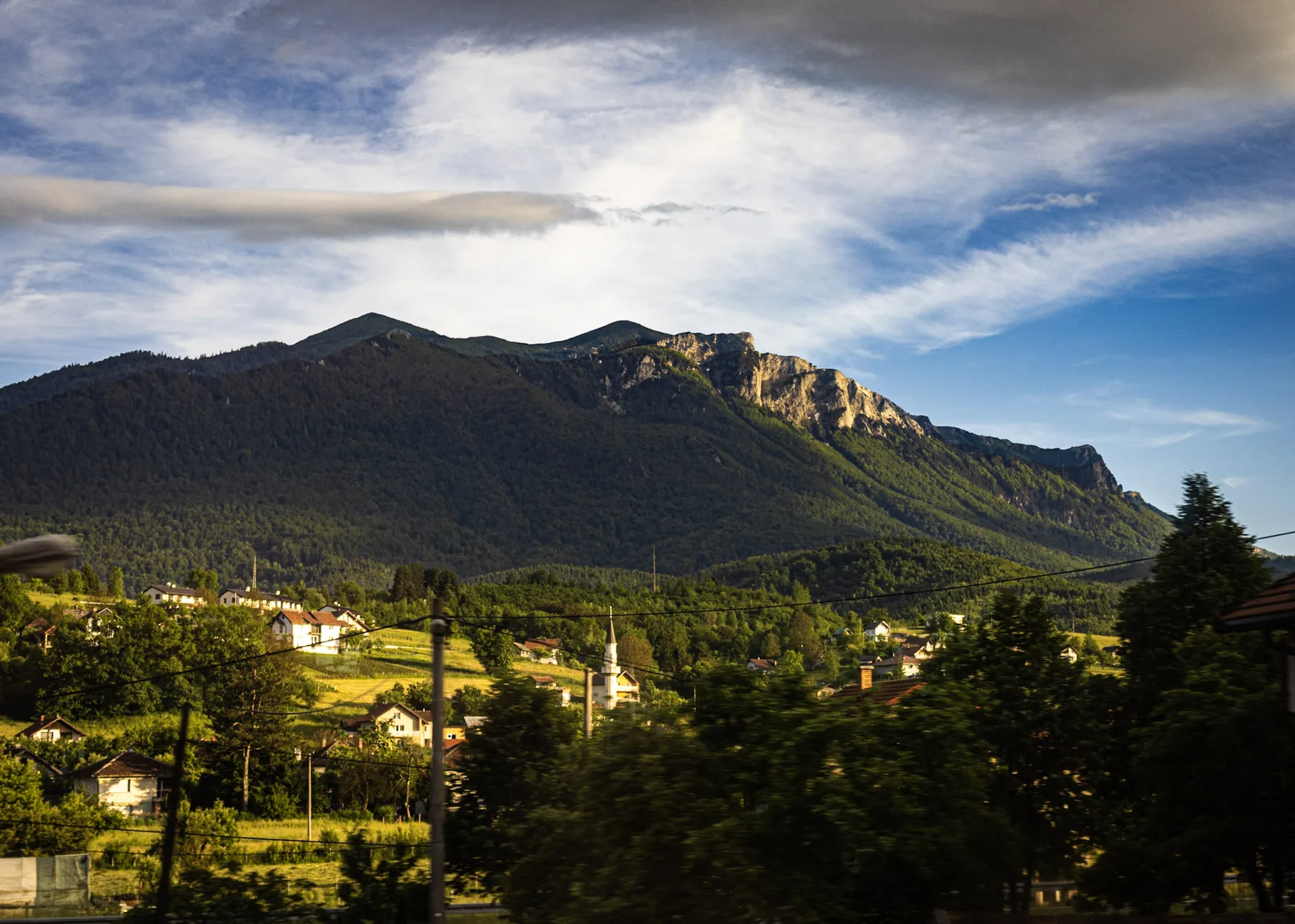
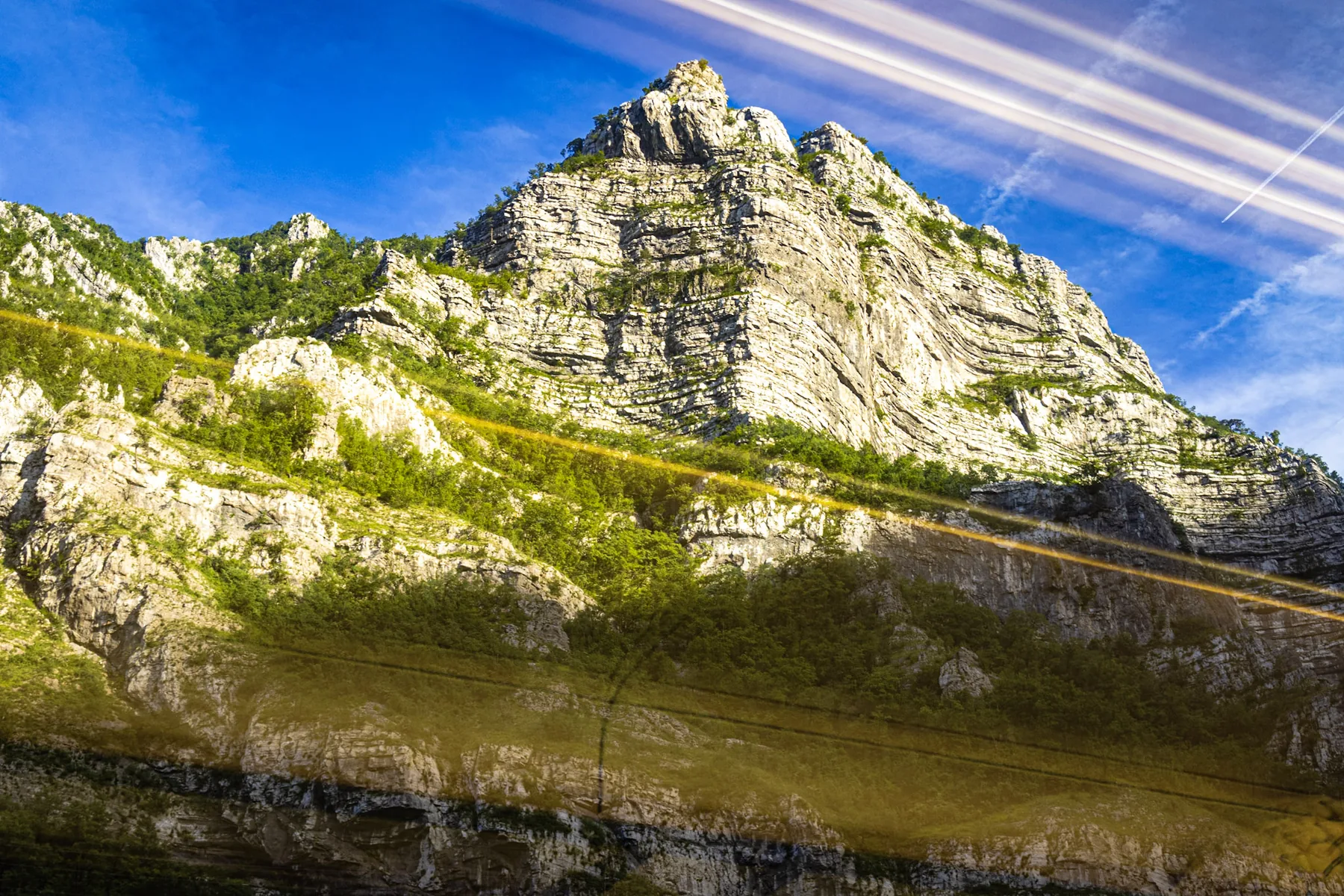
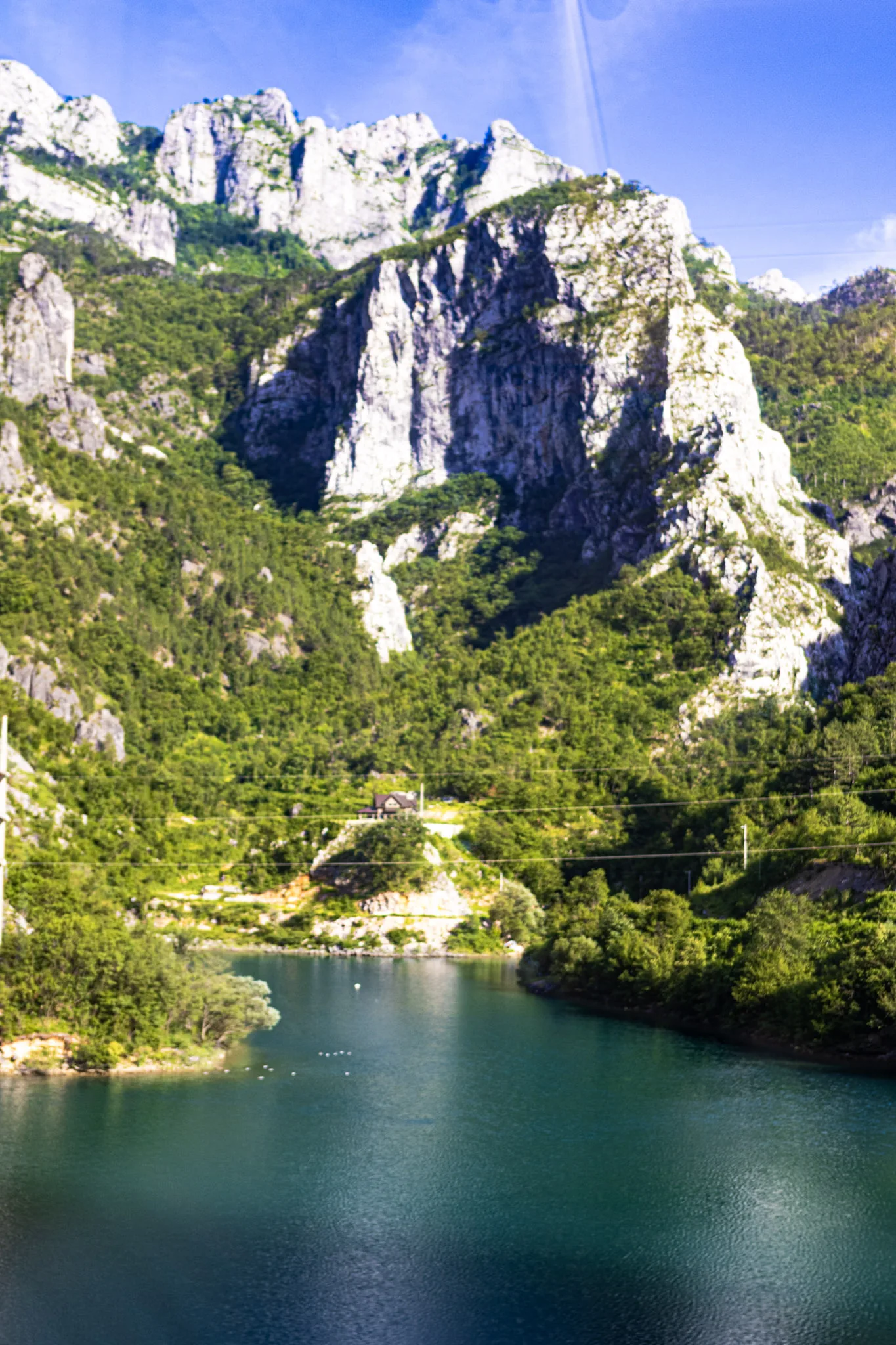
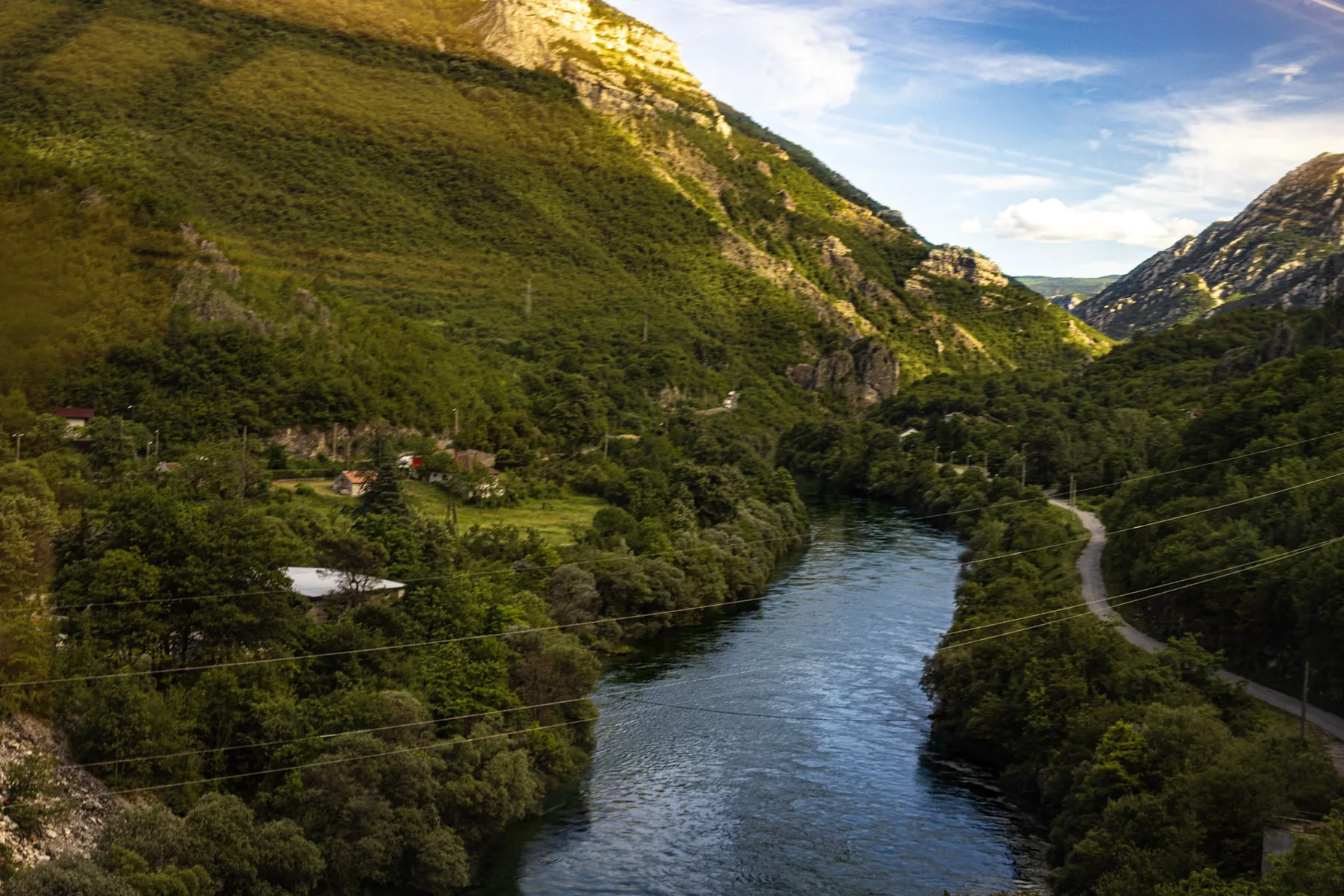
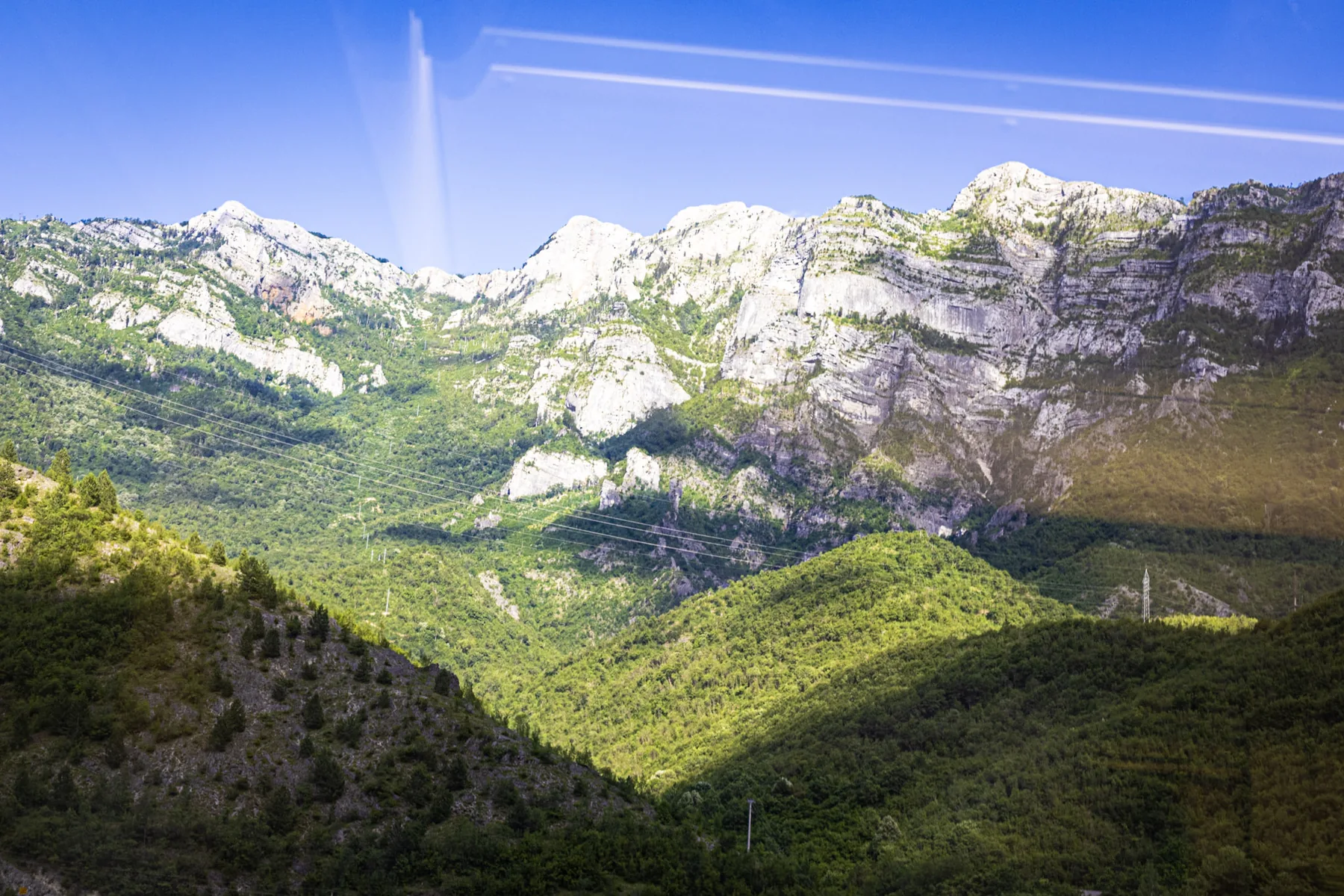
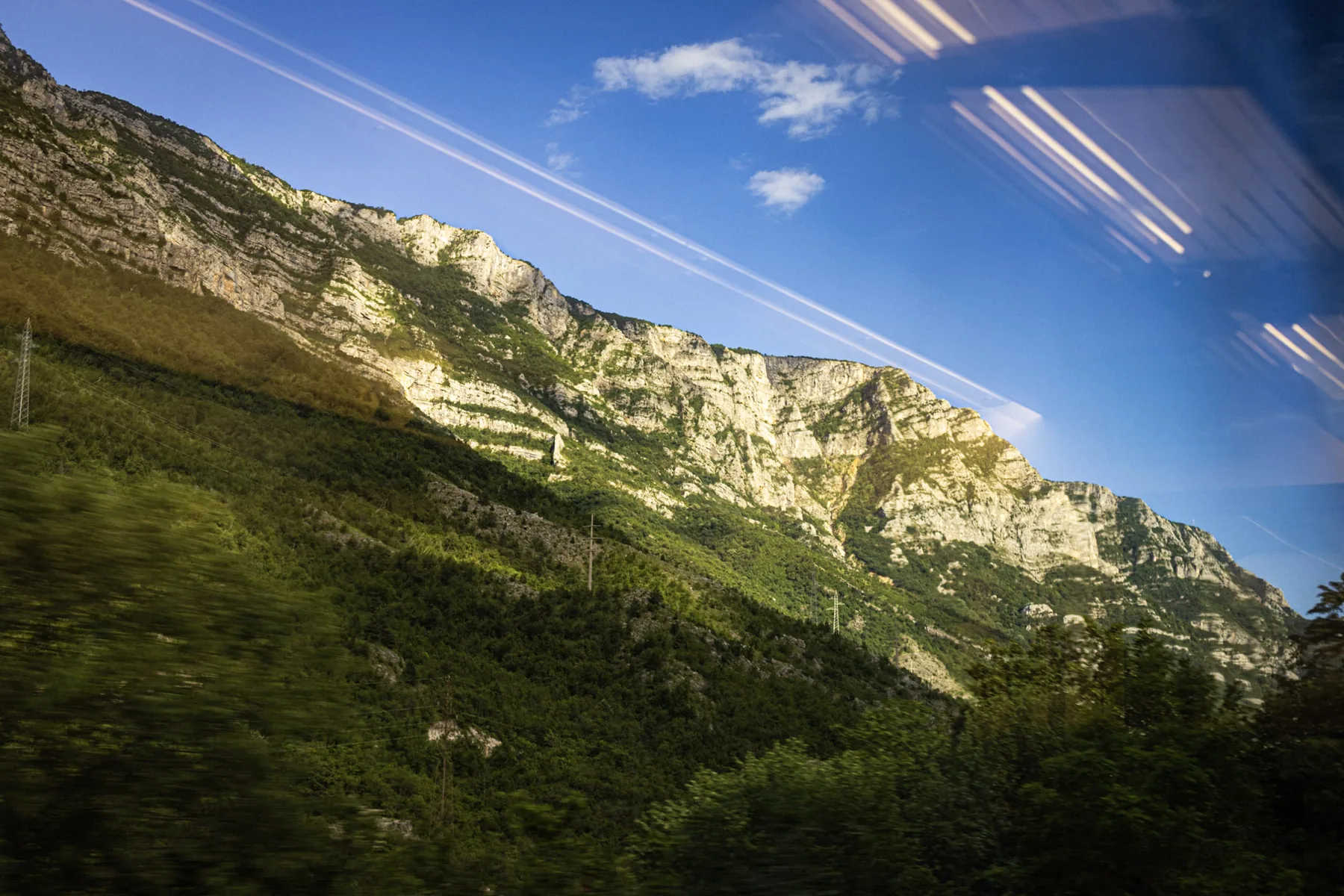
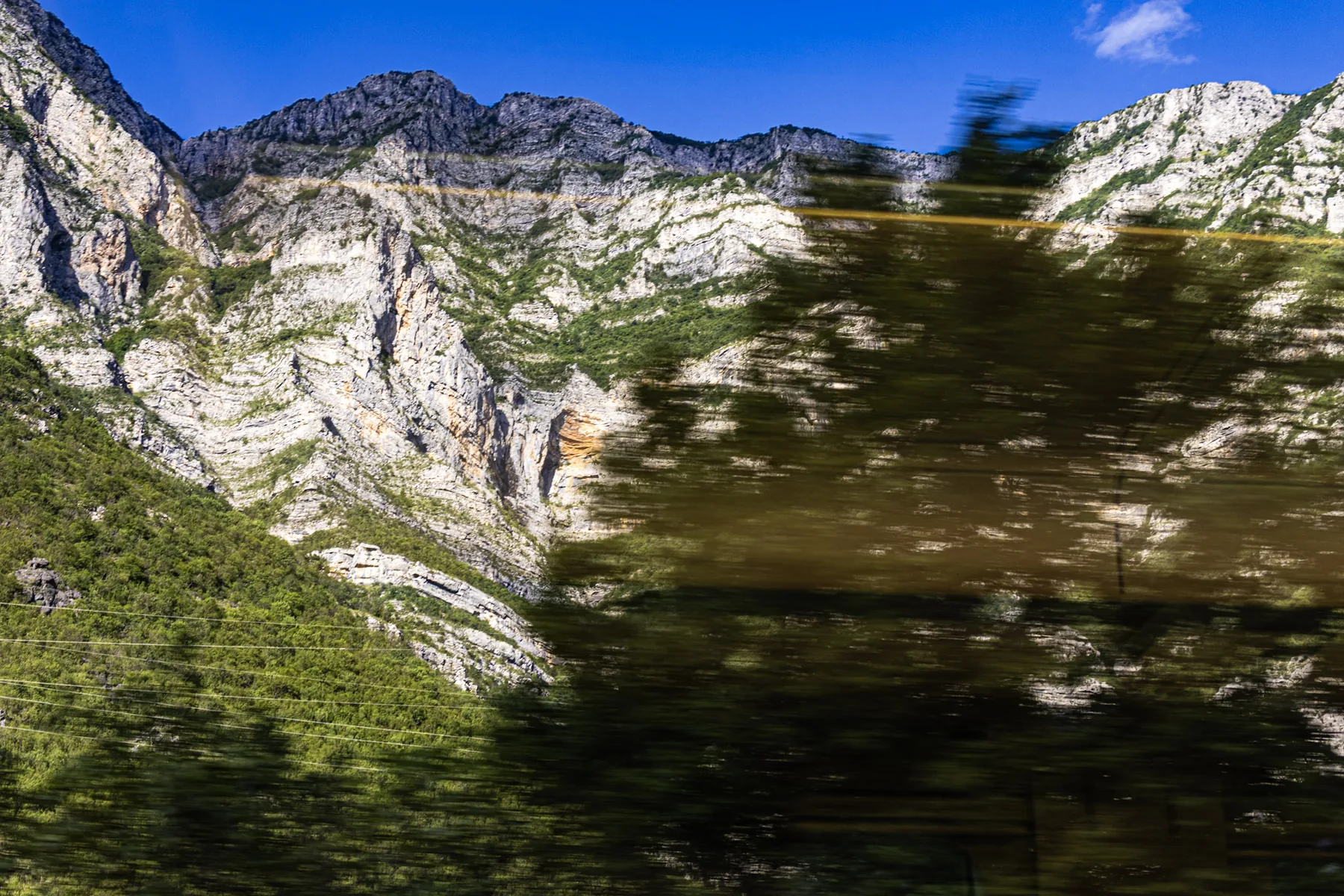
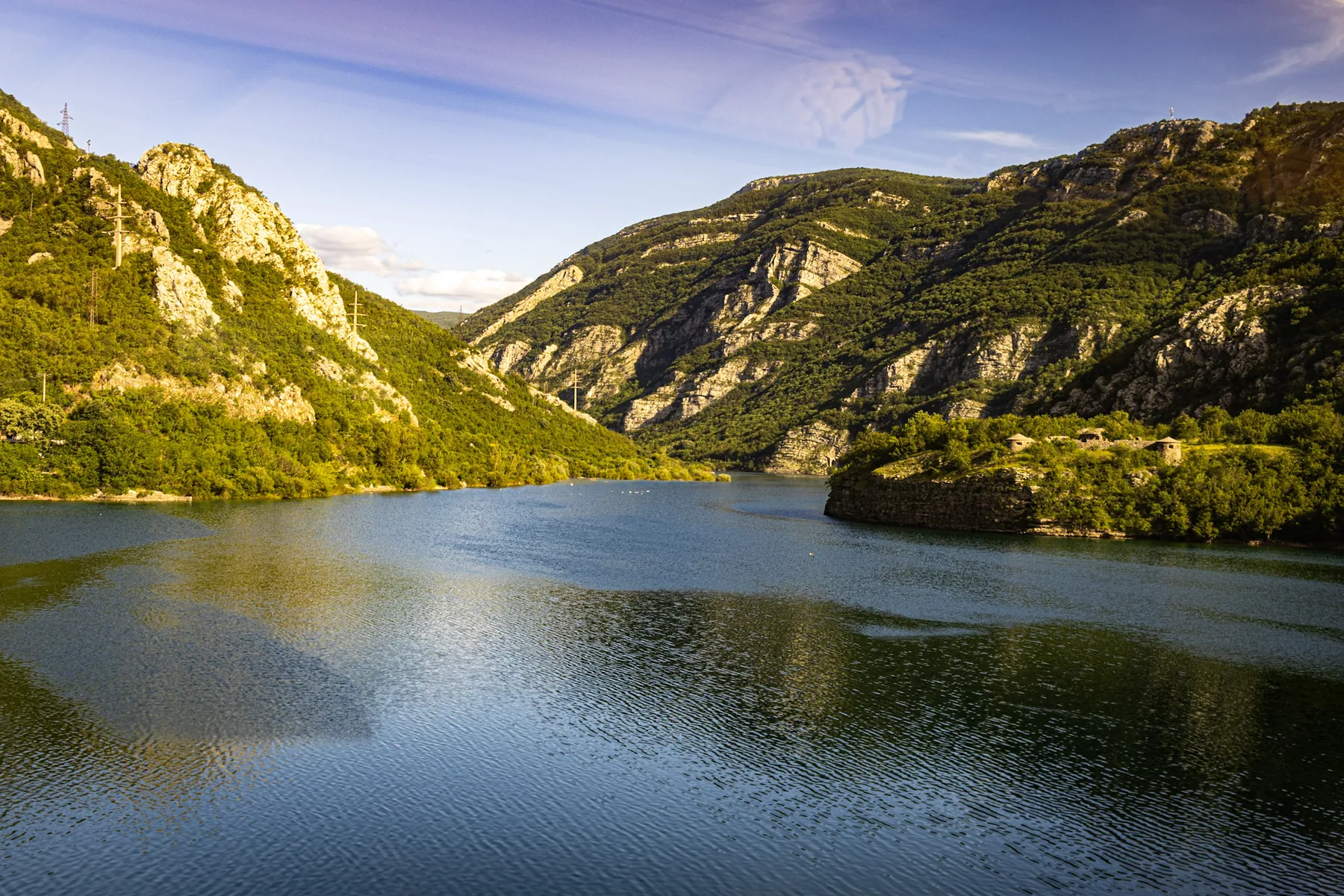
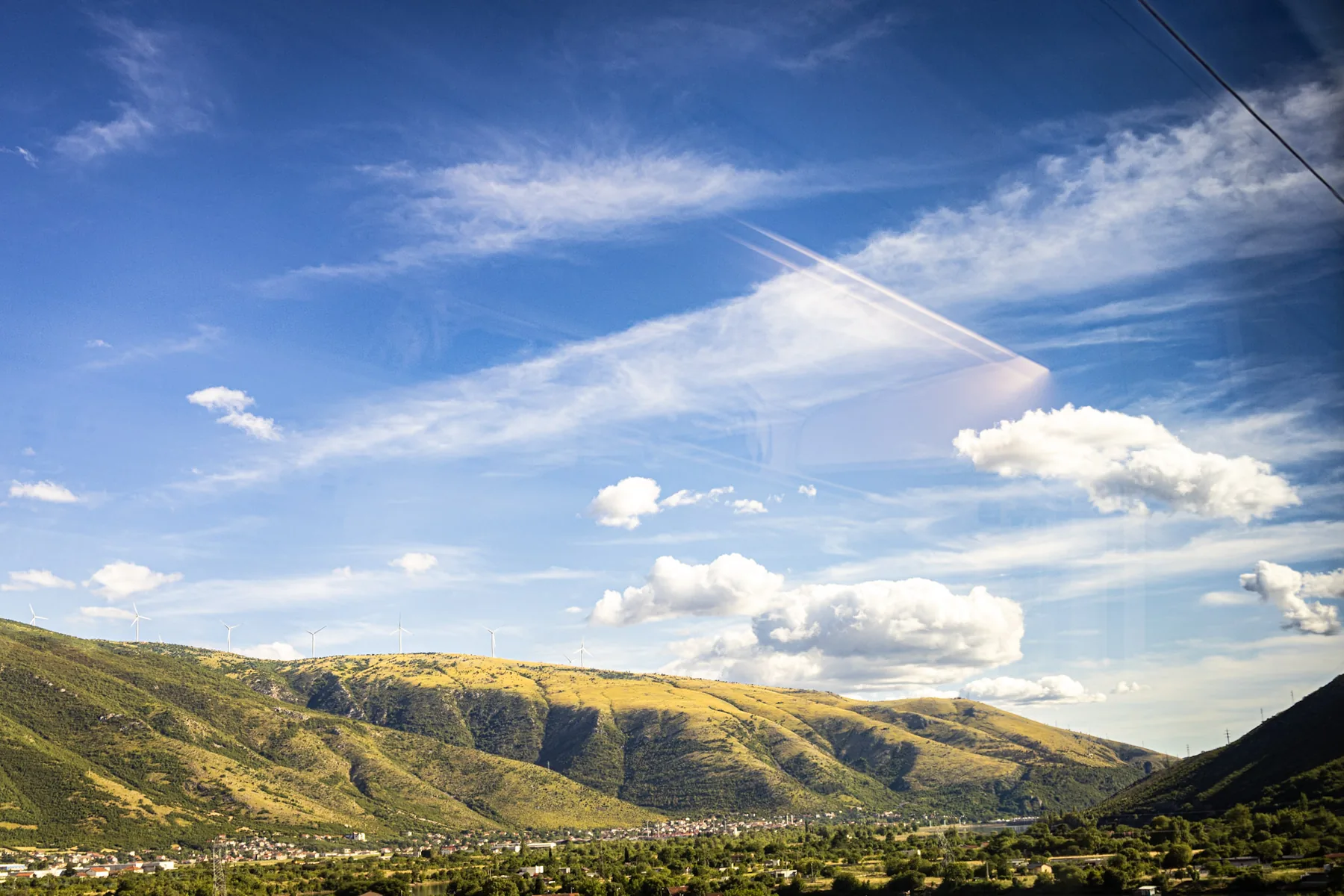
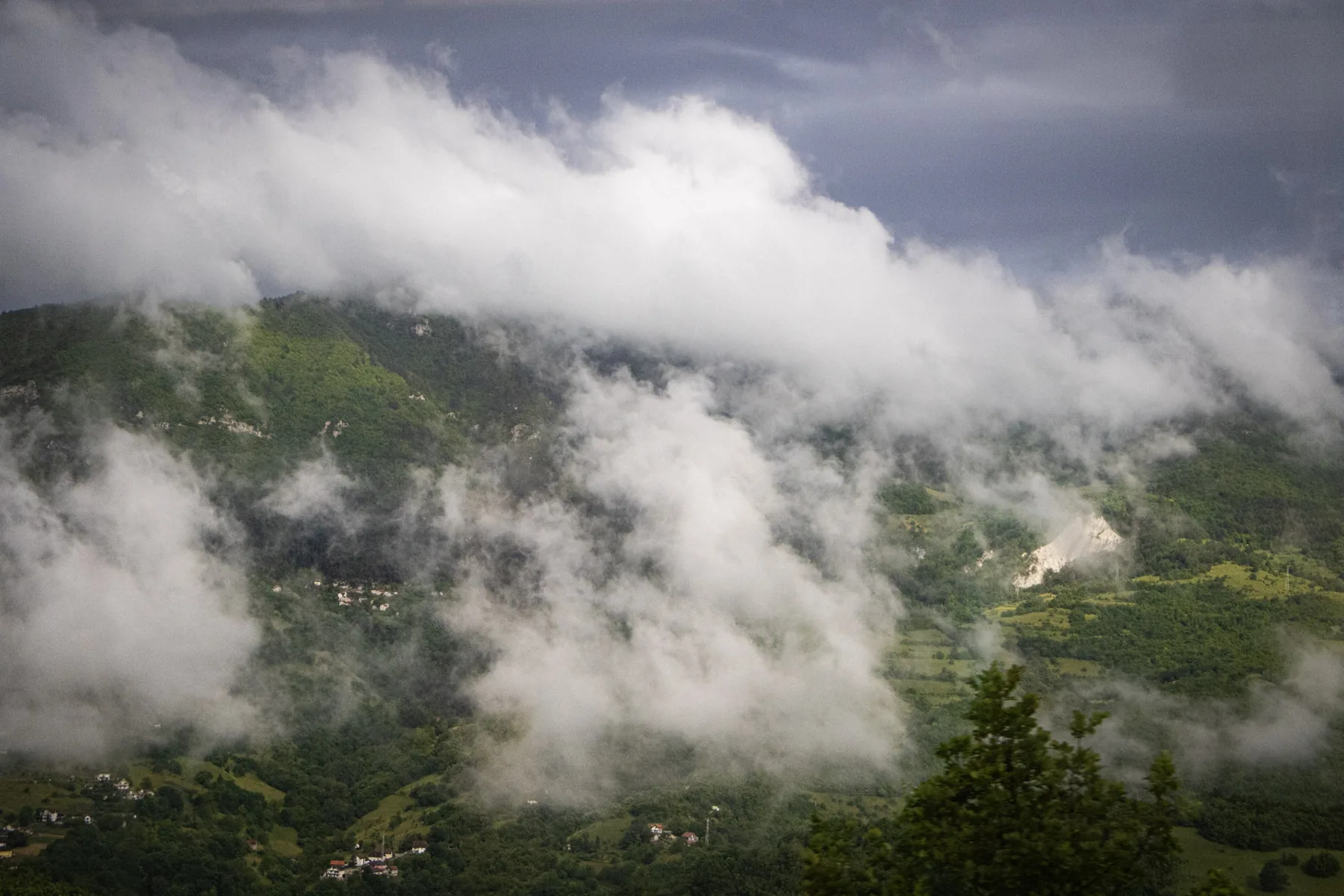
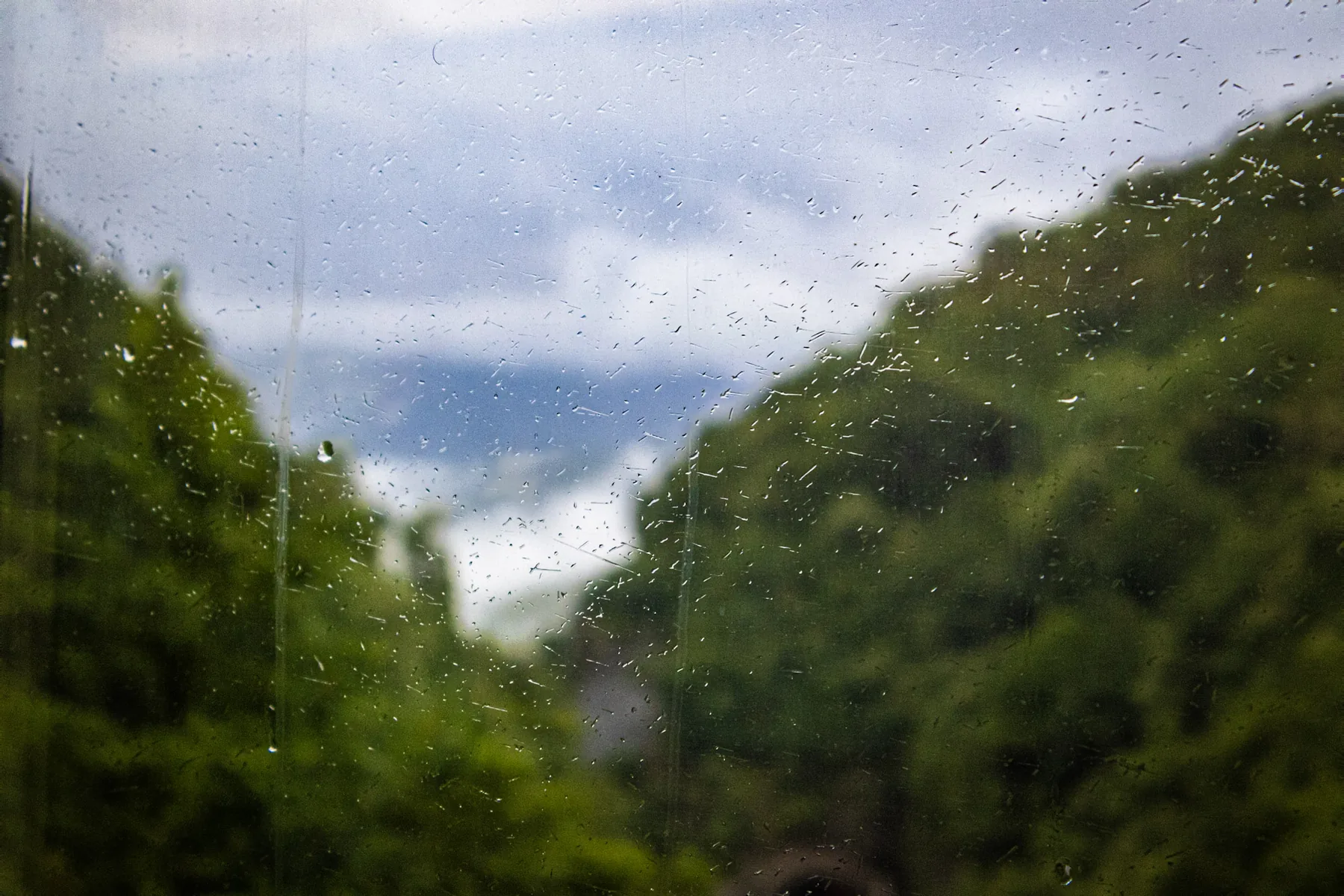
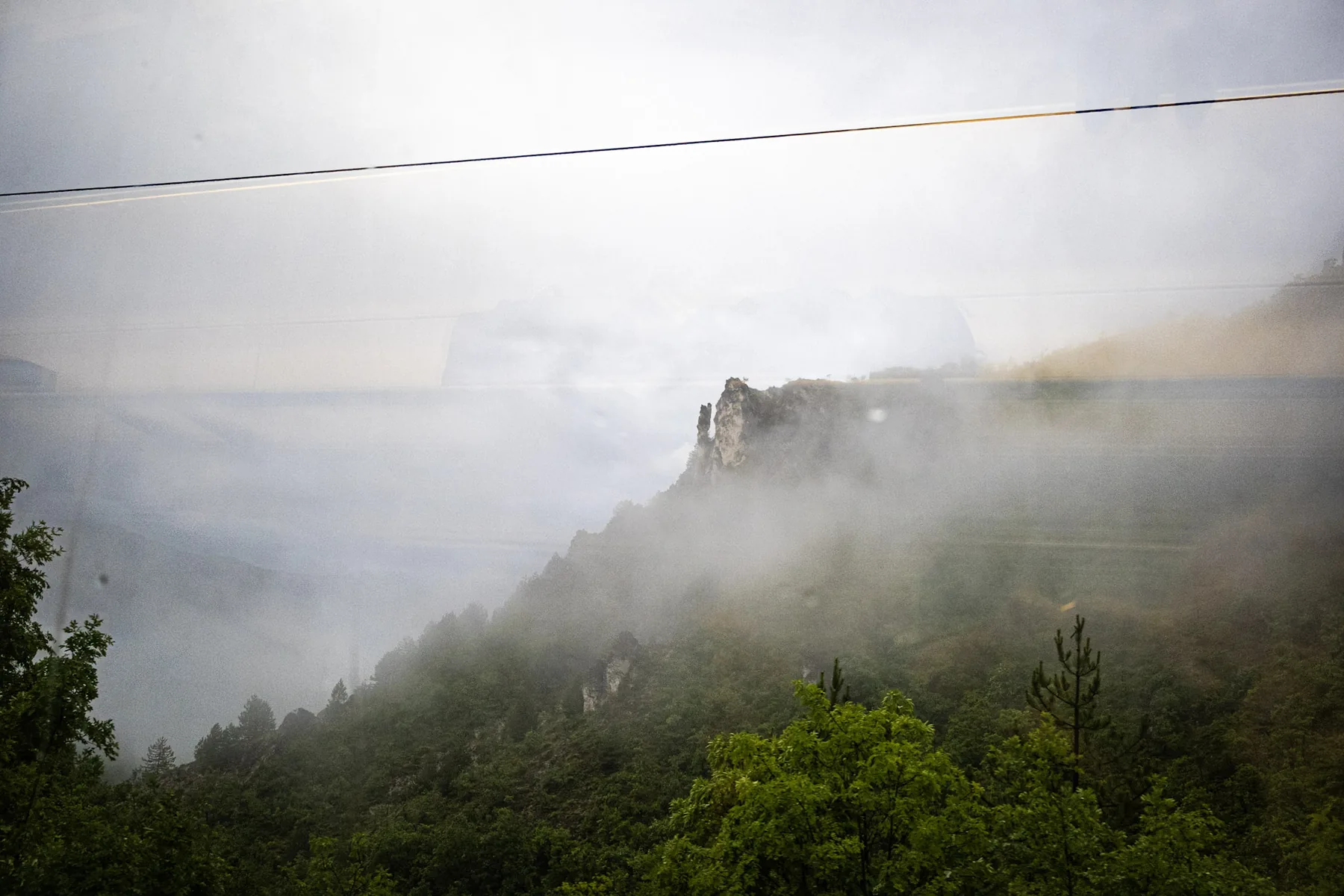
MOSTAR is a mere 72 kilometres away from Sarajevo, but the journey takes two hours or more because much of it is done on tracks that cling to the sides of steep, winding mountain passes. Seldom have I seen such sweeping natural beauty, which I like to think is only emphasised in photographs taken through reflections and water drops on the windows.
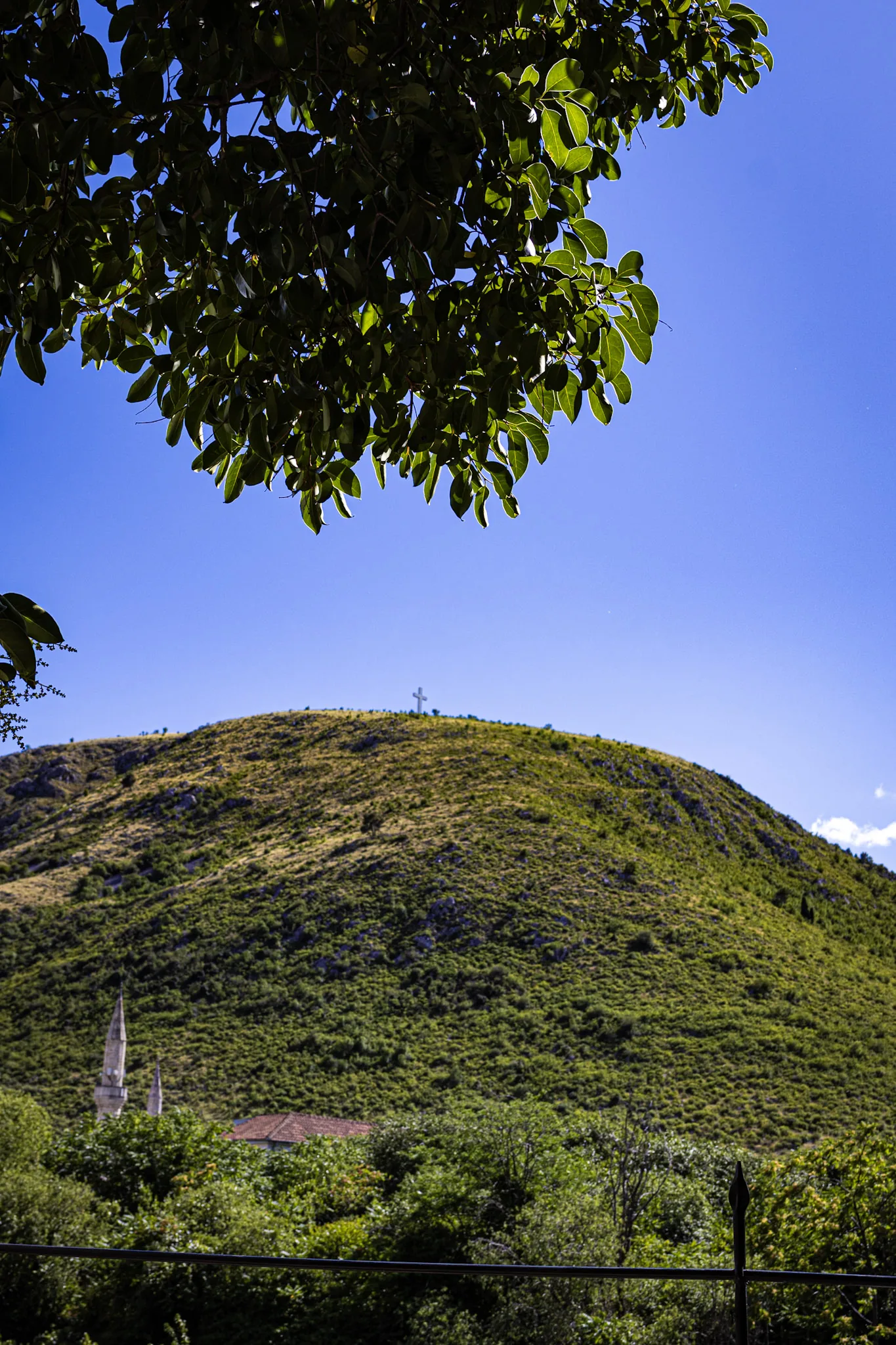
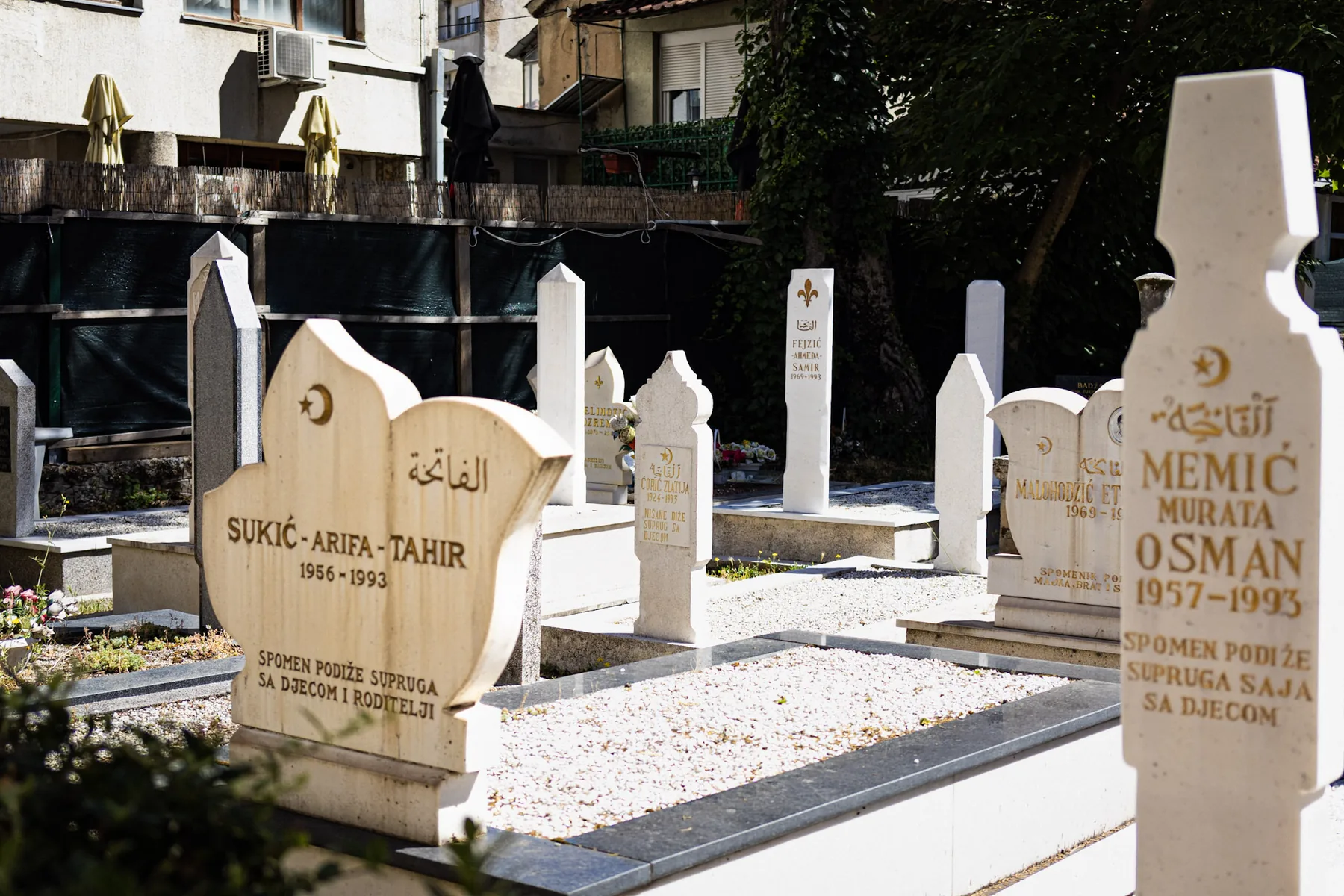
MOSTAR is a prettier place than Sarajevo, which accounts for the hordes of western tourists who go there instead of to the capital. But the same realities apply. You can see a mosque minaret and a church steeple in the photograph to the left below. Below right, the dates on the gravestones in a Muslim cemetery tell their own story.
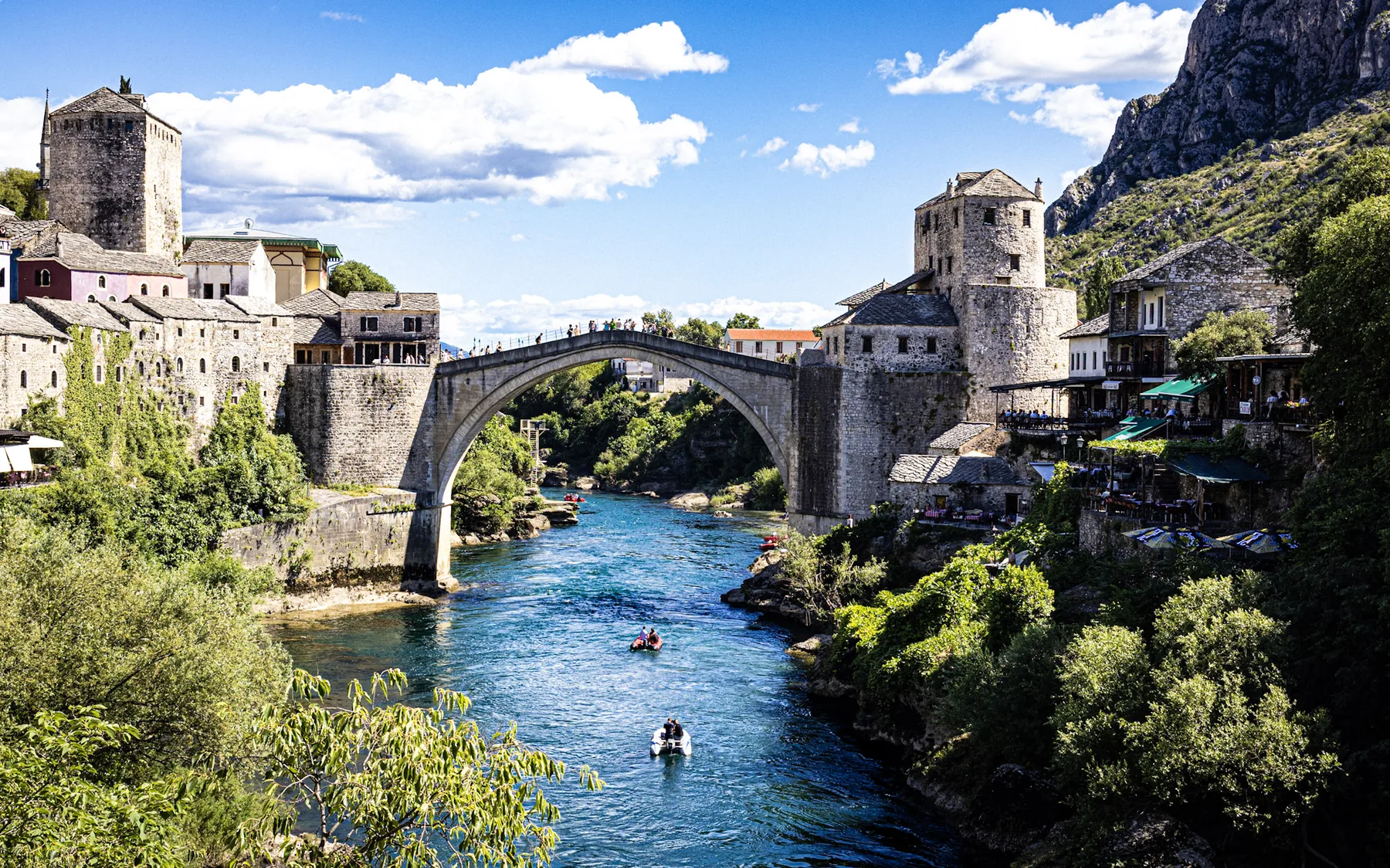
MOST visitors to Mostar flock to Stari Most, or the Old Bridge, which arches its humped back over the Neretva River.
TOURISTS flow this way and that over, around and under the bridge.
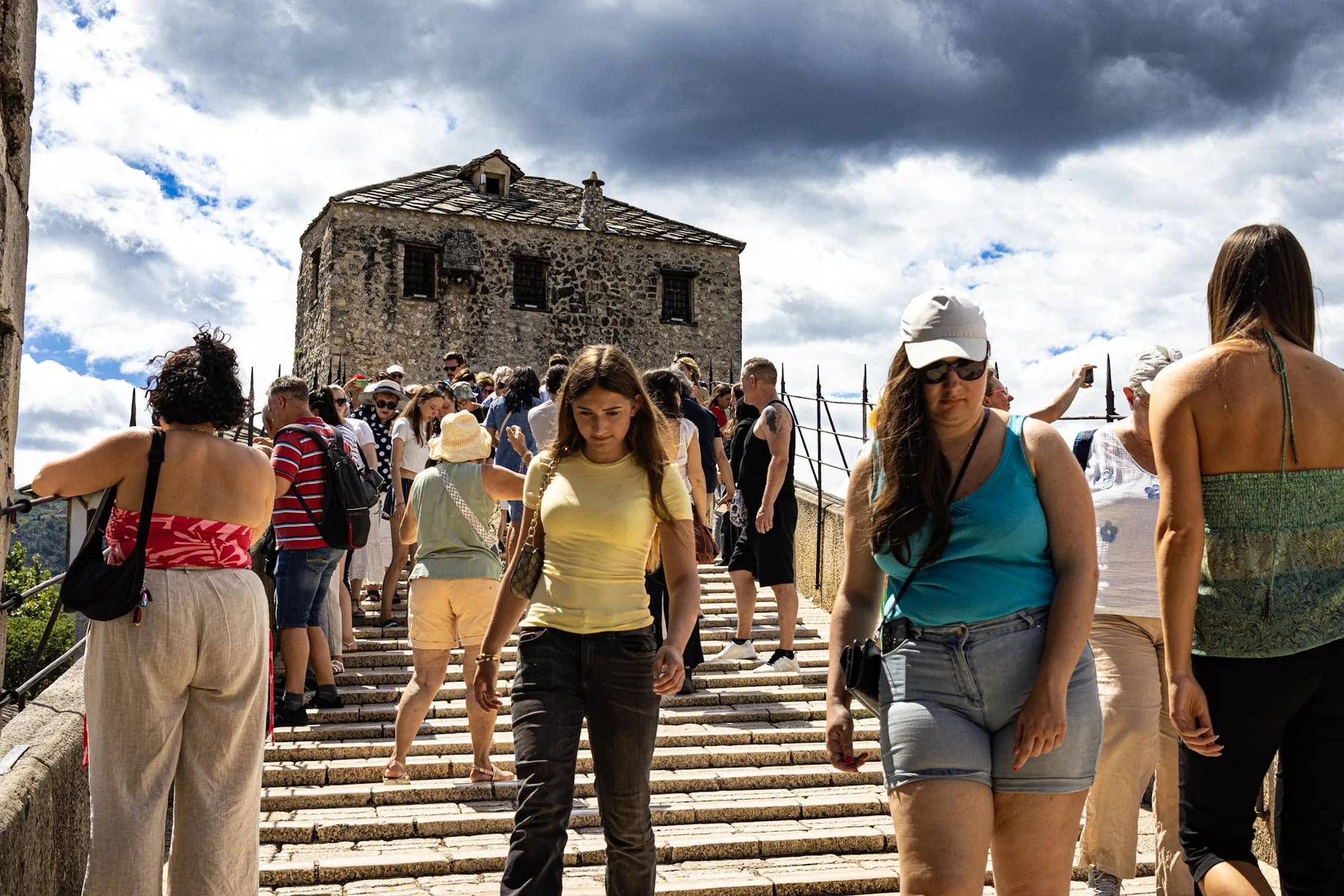
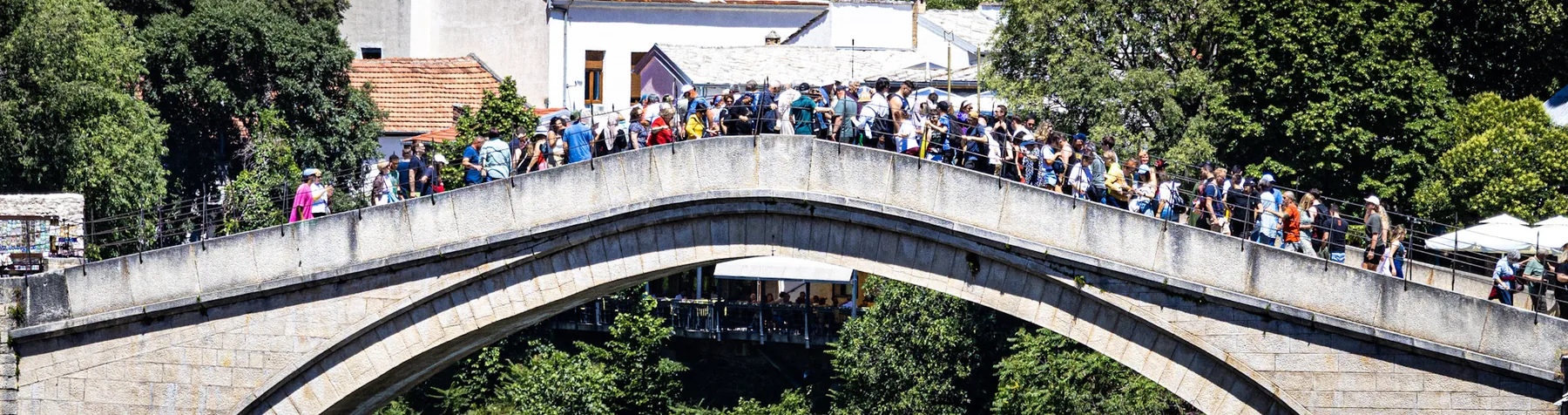
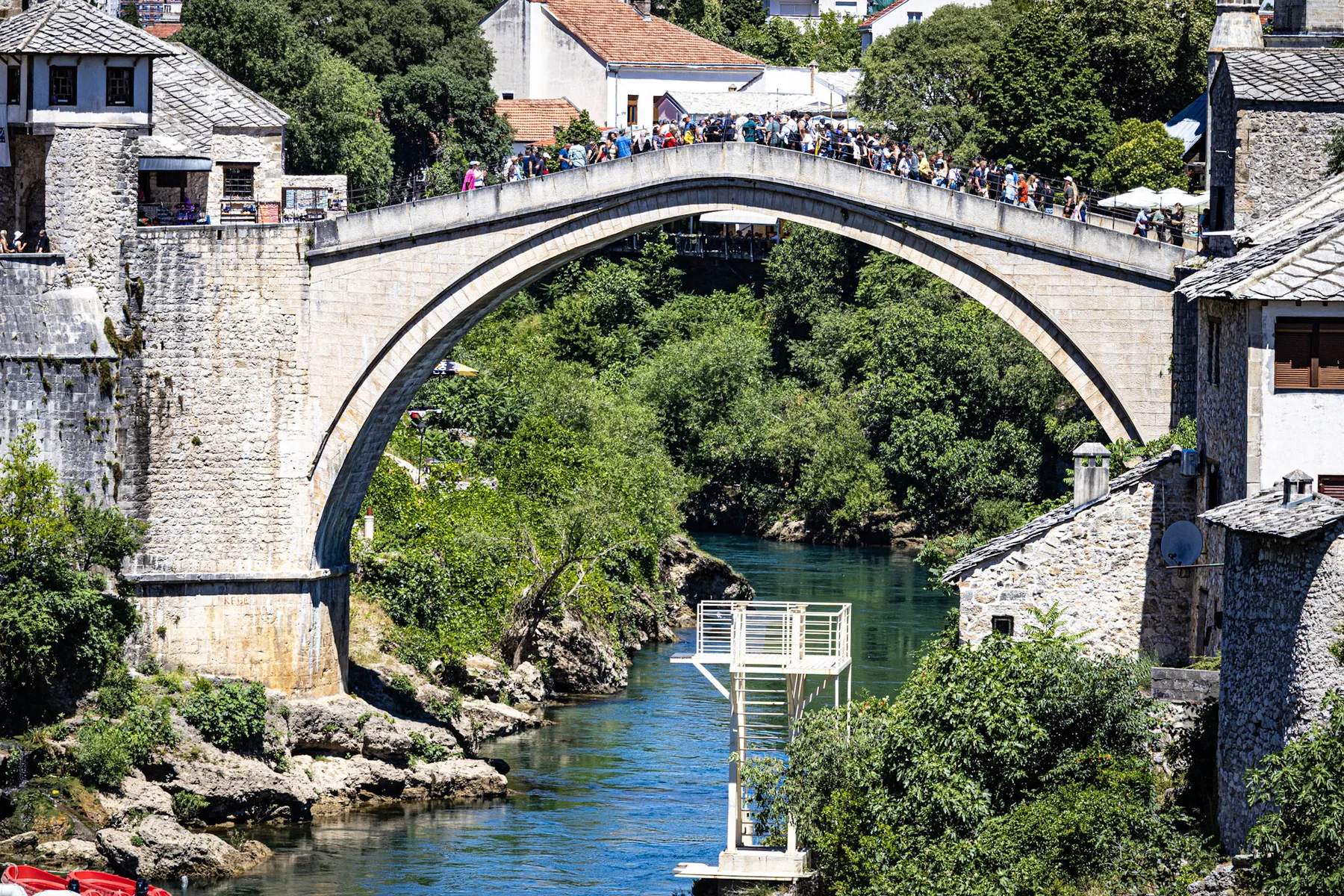
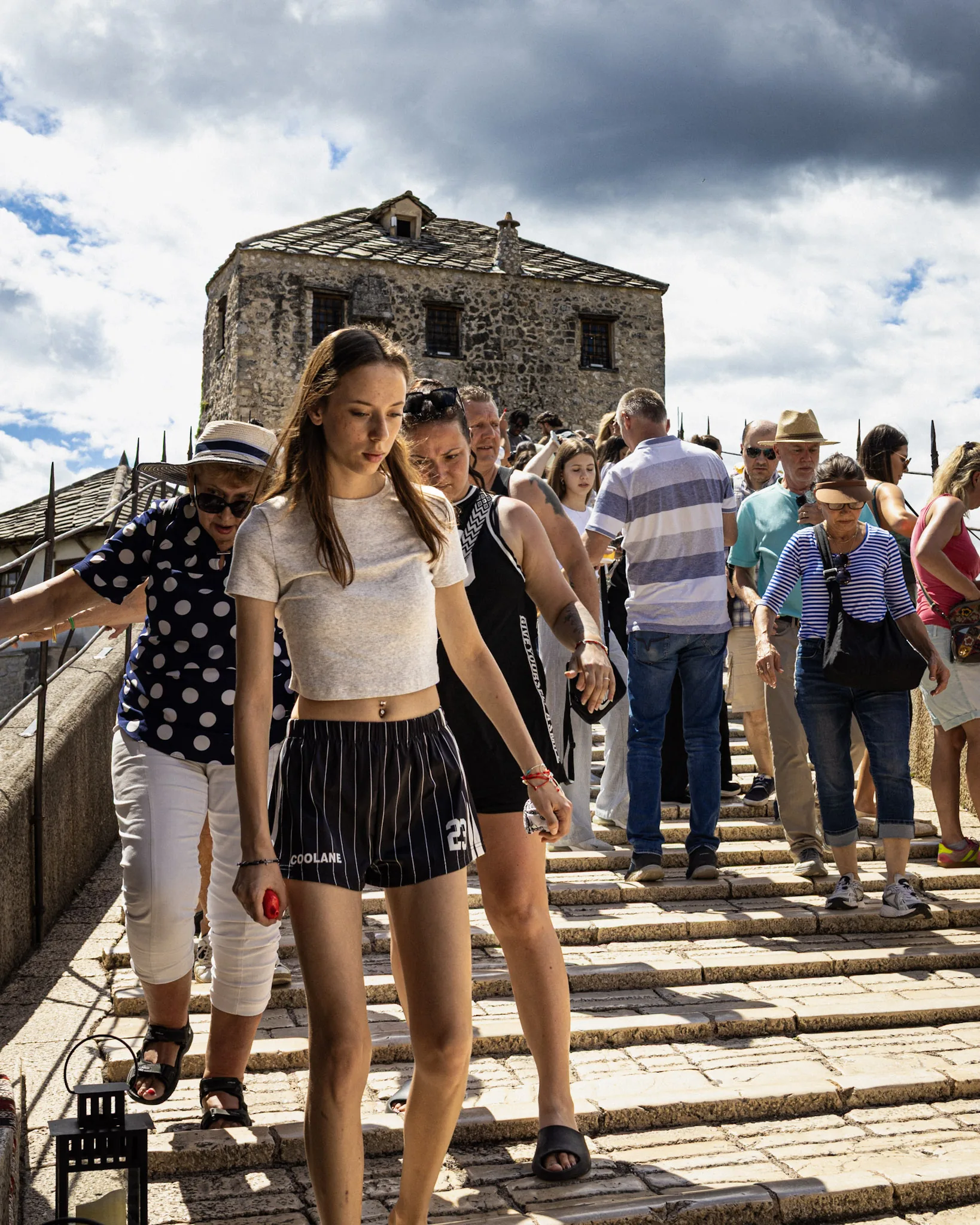
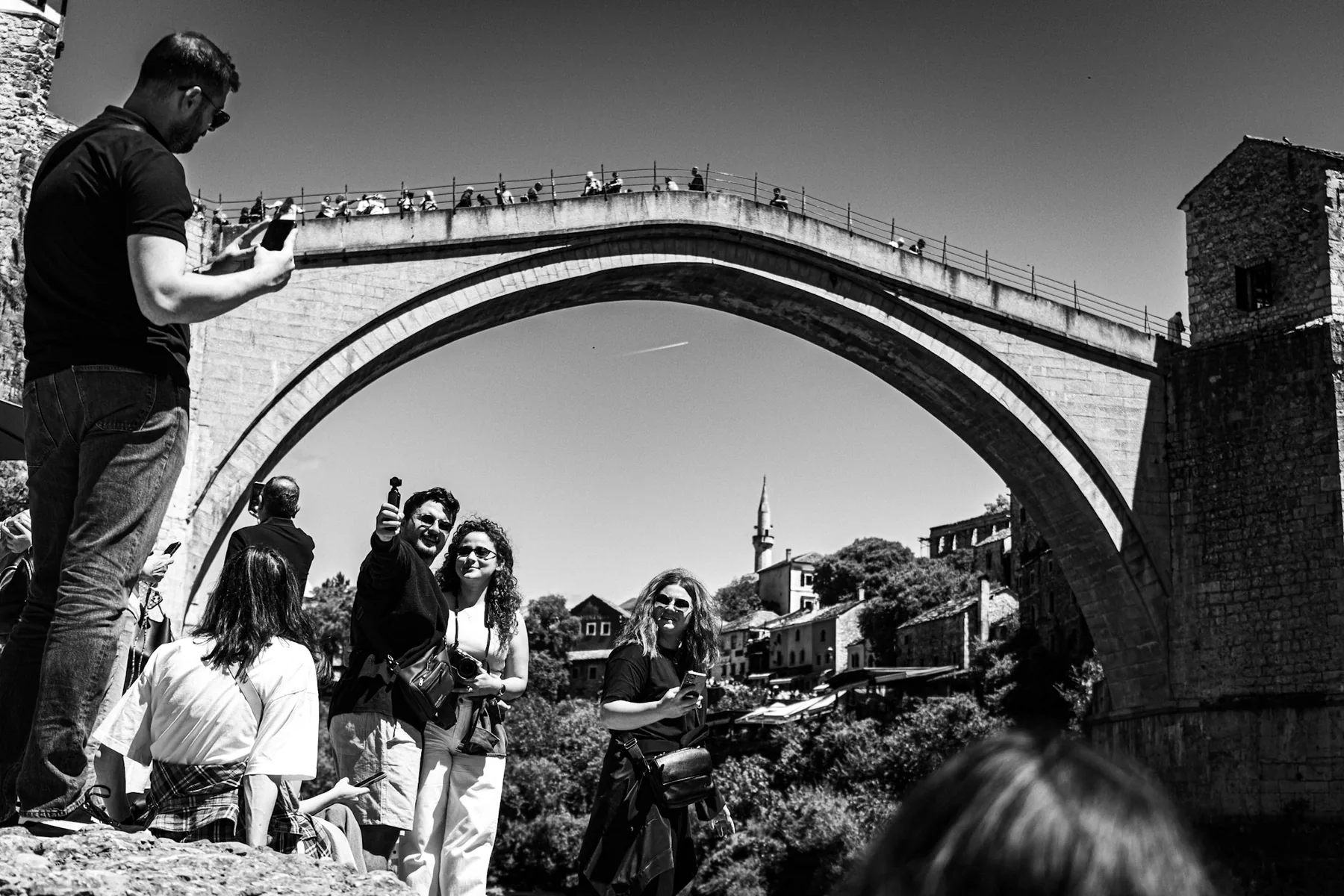
EVERY so often one of a slew of tanned, muscled men appears, steps over the railing onto the edge of the bridge, flexes his pecs, and shouts something in Bosnian, Croatian or Serbian. The fast-flowing, icy-cold, deep river is 26 metres below. Diving into it is considered the height of courage in Mostar. Presumably the pec flexer is advertising the time of the next dive, or his services in training foreigners how to do so. You can see one of these characters in the centre of the photograph below.
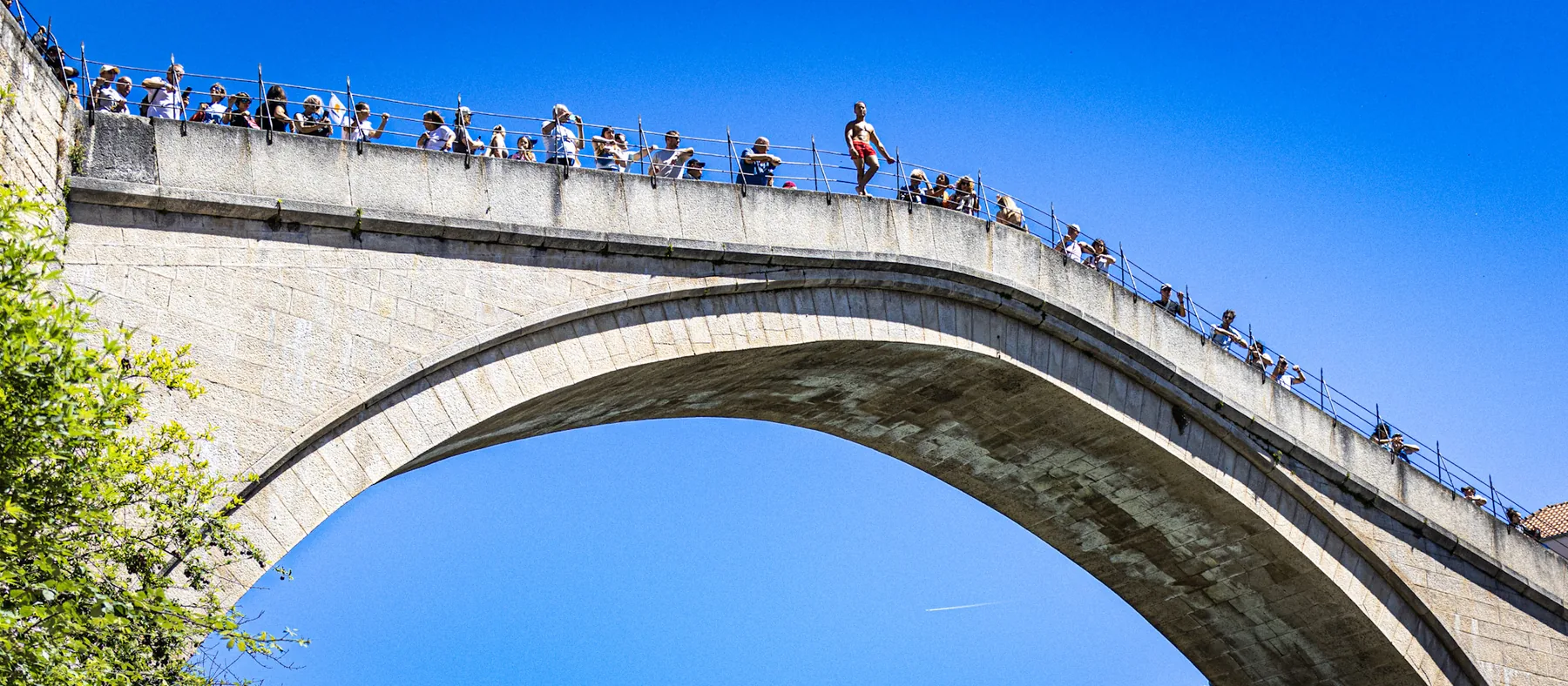
I wonder how many people who have been on the bridge know the history of what they are walking on or using as a selfie backdrop?
Stari Most was commissioned by Suleiman the Magnificent in 1557, designed by Mimar Hayruddin - a student of Mimar Sinan, Suleiman's chief architect - and completed in 1566.
There it stood in all its useful glory, connecting the people of two sides of the city, until about 10.15am on November 9, 1993 - when two days of shelling by Bosnian Croat forces sent its ancient tenelija limestone tumbling into the river.
The Croats said they destroyed the bridge because it was used to supply Herzegovina's defenders. Closer to the truth is that they wanted to break the hearts of the people. They failed.
In July 1998 a partnership between UNESCO, the World Bank and the city of Mostar was established to rebuild the 29-metre long, four-metre wide structure using authentic materials and techniques.
Divers salvaged as many of the blocks from the river as they could. New stones were hewn from the same Mukoša quarry that bequeathed the originals.
The work, which involved Turkish civil engineers and Hungarian and Spanish military engineers and divers, started on June 7, 2001. Stari Most was reopened on July 23, 2004.
OUR day done, it was back to Sarajevo, the city that never forgets.
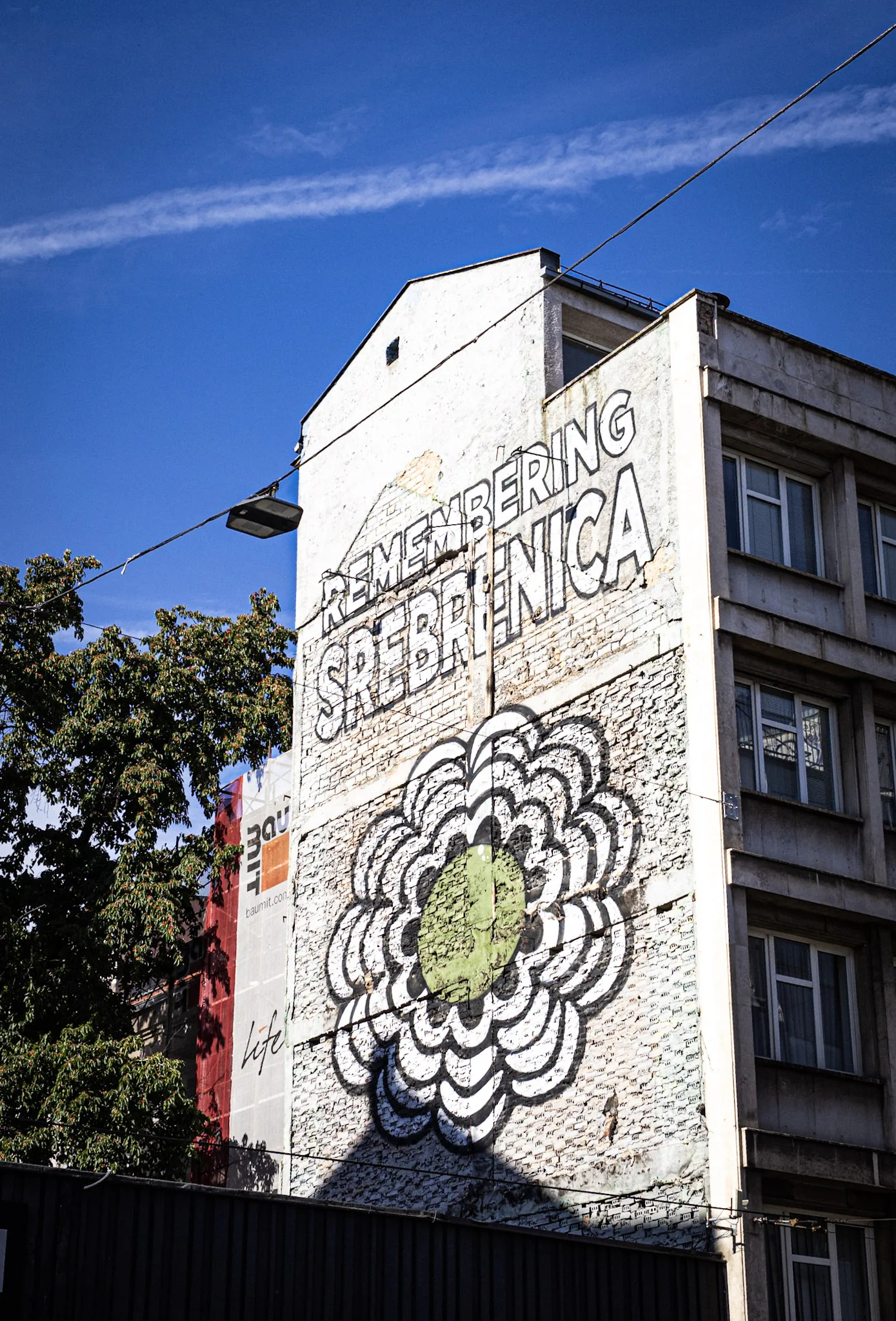
THE war and the genocide are over. In Bosnia and Herzegovina, that is. The quote below the headline of this essay is from a 2021 play, Old Bridge, written by Igor Memic: "One day all you care about is music, fashion and boys. The next day there's no food."
That could apply just as easily today in Palestine, Sudan or Ukraine.
“History doesn’t repeat itself but it often rhymes,” is attributed to Mark Twain, albeit not conclusively.
But we know for certain that we do not learn from history.
© 2026 Telford Vice. Words and photographs.